Free temporary phone numbers don't protect your digital identity; they broadcast your private verification codes to anyone refreshing the public inbox. If you've used an open online receiver to dodge marketing spam, the intent makes sense. You want to keep your personal SIM private while clearing mandatory signup hurdles. However, the critical dangers of using free online sms services far outweigh the temporary convenience. When authentication tokens sit exposed on unauthenticated websites, account takeover risks escalate rapidly.
In this guide, you'll discover the technical risks behind public temporary portals and learn how to safely protect your account verifications. We'll break down the specific exploits bad actors use to hijack accounts through shared feeds, examine why major platforms routinely block recycled public pools, and establish a reliable verification framework that keeps your credentials secure.
Key Takeaways
- Public web inboxes expose incoming tokens in real time, illustrating why the primary dangers of using free online sms services include immediate account hijacking and data harvesting.
- Shared numbers create severe lock-out risks, allowing subsequent visitors to initiate password recovery workflows on your registered profiles.
- Major online platforms actively identify and reject public temporary numbers using automated carrier reputation checks and shared-pool blacklists.
- A structured verification workflow helps you categorize account risk levels and determine when disposable access or dedicated number rentals are necessary.
- Private virtual infrastructure provides isolated inbound routing, preventing third parties from intercepting authentication codes or triggering unauthorized resets.
Table of Contents
- What Are Free Online SMS Services and How Do They Work?
- The 4 Critical Dangers of Using Free Online SMS Services
- Free Public SMS vs. Private Virtual Numbers: Security Comparison
- How to Safely Handle SMS Verification for Online Accounts
- Secure Alternatives: Why Dedicated Verification Infrastructure Matters
What Are Free Online SMS Services and How Do They Work?
Free online SMS services are publicly accessible websites that receive inbound text messages through shared phone numbers. Instead of delivering messages to a private device, these platforms render incoming payloads directly onto an open web page. Anyone visiting the site sees the exact same inbox. While casual web users view these portals as harmless temporary shields, the technical architecture behind them introduces immediate vulnerabilities.
At their core, these platforms rely on traditional Short Message Service (SMS) protocols, which transmit unencrypted text payloads via mobile network carrier routing. Unlike secure, dedicated telecommunications infrastructure, open receivers pass plain text tokens straight into browser DOM trees. Understanding how these platforms operate reveals the core dangers of using free online sms services for modern identity management.
The Architecture of Public SMS Portals
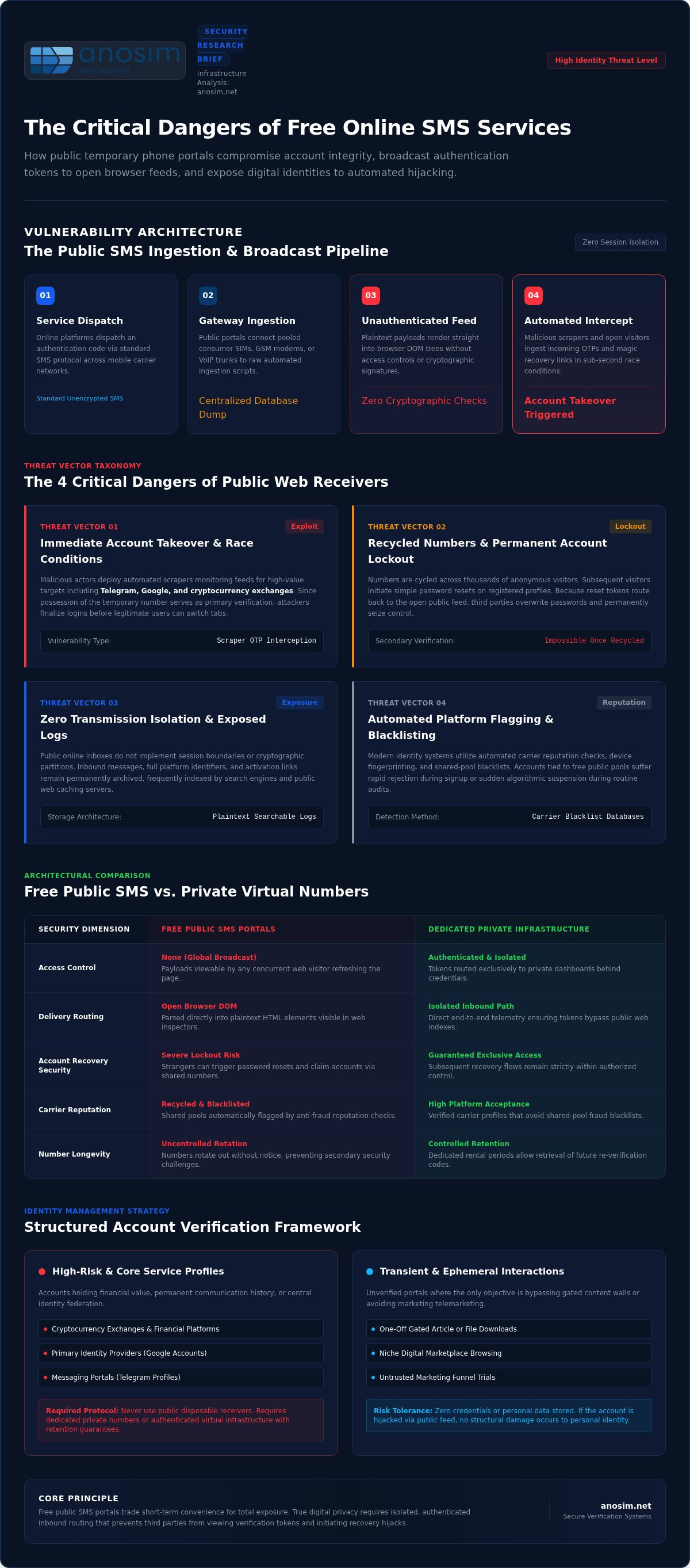
Open receiving websites operate by connecting physical GSM modems, pooled consumer SIM cards, or wholesale VoIP trunks to automated scraping scripts. When a platform sends an authentication code, the backend gateway ingests the transmission and stores the raw text payload directly inside a centralized database.
These portals omit session tokens, cryptographic signatures, or authentication barriers. Any unauthenticated browser session querying the domain receives an immediate stream of parsed SMS logs. In practice, this setup creates critical weaknesses:
- No access control: Incoming messages appear simultaneously on screens worldwide without identity checks.
- Persistent public logs: Historical verification codes often remain indexed in search engines or public caching servers.
- Zero transmission isolation: Account recovery links, one-time passwords (OTPs), and platform identifiers sit completely exposed in plaintext.
Why Users Gravitate Toward Disposable Web Numbers
Users turn to disposable numbers primarily to defend their personal inboxes. Providing a primary carrier mobile number on unverified forums, niche digital marketplaces, or marketing funnels routinely triggers relentless spam calls and automated telemarketing campaigns. A temporary number feels like an easy barrier against intrusive sales pipelines.
Mandatory phone verification walls on modern web platforms push users toward these shortcuts. When an online service demands a mobile number simply to test an interface or read gated content, burning a quick disposable number seems practical. However, treating a public broadcast board as a personal privacy filter creates an illusion of safety. You avoid telemarketing calls, but you expose your account credentials to anyone monitoring that shared feed.
The 4 Critical Dangers of Using Free Online SMS Services
Relying on open receiving portals introduces structural liabilities that compromise both new and existing digital accounts. Because these platforms prioritize open broadcast over authenticated delivery, anyone tracking the stream can intercept incoming payloads. The technical dangers of using free online sms services fall into four major operational categories: credential theft, downstream account recovery hijacking, surveillance profiling, and automated anti-fraud blacklisting.
Immediate Account Takeover and Credential Theft
When an authentication code posts to a public feed, it creates an immediate race condition. Malicious actors run continuous monitoring scripts against popular public portals. Once an incoming one-time passcode (OTP) or magic login link displays for platforms like Telegram, Google, or cryptocurrency exchanges, scrapers can finalize the session before the intended user even switches tabs. Because possession of the temporary number acts as the primary identity factor, attackers seize the profile without ever needing to crack an account password.
Recycled Numbers and Permanent Account Lockout
The greatest structural vulnerability of disposable portals involves post-registration recovery. Even if your initial registration succeeds, public numbers are continually recycled across thousands of anonymous visitors. A subsequent user trying to access the same service will simply initiate an account recovery workflow. The platform sends a password reset token straight to the open web feed, allowing that stranger to overwrite your credentials and permanently lock you out. Additionally, when a platform demands secondary security re-verification weeks later, you cannot retrieve the code because that specific number has rotated out of service.
Automated Account Flagging and Blacklisting
Modern identity verification systems rely on device fingerprinting, Home Location Register (HLR) carrier lookups, and velocity monitoring. When hundreds of users attempt registrations through the same virtual pool, automated fraud detection heuristics instantly flag the underlying line. Major services routinely reject these numbers outright or trigger immediate shadowbans on associated profiles. As a result, platforms aggressively block high-velocity virtual ranges, and public numbers fail verification attempts on most major platforms.
Beyond blacklists, unauthenticated portals maintain historical message logs that commercial surveillance bots continuously index to map interconnected user activities. To avoid poisoned reputation scores and keep authentication tokens confidential, security engineers isolate verification workflows using dedicated SMS activation routing instead of broadcast repositories.
Free Public SMS vs. Private Virtual Numbers: Security Comparison
Understanding the architectural divide between public receiver feeds and private virtual lines clarifies why security teams strictly avoid open tools. While both route messages through cellular or virtual gateways, their handling of payload privacy, session authentication, and carrier reputation couldn't be more different. The technical dangers of using free online sms services stem directly from multi-tenant access models that broadcast incoming data without encryption or user isolation.
The comparison below highlights the core functional differences between public shared reception pools and dedicated virtual infrastructure:
- Message confidentiality: free public portals render every incoming message on an open web page; private virtual numbers deliver messages only to your authenticated session.
- Inbox isolation: a public inbox is shared with every visitor, while a private number is assigned to a single account.
- Number control: public numbers are uncontrolled and recycled quickly; a private number is allocated to you for a single code or for an ongoing rental.
- Platform acceptance: public numbers are heavily blacklisted by major platforms, while carrier-issued mobile numbers pass carrier checks far more often.
- Recovery protection: on a public number, any later visitor can trigger a password reset; with a private number, recovery codes reach only you.
Data Privacy and Access Control Evaluation
Public aggregators dump verification strings straight into unauthenticated web logs. Legal and cybersecurity analyses regularly emphasize the severe dangers of phone number exposure, particularly how public identity identifiers leave users open to credential theft, account enumeration, and data correlation. Private infrastructure prevents this by enforcing end-to-end access boundaries. Reviewing the Anosim FAQ shows how dedicated inbound architecture delivers tokens directly to private dashboards or programmatic endpoints, ensuring no outside observer intercepts the verification stream.
Delivery Reliability and Reputation Scores
Modern web platforms use automated HLR queries and carrier reputation scoring to filter out suspicious traffic. Free portals typically cycle cheap, low-reputation VoIP ranges that automated verification filters flag almost instantly. When an online service detects a known public range, it terminates the registration attempt or places the resulting profile on high-alert monitoring.
Anosim numbers are carrier-issued numbers on physical SIM cards, not VoIP ranges. Because they are standard consumer mobile connections, these private lines pass the carrier checks that block VoIP ranges and avoid the reputation penalties tied to recycled burner pools. This ensures clean account creation while preserving your operational privacy.
How to Safely Handle SMS Verification for Online Accounts
Protecting your digital identity requires a calculated approach to incoming verifications. Handing out your personal SIM card to every digital touchpoint invites data harvesting and tracking. At the same time, turning to unauthenticated tools exposes you to the severe dangers of using free online sms services, from instant hijacking to permanent credential lockouts. Implementing a structured verification workflow ensures you satisfy identity checks without compromising account safety.
Executing a safe verification strategy comes down to three operational phases:
- Audit account sensitivity: Match the verification method to the account's operational value.
- Isolate the entry point: Use dedicated private virtual channels instead of open aggregators or your core mobile line.
- Transition authentication: Switch to cryptographic or local multi-factor methods as soon as onboarding finishes.
Triage Your Accounts by Security Priority
Begin by dividing your registrations into clear operational tiers. High-value profiles like primary email suites, business communication channels, and banking applications require persistent security. For these critical assets, relying on disposable tools causes immediate failure when re-authentication is demanded. A dedicated private option like Rent Number maintains ongoing number retention, ensuring you keep full access whenever long-term two-factor checks appear.
For low-risk tools, developer testing environments, or one-off forum profiles, single-use isolation is sufficient. If you only want to see how receiving SMS online works, Anosim's public free numbers are fine for that, as long as you never use them for an account you want to keep: every visitor can read the codes. Even low-priority accounts leak personal metadata if tied to an exposed inbox. Use isolated, single-tenant private activations for these registrations so your personal SIM remains hidden without publishing access tokens to the open web.
Securing Accounts Post-Verification
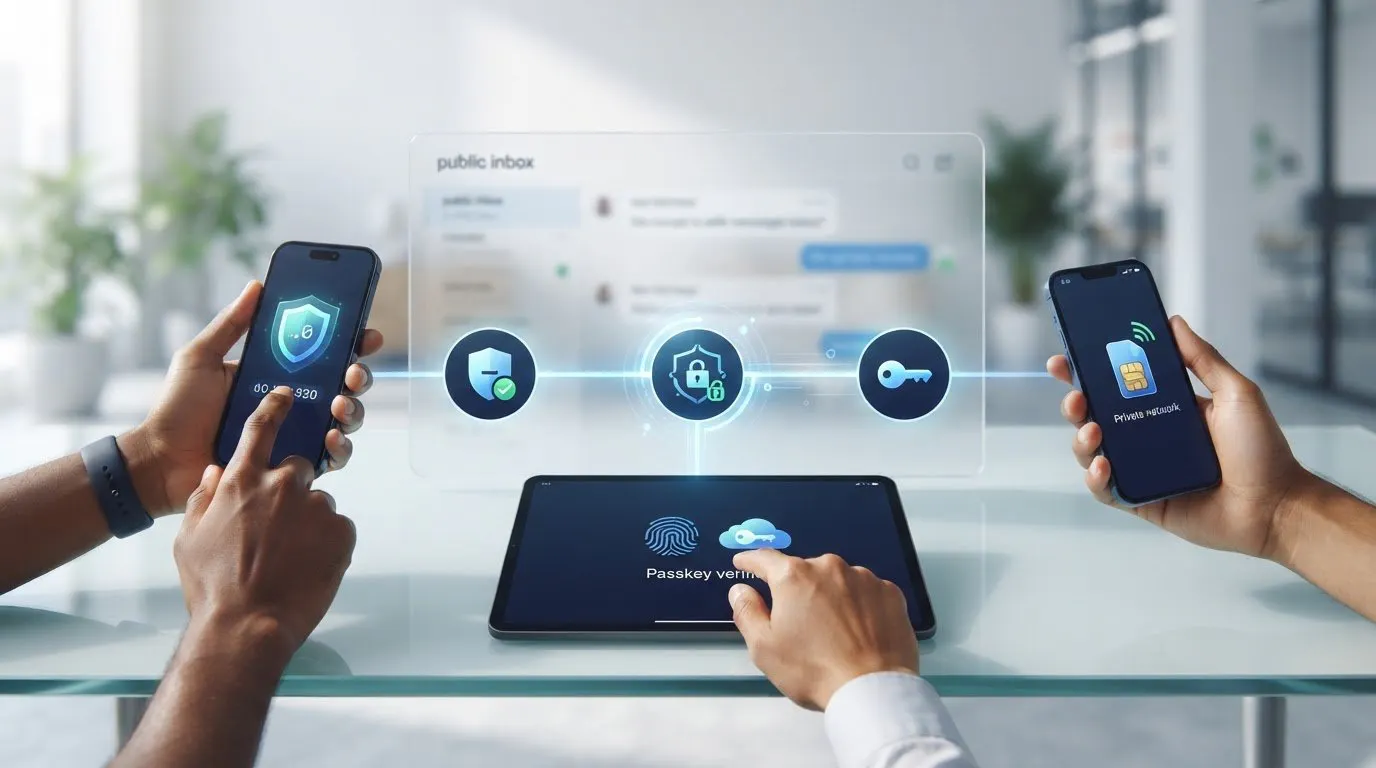
Once you clear an initial SMS onboarding hurdle, secure the account architecture immediately. SMS-based verification serves well for establishing initial trust, but ongoing access control works better through dedicated hardware or local time-based one-time password (TOTP) apps.
Navigate directly to the security panel of your newly verified account and follow these operational steps:
- Enable software-based 2FA: Bind an authenticator application or FIDO2 hardware key to the profile.
- Generate recovery codes: Download emergency offline access codes and store them in an encrypted vault.
- Revoke secondary numbers: If the platform allows, remove the initial temporary phone association once TOTP is confirmed.
- Audit active sessions: Check the device management settings to ensure no unauthorized sessions were initiated during the onboarding window.
Following this tiered operational framework eliminates the risks of exposed public feeds while shielding your primary personal SIM from unwarranted commercial tracking.
Secure Alternatives: Why Dedicated Verification Infrastructure Matters
Eliminating identity exposure requires moving away from shared web aggregators to dedicated inbound telecommunications infrastructure. The structural dangers of using free online sms services exist because those platforms combine public data distribution with unvetted VoIP lines. In contrast, purpose-built verification infrastructure routes sensitive payloads through isolated channels, guaranteeing that only the authorized account holder inspects incoming traffic.
Operating through clean, private mobile routing ensures high delivery success rates while shielding your core communication channels from commercial tracking and automated platform blacklists.
Single-Use Activations vs. Long-Term Rentals
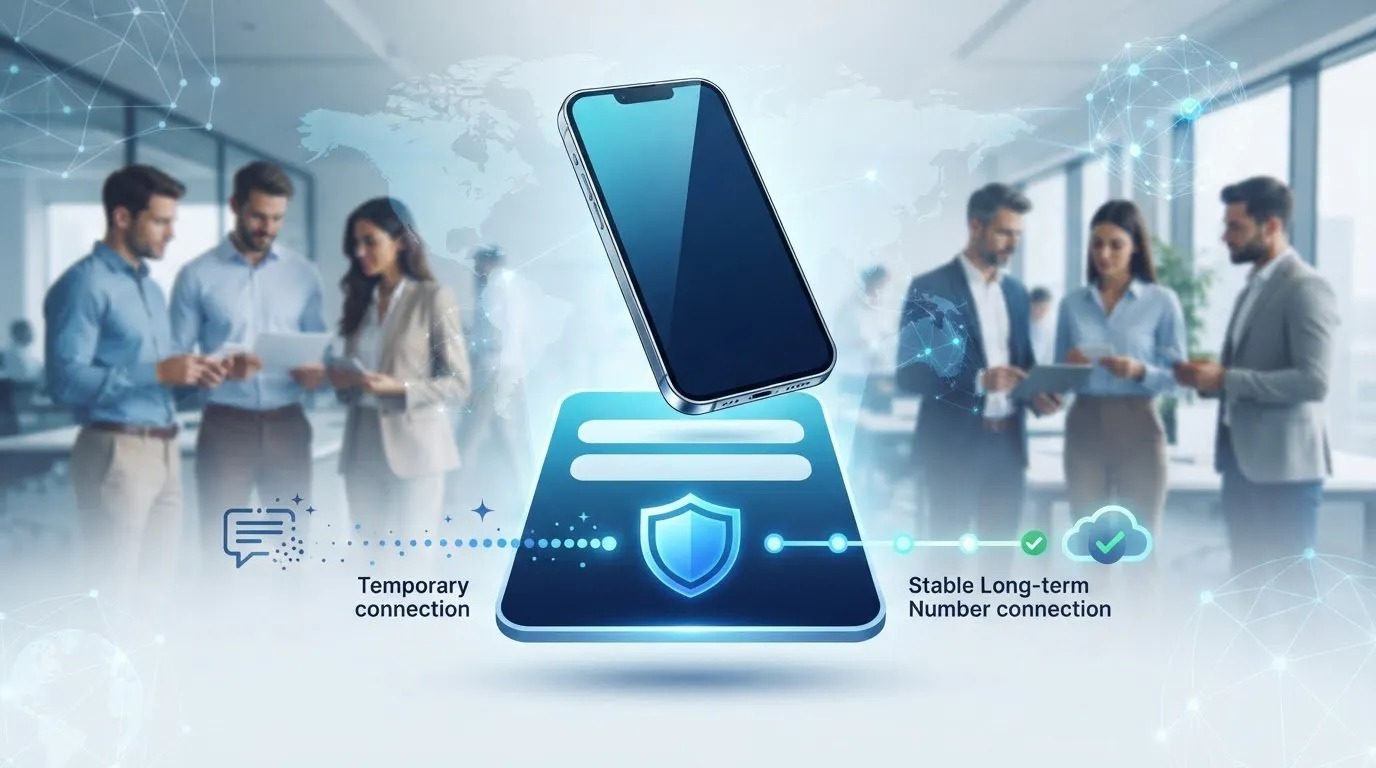
Different verification scenarios call for distinct architectural configurations. When you need to bypass a single signup gate on a secondary service, a one-time SMS Activation delivers an isolated line for a single code, reserved for 20 minutes. This setup prevents downstream reuse while keeping the incoming payload completely private.
Profiles requiring persistent access, recurring login verifications, or session refreshes demand extended continuity. Utilizing dedicated Rent Number options reserves private virtual lines for days, weeks, or months. Retaining the exact same carrier route ensures you clear secondary multi-factor checks whenever security algorithms trigger unexpected re-verifications.
Automated Workflows for Power Users and Developers
Manual verification methods quickly bottleneck multi-account testing, quality assurance frameworks, and data operations. Dedicated virtual infrastructure resolves this challenge through programmatic integration. Developers can deploy automated inbound pipelines via the proprietary Anosim API (v1) or interface with existing software stacks through the SMS-Activate Standard API protocol.
Pairing programmatic verification lines with high-trust mobile proxies from Anosim partner proxied.com produces a fully isolated operational footprint. This combination addresses both IP reputation and cellular routing criteria simultaneously, preventing velocity limits and fraud heuristics from flagging automated workflows.
Taking control of your digital identity starts with using tools built for operational confidentiality. Replace insecure broadcast feeds and take action with Anosim to secure verification workflows today.
Upgrade to Private Verification Infrastructure
Treating open web inboxes as privacy tools creates severe operational vulnerabilities. When verification codes sit exposed on public boards, credential theft and permanent account lockouts follow quickly. Understanding the critical dangers of using free online sms services makes one technical reality clear: maintaining true digital privacy requires isolated, single-tenant routing.
Securing your online footprint doesn't mean you have to surrender your personal phone number. By deploying strictly private inbound SMS verification, you shield sensitive OTP tokens from unauthorized observers while carrier-issued mobile numbers reduce the risk of automated platform registration bans. Whether you're managing a one-time profile activation or configuring ongoing developer testing environments, dedicated infrastructure provides the isolation and continuity modern platforms demand. Secure your account verifications with private virtual numbers on Anosim and establish a dependable authentication workflow today.
Frequently Asked Questions
Can anyone see my verification code on a free online SMS website?
Yes, anyone visiting the website can see your verification code instantly. Free portals operate open public feeds. When an OTP arrives, the backend gateway renders it directly in plaintext on the web page. No authentication or login barrier protects incoming messages, meaning every visitor and automated scraper tracking that URL views your security code at the exact moment you receive it.
Why do services like WhatsApp and Google reject free temporary phone numbers?
Major platforms block free temporary numbers because automated systems flag them as high-risk, shared virtual lines. Services like Google and WhatsApp run carrier lookups and track account creation velocity across known phone ranges. When a single phone number attempts hundreds of account signups or maps to a public disposable pool, automated fraud detection heuristics reject the verification request immediately.
Can someone steal my social media account if I use a free SMS receiver?
Yes, subsequent visitors can easily hijack your profile using standard account recovery workflows. This risk illustrates the critical dangers of using free online sms services. Because public numbers remain accessible indefinitely, a stranger can initiate a password reset using that line. The platform sends the recovery link to the public feed, allowing that person to change your credentials and lock you out permanently.
What is the difference between a free public number and a private virtual number?
The fundamental difference lies in message confidentiality, inbox isolation, and carrier trust scores. Free numbers operate on multi-tenant, unauthenticated feeds where anyone can read incoming text payloads. Private virtual numbers assign lines to an individual user, routing incoming OTPs exclusively to an authenticated dashboard or private API. Private infrastructure also uses mobile carrier routing, ensuring higher platform acceptance rates.
Is it illegal to use temporary SMS services for online account verification?
Using temporary SMS numbers is not illegal in most jurisdictions, but it routinely violates platform terms of service. Providing a temporary line to protect your personal SIM doesn't break telecommunications laws. However, digital services prohibit disposable numbers to curb multi-accounting, fraud, and bot networks. Violating these terms typically leads to immediate account suspensions, shadowbans, or mandatory identity challenges.
How do free online SMS websites make money if their numbers are public?
Free online SMS platforms monetize user traffic through aggressive display advertising, affiliate redirects, and data harvesting. Maintaining SIM banks and VoIP routing incurs regular operating expenses. To offset costs, operators cover their pages with intrusive programmatic ads. Some portals also compile and log historical message metadata, selling unredacted user registration trends to third-party marketing brokers.
Can I recover my account if the temporary phone number expires?
No, once a free temporary number rotates out of service, you lose all ability to retrieve subsequent security codes. Public portals cycle through numbers quickly without notice. If an online platform triggers a secondary verification challenge, session check, or password reset, you cannot access that line again. These recovery failures highlight the dangers of using free online sms services for persistent profiles.