The obvious replacement, another virtual number, may be the wrong choice. A secure alternative to Google Voice for verification depends on what the account accepts: use an authenticator app when supported, or a separate number when the service requires SMS. TOTP authenticator apps generate codes from a shared secret key, and virtual numbers aren’t accepted for every verification process.
It’s reasonable to keep verification codes separate from your personal number, but privacy and compatibility both matter. The Internal Revenue Service does not allow Google Voice and similar virtual phones, or pay-as-you-go phones, for Get Transcript Online verification.
This guide compares authenticator apps, virtual numbers, and other verification methods: how they work, where they fit, and what to consider for multi-factor authentication. You’ll also find practical ways to keep codes private and choose an option that suits the account you need to access.
Key Takeaways
- Keep verification codes private: never share a code sent to your phone, even during a transaction or interaction that seems legitimate.
- Choose the verification method the account accepts. The IRS doesn't allow virtual phones or pay-as-you-go phones for Get Transcript Online verification.
- Compare alternatives by privacy protections, multi-factor authentication support, and compatibility with the communication systems you already use.
- Assess virtual-number plans by how you’ll use the number and the limits that matter for your verification needs, rather than price alone.
Table of Contents
- Keeping verification codes private
- Which virtual phone number providers support verification codes from banks and major services?
- Which providers offer end-to-end encryption or stronger privacy protections for phone numbers?
- What are the prices and plan limits of secure virtual phone number services in the US?
- Anosim: SMS Activation
Keeping verification codes private
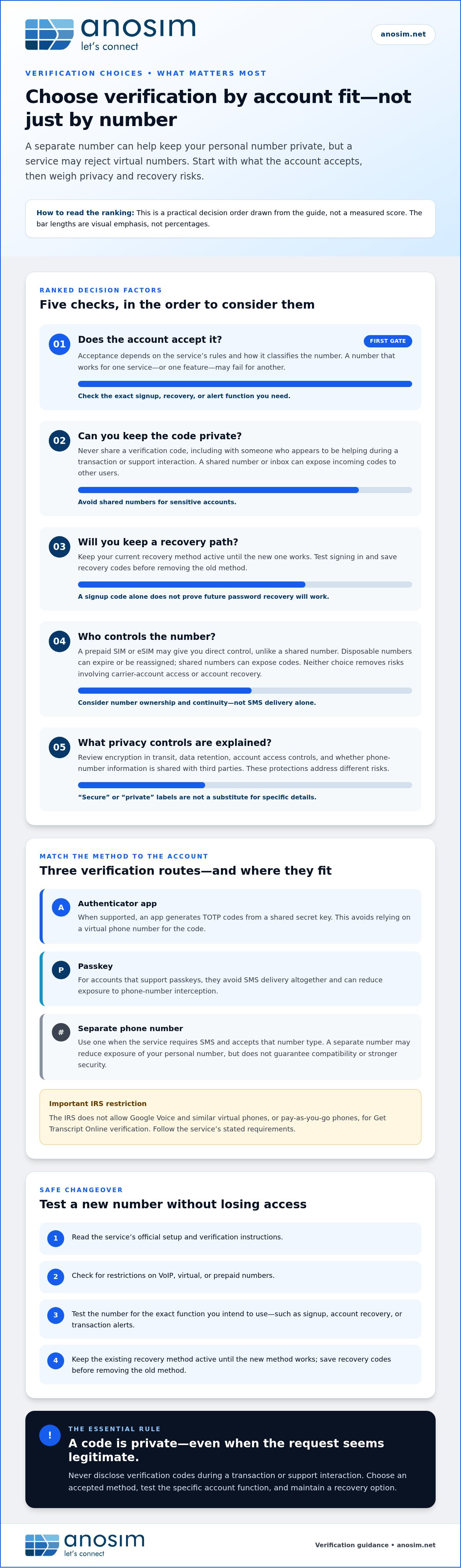
Protect your codes by choosing a method the account accepts and keeping every code private. A separate number can reduce exposure of your personal number, but it doesn’t make every sign-in method equally secure.
Providers Supporting Verification Codes
No virtual-number provider works with every bank or major service. Acceptance depends on the service’s verification rules and the number type. The Internal Revenue Service does not allow Google Voice or similar virtual phones, or pay-as-you-go phones, for Get Transcript Online verification. Before relying on a number, review the account’s help information and test its verification flow. Never share a code with anyone claiming to help.
Privacy Protections for Phone Numbers
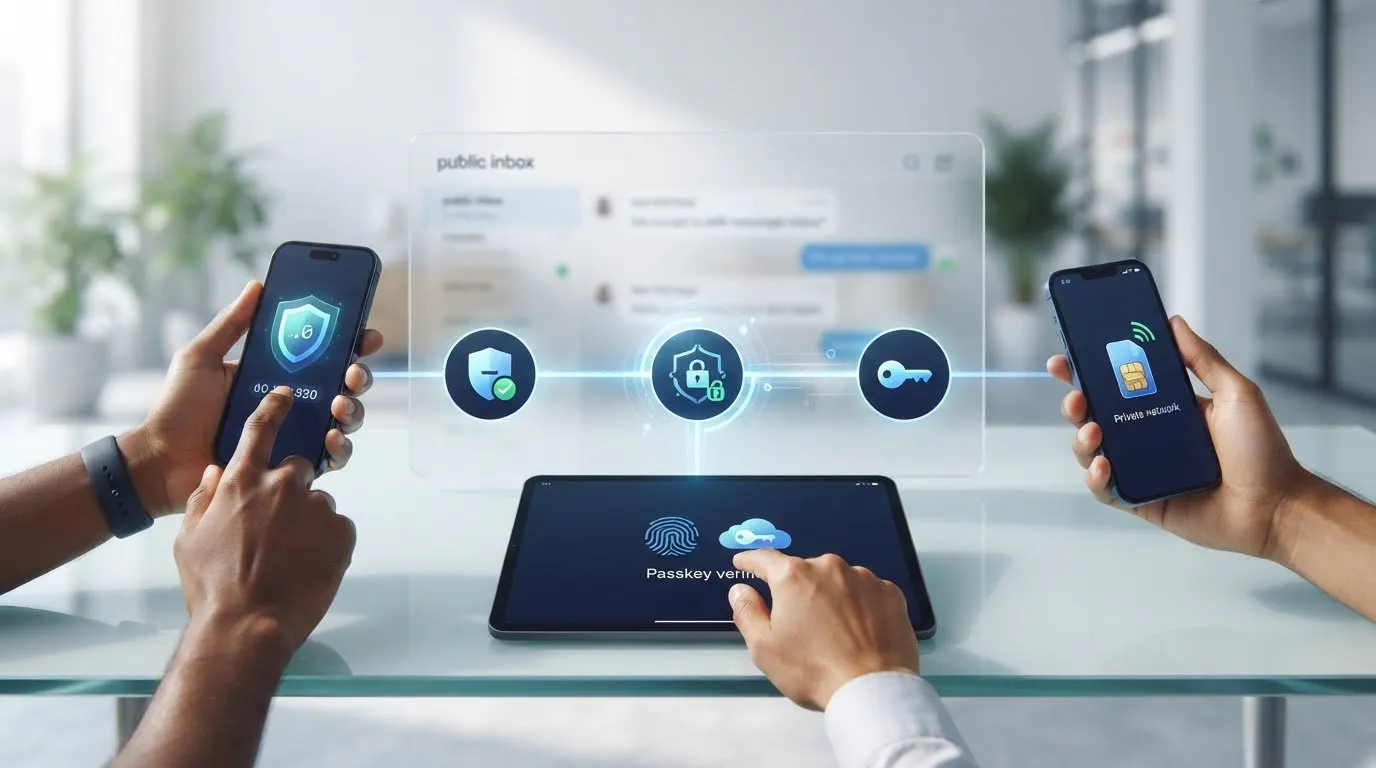
Encryption protects data in transit or storage, while verification security depends on how a code is delivered and who controls the account. Authenticator apps generate TOTP codes from a shared secret key; passkeys avoid SMS delivery altogether. For accounts that support them, passkeys or authenticator codes can reduce exposure to phone-number interception. A prepaid SIM or eSIM may give you direct control of a number, unlike a shared number, but it doesn’t remove risks involving carrier-account access or account recovery.
VoIP Compatibility and Identity Checks
VoIP acceptance varies by website, so there’s no dependable list of services that block these numbers. Check the service’s official phone-verification instructions, then enter the number during signup before making it your only recovery method. US virtual-number services also vary in their identity checks, so review the signup process and terms. If a website rejects a VoIP number, use a verification method it explicitly accepts instead.
Secondary, Disposable, and Shared Numbers
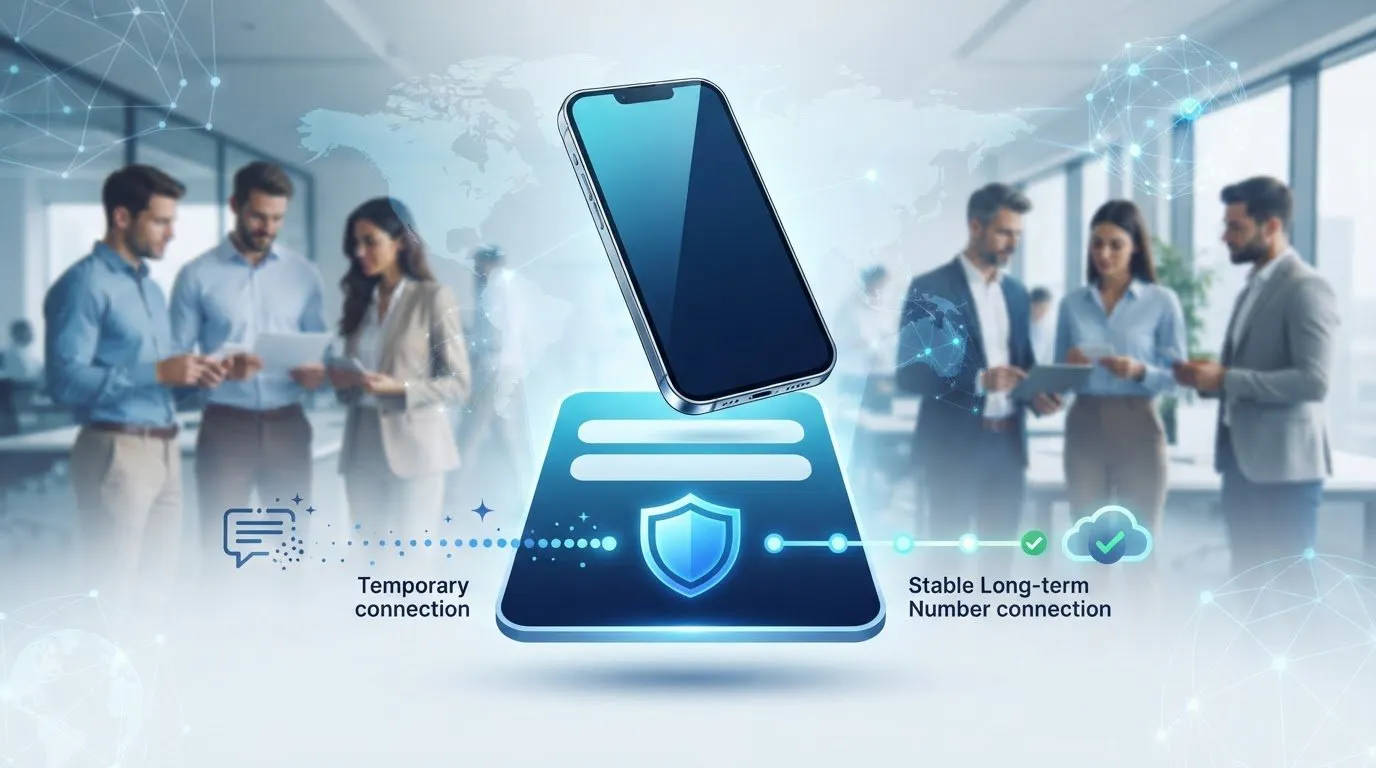
To add a secondary number safely, keep your current recovery method active. Add the new number in account settings, test signing in, and save any recovery codes before removing the old method. Disposable numbers can expire or be reassigned, while shared numbers may expose incoming codes to other users. Either risk can block future access or allow someone else to receive a reset code. Never use a shared inbox for a sensitive account, or disclose a verification code during a transaction or support interaction.
Which virtual phone number providers support verification codes from banks and major services?
No virtual-number provider supports every bank or major service. Acceptance depends on the account’s rules and how its verification system classifies the number. A number that receives a code from one service may be rejected by another, so check compatibility for the specific account you need.
The Internal Revenue Service does not allow Google Voice or similar virtual phones, or pay-as-you-go phones, for Get Transcript Online verification. This illustrates how a service can set its own restrictions. A provider’s ability to receive SMS cannot override a website’s eligibility rules.
Use this process before making a virtual number your primary login method:
- Read the service’s official account setup and verification instructions.
- Look for restrictions on VoIP, virtual, or prepaid numbers.
- Try the number during signup or in account security settings.
- Keep an existing recovery method active until the new method works.
For a bank account, review its help pages for phone-number requirements before changing security settings. If the instructions don’t clarify whether VoIP numbers are accepted, ask the bank through its own support channel about that specific number type. Don’t assume a successful signup means the number will work for future password resets.
Compatibility can vary across features within the same service. A number might receive a signup code but fail for account recovery or transaction alerts. Test the exact function you intend to use, then keep a separate recovery option where the service allows it. For tax access, follow the IRS restriction rather than trying other virtual-number providers.
There’s no universal provider list that establishes acceptance across banks and major platforms. Compare service by service: confirm whether the number type is accepted, test the intended verification step, and preserve account access while switching. This helps you find a workable option without treating SMS delivery alone as proof of compatibility.
Which providers offer end-to-end encryption or stronger privacy protections for phone numbers?
End-to-end encryption protects message content so only the communicating endpoints can read it. That protection usually belongs to an encrypted messaging service, not to a phone number itself. Standard SMS passes through telecommunications networks, so choosing a virtual-number provider doesn’t automatically make an incoming code end-to-end encrypted. Consider message encryption separately from how a provider handles your number and account data.
Compare providers by the specific privacy controls they describe, not labels such as “secure” or “private.” Look for clear information about encryption in transit, data retention, account access controls, and whether phone-number information is shared with third parties. These protections address different risks: encryption can limit exposure during transmission, while limited retention can reduce how much historical data remains available.
- Number access: Check whether the number is dedicated to your account or shared with other users.
- Data handling: Read the privacy terms for how account details and message records are stored or disclosed.
- Account security: Use a strong, unique password and enable multi-factor authentication on the provider account.
- Recovery: Keep a separate recovery method so losing access to the number doesn’t lock you out.
Start by identifying your main concern: protecting message content, limiting exposure of your personal number, or preventing unauthorized account access. If you want to keep your personal number off a signup form, a separate number can help, but it doesn’t hide the verification activity from the service receiving the code. If content confidentiality is essential, use an encrypted or non-SMS authentication method supported by the account.
Before choosing a provider, read its privacy policy and security information, then identify which protections apply specifically to SMS messages and phone-number records. Interpret encryption claims carefully: a provider may encrypt stored data without offering end-to-end encryption for SMS. No single feature addresses every privacy concern, so match the protection to the information you need to safeguard.
What are the prices and plan limits of secure virtual phone number services in the US?
Compare the full billing model, not just the displayed starting price. A US virtual-number service may charge by rental period, message, or a plan that combines access with usage. The right comparison depends on how long you need the number, whether you expect repeated codes, and whether the service charges for renewals. For example, a number used for one account setup has different requirements from one kept for ongoing recovery.
Check what each plan includes before choosing it. Focus on the details that affect your task, such as number type, message access, rental duration, renewal rules, and the services you need to verify. A low initial charge may be less useful if the number expires before setup is complete or can’t receive a later recovery code.
- Duration: Match the rental period to the account’s expected verification and recovery needs.
- Usage: Check whether the plan covers one incoming code or repeated messages.
- Renewal: Review how continued access is billed and what happens when a rental ends.
- Restrictions: Confirm the number type works for the service you intend to use.
Make a simple comparison for each option: note the billing unit, included access, renewal conditions, and usage limits. Compare a short-term rental with a longer plan only after determining whether the account needs future recovery access. Don’t choose by price alone; compatibility and continued access can matter more than the initial charge.
For a quote-based service, pricing is provided after you request a quote. Relevant factors include the number type, rental duration, and intended use. Keep the comparison focused on your verification task, and don’t treat a plan’s headline price as proof that it supports a particular bank or platform. A cost-effective choice is one whose limits suit the account’s access and recovery requirements.
Pricing may depend on rental period, message usage, or a plan combining access and usage. Quote-based services provide pricing after a request. Compare number types, message access, rental duration, renewals, and usage limits to find a plan that suits your verification and recovery needs.
Anosim: SMS Activation
Anosim offers SMS Activation for receiving verification codes when a service accepts SMS to a virtual number. If you need access beyond a single activation, Rent Service and Rent Number provide options for number rentals. Rent Mobile VoIP is another option for virtual-number use cases. Choose based on the account’s verification method and whether you need a one-time code or continued access. Virtual numbers aren’t accepted everywhere, so use an account’s supported method when its rules exclude them. For example, the Internal Revenue Service excludes virtual phones for Get Transcript Online verification. These services are designed for receiving verification codes, not outgoing SMS or outgoing calls; only numbers from the Rent Mobile VoIP service can also receive calls. To explore SMS Activation, visit Anosim’s SMS Activation page.
Make Your Next Verification Choice Deliberate
Before changing account settings, match each account with a verification method it supports. Keep a recovery route available and avoid relying on a number you might lose access to. This preparation helps protect both account continuity and privacy.
A secure alternative to Google Voice for verification isn’t simply a different number. It’s a considered match between the account’s accepted methods, your privacy needs, and how you’ll maintain access over time. If SMS activation or a rented number suits your use case, Anosim offers these options while recognizing that no single solution works everywhere.
Define the account or workflow you’re setting up, then take the next step with a clear use case. Contact Anosim about private verification to discuss the options relevant to your needs. With a thoughtful setup, you can keep verification practical and make a more informed choice.
Frequently Asked Questions
What secure alternatives to Google Voice can receive SMS verification codes?
A secure alternative to Google Voice for verification could be a virtual-number service, a separate mobile number, or an account’s supported non-SMS method. If a website specifically requires SMS, an authenticator app can’t receive that text, so choose a number-based option. A virtual number, for example, can separate signup messages from your personal line. Check which number types the account accepts before changing its recovery settings.
How do Google Voice alternatives protect SMS messages and account data?
Protection depends on both the number provider’s data practices and your account security settings. Encryption can protect data in transit or storage, but that doesn’t necessarily mean SMS is end-to-end encrypted. Review how the provider handles message records and personal information, use a unique password, and secure the email account used for recovery. Anosim support never asks for a password, a 2FA code or a recovery phrase.