
Account count alone doesn’t explain every suspension; how the accounts are used matters. To prevent account suspension for multiple accounts, start with the platform’s rules. Simultaneous use may be treated as cheating, while creating or repurposing an account to get around restrictions can count as ban evasion. A suspension can block access and further activity.
A notice can be disruptive, especially when you rely on an account for selling or other online activity. It helps to know that suspension decisions can relate to the type, severity, or frequency of a violation, and that a suspected account compromise may also lead to a temporary restriction.
This guide explains what suspension means, why platforms issue notices, and how multiple accounts can create risks in different settings. It also covers what to do if you receive a notice and how virtual numbers and SMS activation can support separate verification needs without changing platform rules or guaranteeing that an account won’t be restricted.
Key Takeaways
- Read a suspension notice closely to identify the stated reason and the account activity involved before deciding how to respond.
- Distinguish temporary restrictions from permanent suspensions, and consider the type, severity, and frequency of the activity at issue.
- Review each platform’s account policies and keep separate accounts tied to clear, legitimate purposes rather than using them to bypass restrictions.
- For a separate verification need, Anosim’s SMS Activation can provide a virtual number for receiving verification codes; it does not override a platform’s account rules.
Table of Contents
- Suspension notices and reasons
- What is an Account Suspension?
- What are the rules for multiple accounts on major platforms in the United States?
- What legitimate reasons allow someone to create multiple accounts?
- Anosim: SMS Activation
Suspension notices and reasons
A suspension notice identifies restricted access or activity and may give a reason. Multiple accounts become relevant when their use conflicts with the platform’s rules.
Platform Rules for Multiple Accounts
Platform rules determine whether multiple accounts are allowed and how they may be used. Pokémon GO identifies playing with multiple accounts simultaneously as cheating that can result in suspension. On marketplaces, sellers may risk suspension for unpaid selling fees, unfulfilled refund reimbursements, missing order tracking, or unresolved buyer disputes. These examples show why the platform and account activity matter more than account count alone.
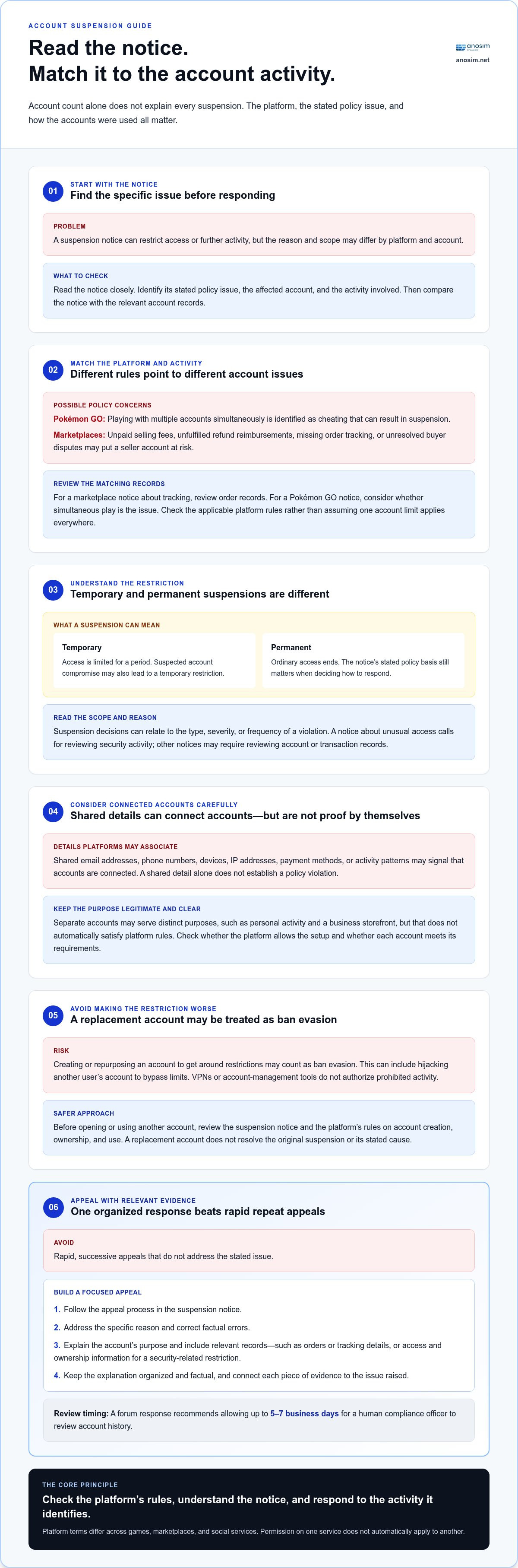
Read the notice for the stated policy issue, then compare it with the activity on the affected account. A marketplace notice about missing tracking calls for reviewing order records; a Pokémon GO notice may concern simultaneous play. Submit one comprehensive appeal rather than rapid, successive appeals. A forum response recommends allowing up to 5-7 business days for a human compliance officer to review account history.
Legitimate Reasons for Multiple Accounts
Separate accounts may serve distinct purposes, such as keeping personal activity apart from a business storefront, but that purpose doesn’t automatically satisfy platform rules. The key questions are whether the platform allows the arrangement and whether each account meets its requirements. For example, separate marketplace accounts for different business activities still require resolving buyer disputes and providing order tracking where required.
Before creating another account, read the platform’s rules on account ownership and use. Keep each account’s purpose clear, and don’t use a new or repurposed account to get around a restriction. Platforms may treat this as ban evasion, including when someone hijacks another user’s account to bypass limits.
Account Links Across Shared Details
Shared email addresses, phone numbers, devices, IP addresses, or payment methods can signal that accounts are connected. Can multiple accounts be linked through these details? Yes. A platform may associate accounts using shared identifiers or activity patterns, though a shared detail alone doesn’t establish a policy violation.
VPNs and account-management tools can change or obscure network details, but they don’t authorize prohibited activity. Rapidly changing access patterns or tool-assisted activity may complicate an account review; using tools to evade a restriction can count as ban evasion. Follow platform rules and respond to notices with relevant account records.
What is an Account Suspension?
A marketplace suspension disables account access and blocks further activity through that account. Depending on the platform’s decision, some or all functions may be restricted. A temporary suspension limits access for a period; a permanent suspension ends ordinary access. Either can disrupt account activity, so pay attention to the notice’s reason and scope.
Temporary and permanent suspensions can reflect the type, severity, or frequency of a user’s violations. A temporary restriction may also follow suspected account compromise, limiting use of the account for malicious activity. For example, a notice about unusual access calls for reviewing security activity, while a lasting suspension requires understanding the stated policy basis before responding.
To understand account limits, consult the platform’s official terms, help center, and account-enforcement guidance. Search for rules on account creation, ownership, and use, then compare the exact wording with your intended activity. This is more useful than assuming one account limit applies across marketplaces, games, and social platforms.
To appeal, follow the process in the suspension notice and address its specific reason. Include relevant account records, such as order or tracking details for a marketplace, or access and ownership information for a security-related restriction. Explain the account’s purpose, correct factual errors, and link each piece of evidence to the issue raised. Keep your explanation organized and factual.
Creating another account to replace a suspended one can lead to further restrictions if the platform sees it as an attempt to evade enforcement. Creating a new account, repurposing an existing one, or hijacking another user’s account to bypass restrictions may count as ban evasion. Before opening or using another account, review the notice and applicable rules. A replacement account doesn’t resolve the original suspension or its stated cause.
What are the rules for multiple accounts on major platforms in the United States?
There isn’t one account-count rule shared by every platform in the United States. Each service sets its own terms, so a game’s rules may differ from a marketplace’s seller-account requirements. Start by identifying the platform, account type, and activity involved. Don’t assume permission on one service applies to another.
Compare the rules for personal accounts, business accounts, and accounts used for separate purposes. Pokémon GO, for example, treats playing with multiple accounts simultaneously as cheating that can result in suspension. Marketplace seller rules focus on account obligations and transactions. These examples show why account count alone doesn’t explain the applicable policy; permitted use and conduct matter.
To assess a proposed setup, find the platform’s current terms and account guidance. Search for rules on creating additional accounts, managing accounts for others, account ownership, and restrictions after enforcement. Then match each account to a distinct purpose. A business seller planning separate storefront identities, for example, should pay close attention to rules on seller accounts and order handling.
- Check the account category: personal, seller, or game accounts may have different terms.
- Check the activity: simultaneous gameplay and marketplace selling raise different policy questions.
- Check enforcement language: note whether restrictions also cover accounts used to bypass a suspension.
Keep a record of the rule you relied on and the account purpose it covers. If the platform updates its guidance, review the terms before changing how you use an account. A setup that follows one service’s rules may still conflict with another’s. For a marketplace seller, accurate order records address transaction obligations, not permission to operate multiple accounts.
Use the platform’s own policy wording to guide your decision rather than copying practices from another service. To prevent account suspension for multiple accounts, identify the governing platform rule first, then keep each account’s activity within its stated limits.
What legitimate reasons allow someone to create multiple accounts?
A legitimate purpose explains why someone wants separate accounts, but it doesn’t establish permission. The platform’s policy determines whether the setup is allowed. For example, separating personal activity from a business presence may help organize messages and records, but the account rules still determine whether both accounts can operate.
Distinct roles can also make account separation useful. A business might want one account for customer-facing updates and another for internal administration. That arrangement works only if the platform permits those account types and the person managing them follows its requirements. Treat the purpose as context, not an exemption from the rules.
- Personal and business activity: Keep private conversations separate from a storefront, if the platform allows both.
- Different brands: Separate identities may help organize distinct business operations, subject to account policies.
- Work roles: A team may need separate access for administration and public communication, where the service supports that setup.
- Testing or development: A test account can keep experiments apart from live activity, if the platform permits test accounts.
Before creating an account for any of these reasons, find the platform’s terms on account ownership, business use, and additional profiles. Match the proposed setup to the relevant rule. For instance, if the terms distinguish personal profiles from seller accounts, use the account type that fits the activity rather than duplicating a profile to avoid its limits.
Keep the purpose consistent after setup. A business account used for customer communication shouldn’t become a way around a restriction on another account. Maintain clear access records and use each account for its stated role. If the platform offers a designated business or team feature, use that structure instead of assuming separate logins are acceptable.
In short, separating accounts for organization, business identity, team responsibilities, or testing can be a reasonable purpose, but platform permission is decisive. Read the applicable terms before acting, and don’t create or repurpose accounts to evade enforcement. A clear purpose and policy-aligned use help reduce avoidable confusion during account reviews.
Anosim: SMS Activation
Anosim offers SMS Activation and Rent Number services to receive account verification codes through virtual numbers. If you need a separate number for a distinct account purpose, these services can support verification without changing platform rules or preventing a suspension caused by prohibited activity.
Choose this option when a service requires phone verification and you want to keep that process separate from your personal number. Use each account only as the platform allows, and don’t treat a different number as a way to bypass an existing restriction. Verification supports account setup; it doesn’t establish permission to create or operate multiple accounts.
Visit anosim.net to explore SMS Activation and Rent Number options.
Make Account Management Part of Your Routine
Build account decisions into your regular digital operations instead of treating them as one-time setup choices. Assign someone to review account purposes, access, and platform terms when your business changes how it uses a service. This creates a clear record of why each account exists and helps keep its use aligned with current requirements.
A practical approach to prevent account suspension for multiple accounts starts with deliberate account management, not concealment. Keep verification separate from the decision about whether an account is permitted. Anosim offers Rent Service for users who need one service on a rented number over a longer period, with unlimited SMS for that service during the rental.
If you want support with a virtual-number need, contact Anosim for help. Choose a setup that supports your work while keeping platform rules central. A considered process gives you a stronger basis for managing accounts confidently.
Frequently Asked Questions
How can I manage multiple accounts without triggering automated suspension?
Use only accounts the platform permits, and keep each account’s purpose and access organized. For a small business, assign authorized staff through the platform’s team or role features when available, rather than sharing credentials among unrelated users. Keep activity records, avoid bulk actions that violate platform rules, and respond promptly to verification requests. No technical setup makes prohibited account use acceptable.