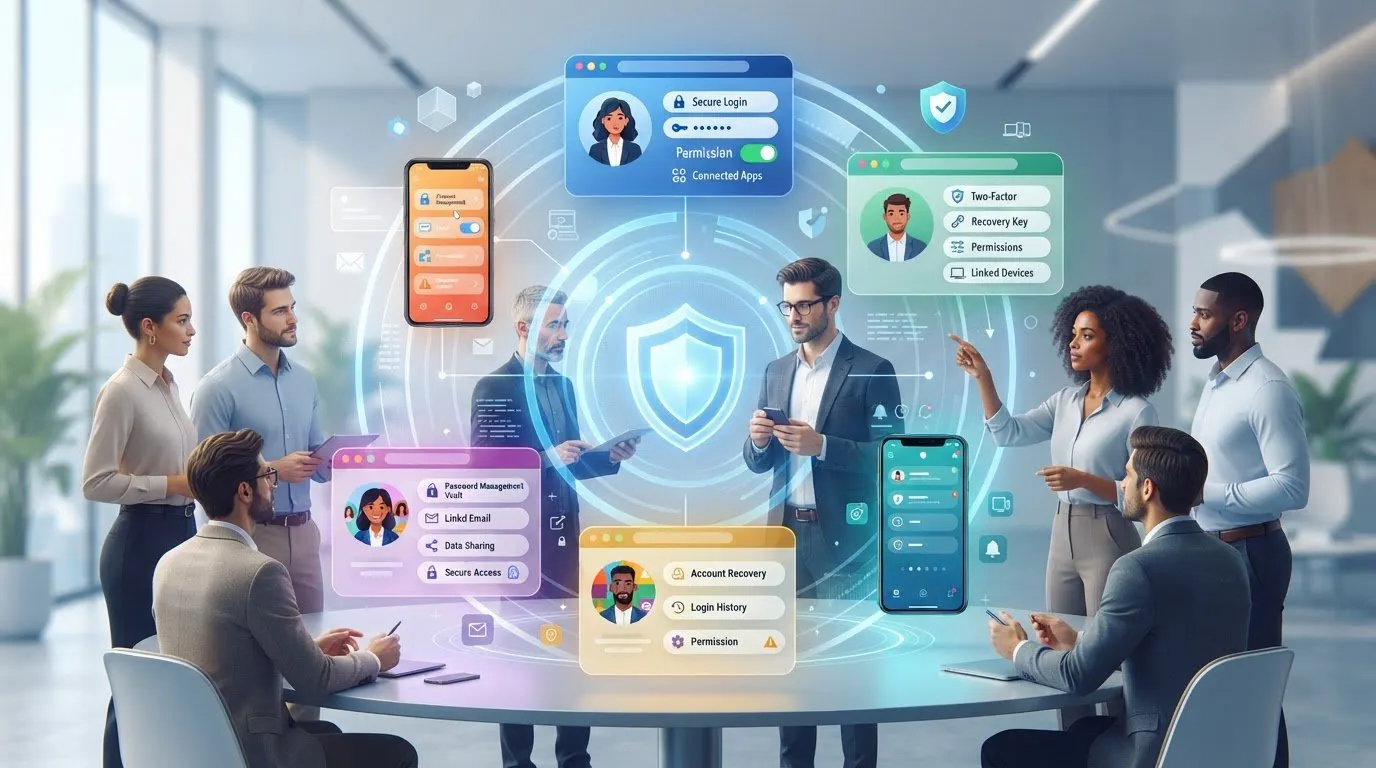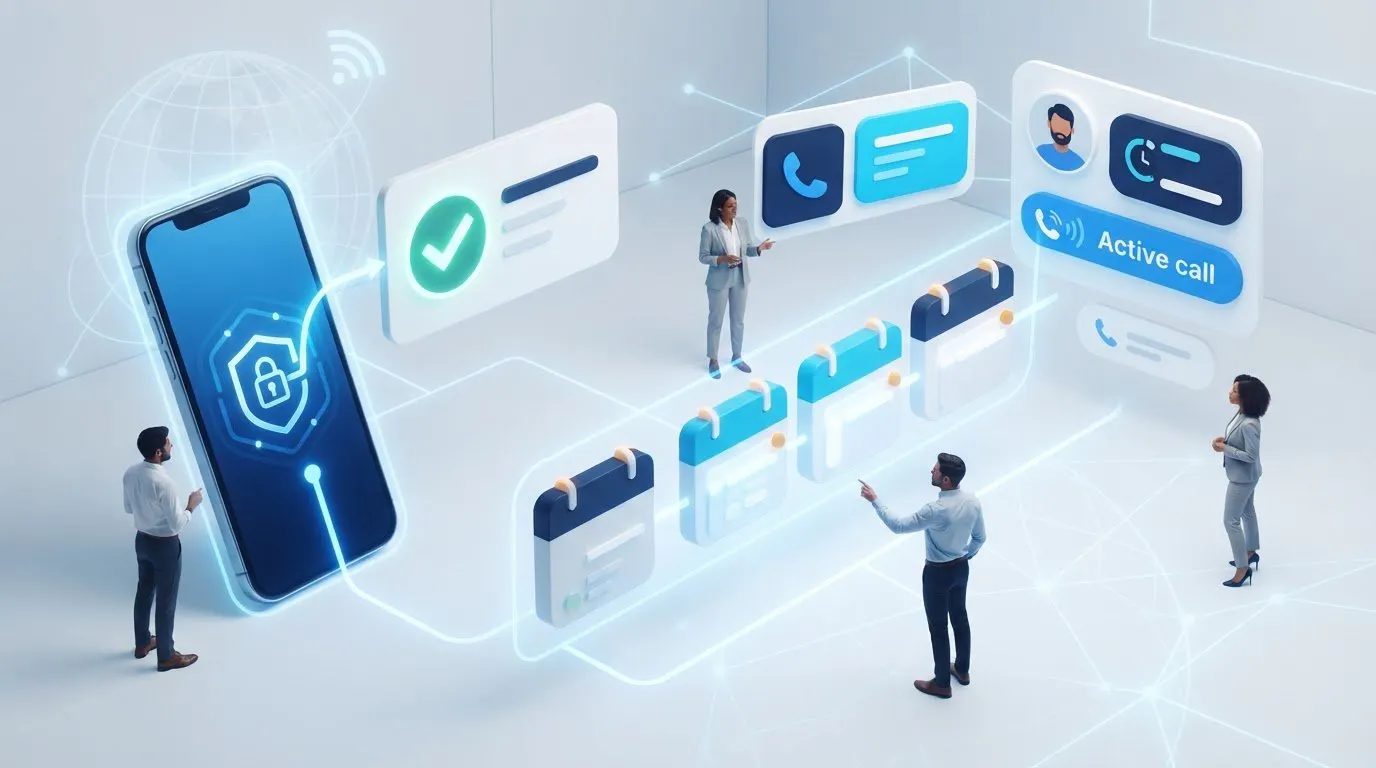
A project that lasts a month may need only one verification code, while a task that takes a day could require several follow-up messages. Choosing a virtual number for short-term projects by calendar duration alone can mean paying for access you don’t need or losing access before the work is finished.
If you’re deciding between one-time SMS activation and a number rental, start with the message pattern. A single verification may suit activation; repeated codes or ongoing inbound SMS access call for a rental that keeps the number available longer. Match access to the workflow, not just the project end date.
This guide compares the options by project duration, verification frequency, access continuity, and team needs. You’ll also learn when API integration may fit a supported automated workflow and what to consider before connecting a number to a process. Use these criteria to choose an access model that keeps required messages within reach without extending access unnecessarily.
Key Takeaways
- Choose a virtual number for short-term projects based on how often you need SMS and how long messages must remain accessible, not just the project’s calendar length.
- Use one-time SMS activation for a defined, single verification need; consider a rental when the workflow may require follow-up messages.
- Compare manual access with API-supported workflows by considering team involvement and integration requirements.
- Before assigning a number, map the workflow, estimate repeat messages, test the process, and review the target platform’s rules.
- Match Anosim SMS activation or number rental to the project’s inbound SMS needs and access duration.
Table of Contents
- When a Virtual Number for Short-Term Projects Makes Sense
- One-Time SMS Activation or a Rented Virtual Number?
- Compare Short-Term Number Options by Access and Workflow
- How to Choose and Prepare a Number for a Short Project
- Use Anosim for Inbound SMS Access During a Project
When a Virtual Number for Short-Term Projects Makes Sense
A virtual number for short-term projects is a number used to receive project-related SMS online, such as a verification code for a test account or an update tied to a temporary workflow. Virtual numbers can work in different ways; the Virtual number overview explains the broader concept. This guide focuses on inbound SMS access, not calling features.
Using a separate number can keep project messages apart from a personal number. It may suit software QA, a limited-duration campaign, or an account workflow with a defined start and finish. It does not make a workflow anonymous or guarantee that a third-party service will accept the number.
What makes a number suitable for a time-limited project?
Assess three things: how often messages are expected, how long you need to retrieve them, and who must access them during a handoff. A project with one verification event may need only brief access. But a fixed end date doesn’t mean one-time access is enough if the workflow includes later sign-ins, resets, or review messages.
For example, a QA tester might verify an account during setup, then need another code when a teammate takes over testing. That repeat message changes the access requirement, even if the project lasts only a few days. Map the full message sequence and review the target platform’s rules before relying on the number.
Which project workflows may need inbound SMS?
Inbound SMS can support controlled testing when a team needs to observe a verification step without using a personal number. It can also separate messages for temporary operations, such as a campaign account or a time-bounded project login. Decide who will check incoming messages and whether access must continue through a handoff.
- Software testing: Receive project-related codes while checking a defined account flow.
- Temporary operations: Keep campaign or project messages distinct from personal communications.
- Team handoffs: Preserve access for the people who still need inbound messages during the work.
Privacy-conscious use means limiting exposure of personal contact details and managing project access deliberately. It is different from using a number to evade a service’s rules, restrictions, or verification controls. Review the target service’s terms and follow applicable privacy requirements, especially when multiple team members may see incoming messages. If a platform does not permit this type of number, choose a compliant workflow instead.
One-Time SMS Activation or a Rented Virtual Number?
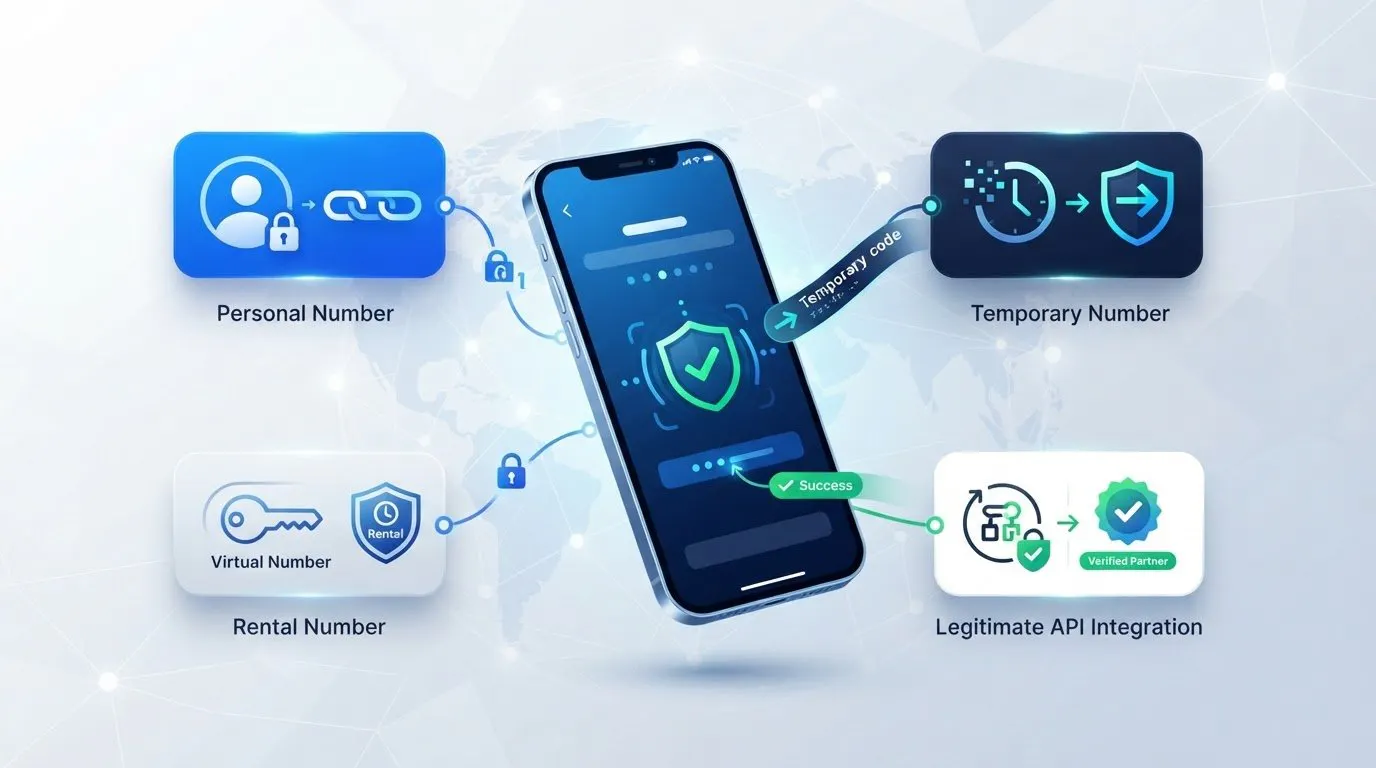
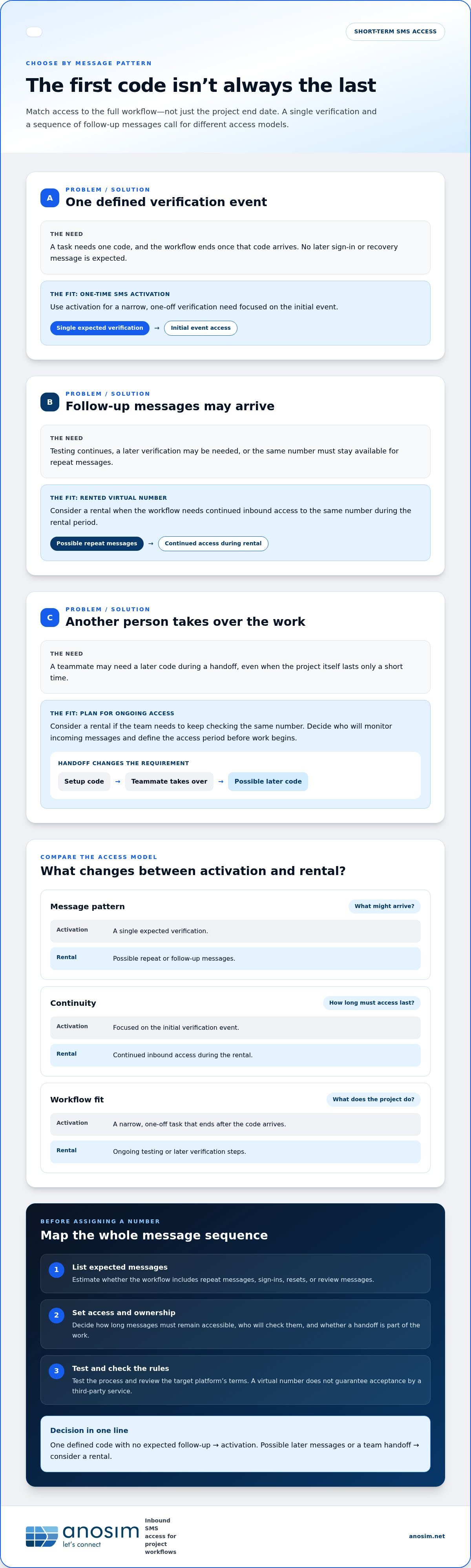
Choose based on what happens after the first code arrives. One-time SMS activation suits a defined verification event; renting a number is more appropriate when the project may need later messages sent to that same number. The best virtual number for short-term projects covers the full message pattern without leaving a continuity gap.
- Message pattern: one-time SMS activation: a single expected verification; rented virtual number: possible repeat or follow-up messages.
- Continuity: one-time SMS activation: focused on the initial event; rented virtual number: supports continued inbound access during the rental.
- Control: one-time SMS activation: limited to the activation workflow; rented virtual number: more suitable when the project needs to keep checking the same number.
- Workflow fit: one-time SMS activation: a narrow, one-off task; rented virtual number: ongoing testing or a workflow with later verification steps.
When is SMS activation enough?
Activation is the clearest fit when a task calls for one verification code and the workflow ends once it arrives. For example, a team validating a single sign-up step may not need continued access if no later sign-in or recovery message is expected. Anosim’s SMS activation lets you receive verification codes for this kind of one-time inbound need.
Consider the full workflow before choosing. If the service might send a later code to the same number, activation may not provide the continuity you need. Even a short project can involve multiple message events.
When does a project need a rented number?
Consider a rental if testing will continue, the account may need repeated verification, or another team member must access inbound messages during a handoff. Define the access period and who will monitor messages before work begins. This helps prevent a situation where the project is active but the required number is no longer accessible. Anosim number rental supports extended inbound SMS access.
A rental does not guarantee that a third-party platform will accept the number. Platform rules and verification behavior can vary, so review the target service’s terms before building the number into a workflow. A virtual number also isn’t automatically a VoIP phone service; the FCC’s overview of Voice over Internet Protocol (VoIP) explains that technology separately from this SMS-focused comparison.
These options address temporary project needs. For ongoing business communications and broader enterprise telecom infrastructure, providers like ITSthe1 Solutions offer comprehensive technology systems suited for permanent operations instead.
Compare Short-Term Number Options by Access and Workflow
Project duration is only one part of the decision. Also consider how often messages may arrive, whether the same number must remain accessible, who needs to retrieve codes, and whether the workflow is manual or integrated with software. These factors help match a virtual number for short-term projects to the actual work rather than the calendar alone.
- One-time activation: message pattern: one expected verification event; access and team workflow: focused access for a single task; limited fit for later messages; best fit: a manual, one-off check.
- Rented number: message pattern: repeat or potentially recurring inbound SMS; access and team workflow: continued access can support monitoring and handoffs; best fit: ongoing testing or a multi-step project.
- Manual workflow: message pattern: messages checked by a person as needed; access and team workflow: works when team involvement is occasional and simple; best fit: small or low-frequency tasks.
- API-supported workflow: message pattern: SMS activity forms part of a supported software process; access and team workflow: can reduce manual steps; integration needs technical setup; best fit: repeated or system-connected tasks.
How should project duration shape the choice?
Map the project from setup through final review, not just to launch. Mark when verification may happen during testing, when a reviewer may need to repeat a step, and whether a teammate needs access after handoff. Compare that timeline with expected message frequency and the need to keep the same number available. A short project with several milestones may need more continuity than a longer task that generates only one code.
For example, a test cycle might include initial setup, a later login check, and a reviewer’s final pass. Even if the active testing window is brief, messages could be needed at each stage. A timeline makes those requirements visible before the workflow depends on access.
When does API access matter for a short-term project?
If someone can check messages directly without disrupting the work, a manual process may be sufficient. If inbound SMS is part of a repeatable software workflow, API access may reduce manual handling in supported use cases. Anosim API (v1) and SMS-Activate Standard API are integration options. Review the API documentation for Anosim API (v1) to assess supported actions before designing an implementation. Don’t assume an endpoint or response format without checking the documentation.
Keep the service category aligned with the task. SMS activation and number rental address inbound SMS needs. Mobile VoIP is a distinct option for projects that specifically require VoIP functionality, not a substitute for an SMS access plan. Neither integration nor manual access guarantees that a third-party platform will accept a number. Check its rules before putting the process into production.
How to Choose and Prepare a Number for a Short Project
A brief plan prevents a temporary SMS workflow from becoming an access problem during testing or handoff. Before choosing a virtual number for short-term projects, document what the number must receive, who needs access, and when that access can end. Use this sequence to match the number choice to the project’s requirements.
What should the project brief specify?
Record the target workflow, expected SMS events, authorized users, and the period messages may still be needed. Distinguish a single verification from a process that could generate later codes. Include the target platform’s rules and the privacy requirements that apply to the messages and any account data they contain.
- Define the workflow. Note the service or project process that requires inbound SMS, what the message supports, and who is accountable for it.
- Estimate message recurrence. List expected verification points, including testing, review, account recovery, or other planned steps. If later messages are possible, account for them rather than planning only for the first code.
- Select the access type. Match a one-time verification need to SMS activation, or consider number rental if the same number must remain accessible for subsequent inbound messages.
- Test the intended process. Run a controlled test before relying on the number in a live workflow. Confirm the team knows how to retrieve messages and that the process complies with the target service’s terms. A platform’s acceptance isn’t guaranteed.
- Review and close out. Check whether the workflow changed, whether access is still required, and whether project dependencies can be removed. Set the end date after the final verification and handoff needs, not automatically at launch or project delivery.
How can teams reduce setup and handoff friction?
Assign one project owner to manage access, coordinate message handling, and record who is authorized to use the number. Keep that record with the project brief so a teammate taking over knows where responsibility sits. Limit access to people who need it, and avoid sharing verification messages through channels that expose them unnecessarily.
Build testing and closeout into the project plan. The test should confirm the team’s procedure, not assume every third-party platform will accept the number. At closeout, remove number-dependent steps from documentation and automated workflows, notify the project owner that the access period has ended, and confirm whether any planned review or handoff still requires inbound messages.
Consult the Anosim FAQ for general account or service setup questions. A clear workflow, named owner, and defined end point make it easier to keep a short-term number aligned with the project.
Ready to plan inbound SMS access for your project? Explore Anosim’s number options and choose an access model that fits the workflow.
Use Anosim for Inbound SMS Access During a Project
Anosim’s inbound SMS options support different project patterns. Choose SMS activation when the workflow calls for one defined verification event. Choose number rental when later inbound messages may be needed and the same number must remain accessible during the work. This distinction aligns a virtual number for short-term projects with the actual message and continuity requirements.
Which Anosim option fits the project pattern?
For a single verification step, Anosim SMS activation provides a focused way to receive a verification code. It fits a task where the workflow is complete after that inbound message and no further access to the number is required.
If the project includes repeated tests, later sign-ins, or a team handoff that may require additional codes, Anosim number rental supports continued inbound SMS access. Plan around the messages the project may need, rather than choosing solely by its expected end date. Neither option guarantees that a third-party platform will accept a virtual number, so review its applicable terms before using the number.
For a supported automated workflow, developers can consider Anosim API (v1) or SMS-Activate Standard API. API access may fit a process that benefits from integration, but supported actions and implementation details should guide the design. Review the Anosim API (v1) documentation before building an integration, and avoid assuming capabilities that aren’t described there.
What should readers do before starting?
First, confirm that the workflow follows the target platform’s terms and applicable privacy requirements. Then identify whether the task needs one verification event or ongoing inbound message access, and select activation or rental accordingly. Set expectations within the team about who will monitor messages and when the project no longer needs the number.
Anosim provides inbound SMS services. It does not provide physical SIM delivery, outgoing SMS, or outgoing calls; only numbers from the Rent Mobile VoIP service can also receive calls. Keep the service aligned with the project: if you need to receive a verification code or other inbound SMS, choose the access model around that need. If the workflow depends on outgoing communication, an inbound SMS option won’t meet that requirement.
The decision is straightforward: use activation for a one-time inbound verification need, and rental when continued access to later messages matters. For automated processes, consult the current API documentation before implementation. Review platform rules, plan the access window around project handoffs, and choose based on the message pattern. Explore Anosim’s SMS services to find an inbound SMS option for your project.
Set Up Your Next Project with the Right Access Plan
Before work begins, turn your SMS requirement into a clear project decision: who needs access, which messages matter, and when the workflow is genuinely complete. Planning helps prevent a temporary setup from becoming a lingering dependency or leaving a teammate without a message they still need.
For a virtual number for short-term projects, Anosim’s inbound SMS activation and number rental address different access patterns. If your workflow includes integration, Anosim API (v1) and SMS-Activate Standard API provide documented paths for supported use cases. Keep the implementation aligned with the current documentation and the target platform’s terms.
Choose the access model that fits the project, then define ownership and closeout before relying on it. Explore Anosim’s SMS services to plan your next step with a practical access approach.
Frequently Asked Questions
Can a virtual number receive SMS for a short-term project?
Yes, a virtual number can receive inbound SMS for a short-term project if the number service and target platform support that use. Before setup, identify whether messages are needed for one step or several, such as initial access followed by a test reset. Review the platform’s terms, assign responsibility for monitoring messages, and plan how the team will handle a code arriving during a handoff. Don’t use a number to bypass restrictions.
Is SMS activation different from renting a virtual number?
Yes. SMS activation is generally intended for a defined, one-time verification, while a rental suits workflows that may require later inbound messages. For example, if a project’s test account could need another code after a configuration change, ongoing access may matter more than the project’s short timeline. Decide whether the same number must remain available for future steps rather than assuming the initial verification is the only one.
How long should I rent a virtual number for a project?
Keep access for the full period in which the workflow could still need inbound messages. Include time for testing, review, and handoff, and consider whether a later sign-in or account recovery step might generate another code. Don’t base the plan only on the launch date or planned delivery date. Document the project’s access needs and set a closeout date after the final expected message and handoff.
Will every website or app accept a virtual number?
No. Each website or app can apply its own verification rules, and acceptance may differ between services or workflows. Review the target platform’s terms before making a virtual number a dependency. For example, plan a compliant alternative for a test that cannot proceed if a number is rejected. Don’t assume universal compatibility or use a number to evade account restrictions.
Can a short-term project use a virtual number for software testing?
Yes, a virtual number may suit software testing that involves receiving SMS, provided the platform permits that use. Define what the test is meant to verify, such as whether a code arrives during a specific account flow, and separate test data from production data where appropriate. Give access only to responsible team members. If automating part of the workflow, consult current API documentation instead of assuming particular functions or response formats.
What should a team do with a number when a project ends?
Close out the number deliberately. First, check whether any active test, account process, or handoff still depends on future messages. Then remove the number from project procedures and connected workflows when it is no longer needed, and update internal records so the next owner doesn’t rely on outdated access details. Restrict access to authorized team members while the project remains active, and include message handling in the closeout checklist.