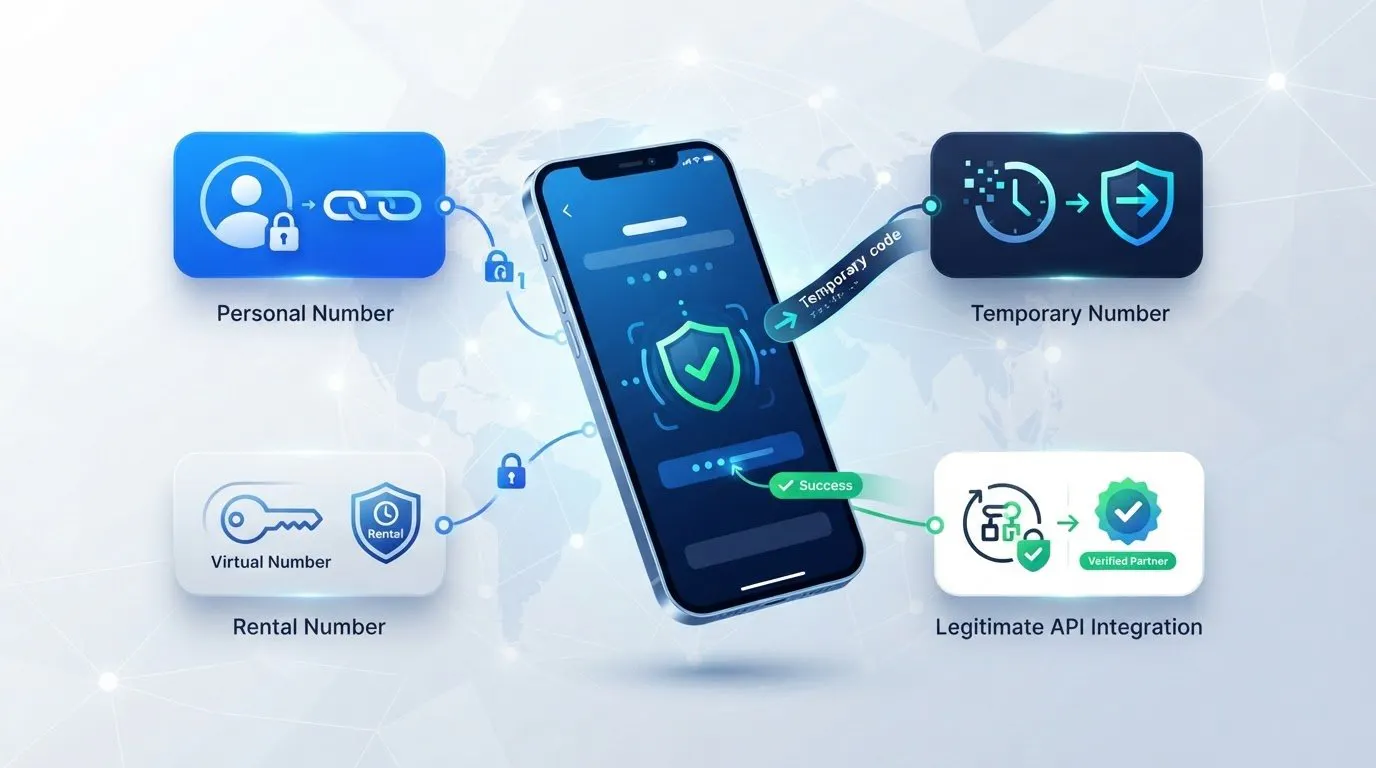
The number that keeps your personal phone private may not be the number that receives your verification code. Before choosing a virtual phone number to receive sms, check whether the service accepts virtual or VoIP numbers and how long you’ll need access to incoming messages.
It’s easy to focus on privacy or price, but the right option depends on compatibility and access duration. If you need one verification code, a one-time SMS activation may be enough. If you expect follow-up codes or may need to recover the account later, a rented number may be a better fit. Neither option guarantees acceptance: websites and apps set their own rules, and some reject virtual numbers.
This guide explains how virtual numbers receive SMS and how to choose between one-time activation and a longer rental. It also covers what to check before requesting a code, including number type and service compatibility, and how to limit exposure of your personal number where the site permits alternatives. Anosim offers SMS activation and longer-term number rentals for these different access needs.
Key Takeaways
- A virtual phone number to receive sms lets you access incoming messages through a service, without a delivered physical SIM.
- Check a website or app’s rules before choosing a number. Successful SMS delivery doesn’t necessarily mean the number meets the account requirements.
- Choose one-time activation for a single verification attempt, or consider a rental if you may need messages again later.
- Check the service terms and select a country or number type only if the target platform requires it.
- Anosim offers inbound SMS activation and longer-term number rentals for different access needs.
Table of Contents for Choosing a Virtual Phone Number to Receive SMS
- What Is a Virtual Phone Number for Receiving SMS?
- Will a Virtual Phone Number Work for Your SMS Verification?
- One-Time SMS Activation or Longer Number Rental?
- How to Choose and Use a Virtual Number for SMS
- Using Anosim for Incoming SMS: Choose the Right Access Path
What Is a Virtual Phone Number for Receiving SMS?
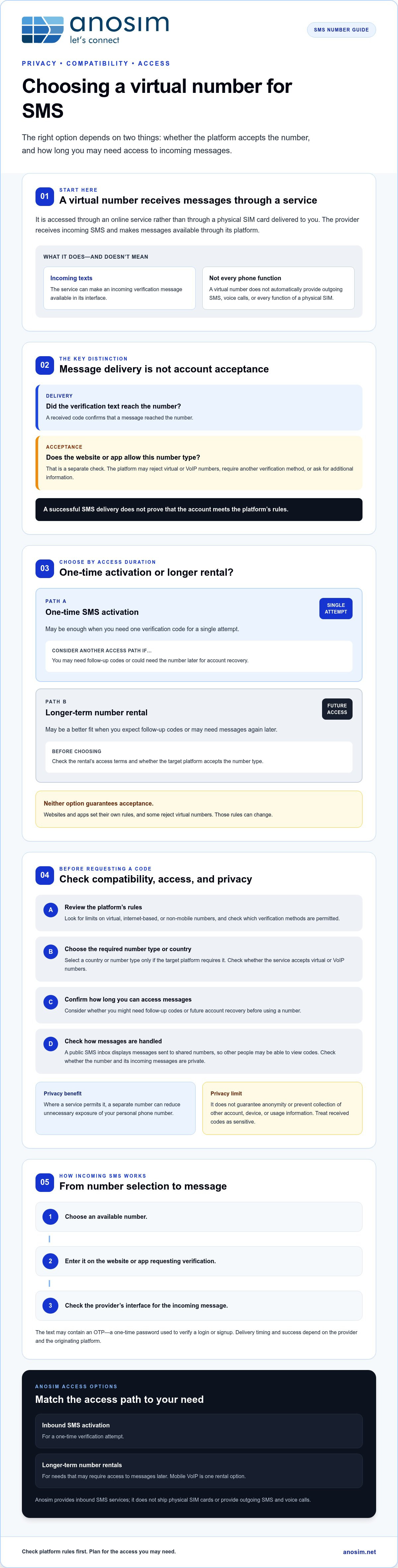
A virtual number is a phone number you access through a service rather than through a physical SIM card delivered to you. The service receives incoming SMS and makes messages available through its platform. A virtual number can help keep your personal number private where a website or app permits an alternative, but it doesn't automatically provide every phone function.
Definition: A virtual number for SMS reception is a number managed through an online service that receives texts for you. Unlike a public SMS inbox, it isn't necessarily shared or visible to everyone.
That distinction matters for privacy. Public SMS inboxes display messages sent to shared numbers, so other people may be able to view verification codes. Virtual number services can have different access arrangements, so check whether the number and its incoming messages are private before using them for an account you need to protect. For a general overview of virtual numbers and how they can be set up, see What Is a Virtual Phone Number.
How does a virtual number receive a verification text?
The process is straightforward: choose an available number, enter it on the website or app requesting verification, then check the provider’s interface for the incoming message. The text may contain an OTP, or one-time password, a temporary code used to verify a login or signup. Receiving the code confirms that a message reached the number. It doesn’t prove that the platform accepts virtual numbers or that the account meets its rules. Delivery timing and success depend on the provider and the originating platform.
Virtual number, VoIP number, and physical SIM: what differs?
These terms describe related but distinct things. A virtual number is accessed through a service and doesn't necessarily use VoIP. VoIP is a technology for carrying communications over the internet, and mobile VoIP is one specific rental option Anosim offers. A physical SIM is a card used in a compatible device to connect to a mobile network. Anosim provides inbound SMS services, including activation and number rentals, but doesn’t ship physical SIM cards or provide outgoing SMS or outgoing calls; only numbers from the Rent Mobile VoIP service can also receive calls.
For a virtual phone number to receive sms, focus on the function you need: incoming messages. Don’t assume a number can also send texts or place calls, or that every platform will accept it. Check the provider’s access terms and the target service’s verification requirements before relying on the number.
Will a Virtual Phone Number Work for Your SMS Verification?
A working number doesn’t guarantee that a third-party service will accept it. SMS delivery and account approval are separate checks. A provider may receive the verification code while the website or app rejects the number or requires another verification method. Acceptance depends on the target service’s rules, and those rules can change.
Before choosing a virtual phone number to receive sms, review the target service’s terms and permitted verification methods. Look for any stated limits on virtual, internet-based, or non-mobile numbers. If the service requires a particular number type or identity check, receiving a text alone won’t satisfy that requirement.
Why do some services reject virtual or VoIP numbers?
Websites and apps set their own verification controls, which may include limits on certain number types. VoIP is one technology used for internet-based communications; the FCC explains how VoIP works, but each platform decides which numbers it accepts. There’s no universal explanation or workaround. If a service excludes virtual numbers, use a verification method it permits instead of repeatedly submitting numbers that may not qualify.
When is a virtual number a privacy-conscious option?
If a service permits it, using a separate number can reduce unnecessary exposure of your personal phone number during signup. It doesn’t guarantee anonymity or prevent the platform from collecting other account, device, or usage information. Keep accounts authorized and follow the service’s rules. Treat received codes as sensitive: don’t share them, and consider whether you’ll need future access before using a number for account recovery.
Compatibility depends on more than whether a message arrives. Check whether the platform accepts the number’s type and whether its verification process asks for additional information. If the first attempt fails, consult the platform’s instructions before trying another option.
- Check the rules: Confirm the service allows the verification method you plan to use.
- Separate delivery from acceptance: A received code doesn’t confirm that an account has passed the platform’s checks.
- Plan for continued access: Consider recovery needs before using a number you may not be able to access later.
If the service permits virtual-number verification, Anosim’s SMS activation options are one service category to review. Check the target platform’s requirements first; acceptance isn’t guaranteed.
One-Time SMS Activation or Longer Number Rental?
Choose based on how long you’ll need to receive messages. A one-time activation is intended for a single verification attempt, while a rental may suit repeat verification or continued access. Neither option guarantees that a third-party service will accept the number, and access is subject to the selected service’s terms.
- Duration: one-time SMS activation covers a single activation, subject to availability and service terms; a number rental runs for a specified rental period, so check the selected service’s terms.
- Repeat access: with one-time SMS activation, don’t assume the same number or message access will remain available afterward; a number rental may suit repeat messages during the rental, but access beyond its terms isn’t assured.
- Typical use: one-time SMS activation fits one permitted signup or verification attempt; a number rental fits follow-up verification or a need for longer access to incoming messages.
- Key uncertainty: for one-time SMS activation, whether a suitable number is available and accepted by the target platform; for a number rental, whether the platform accepts it and how long message access lasts under the service terms.
When does one-time SMS activation fit?
If you need one code for a permitted signup, activation can be a practical fit. Choose an available number, submit it to the service requesting verification, then check for the code during the active service session. Don’t wait until later to retrieve it or assume you can return to the same number. Availability and delivery depend on the service and the originating platform. Review Anosim’s SMS activation options and applicable terms before proceeding.
When is renting a number more suitable?
Consider a rental if you expect repeat verification or need to receive messages over a longer period. For example, an account may request another code during a later login or recovery step. A rental can support continued access within its defined terms, but it doesn’t mean the number stays available indefinitely. The rental duration and message access depend on the selected service. See Anosim’s virtual number rental information for the applicable terms.
For either option, check the target platform’s accepted verification methods first. The NIST digital identity guidelines provide broader context on authentication; they don’t establish whether a particular website accepts a specific number. Choose based on how long you need message access, then verify compatibility rather than assuming activation or rental guarantees acceptance.
How to Choose and Use a Virtual Number for SMS
A short pre-check can prevent wasted attempts and help you choose a number that fits the account’s verification rules. Consider number availability, platform acceptance, and continued message access separately. Follow these steps before submitting a virtual phone number to receive sms:
- 1. Confirm the service rules. Check whether the website or app permits the number type and verification method you plan to use.
- 2. Choose the access duration. Use activation for a single verification need, or consider a rental if you may need to receive messages again. Check the relevant service terms.
- 3. Select an available option. Review the provider’s current availability and access conditions before choosing.
- 4. Submit the number. Enter it as directed by the target service and check the digits before requesting a code.
- 5. Check for the message. Monitor the provider’s message status and follow its instructions for accessing an incoming SMS.
What should you check before requesting a verification code?
Start with the target platform’s instructions. Confirm it permits the selected number type and verification method. Then decide whether future access matters: a one-time activation may suit a single permitted signup, while a rental may fit repeat verification. Review provider terms and availability before submitting the number. Check the number’s country or type only if the target service requires a specific one. Choosing a particular country does not ensure acceptance.
Before you start:
- Does the platform allow this verification method?
- Will you need to receive messages again later?
- Have you checked the provider’s current terms and availability?
- Does the platform require a particular country or number type?
What if the SMS does not arrive?
First, check that you’re viewing the correct active session and selected number, then review the message status and provider guidance. Delivery timing and success can depend on both the provider and the originating platform, so a delay doesn’t necessarily mean the number is invalid. Follow the provider’s available support process if the message remains missing. If the website or app warns against repeated code requests, don’t keep submitting requests; follow its instructions instead.
Choose the option that matches your access needs, and check the applicable terms before starting. If one verification attempt is appropriate, review Anosim’s SMS activation options and their conditions before selecting an available option.
Using Anosim for Incoming SMS: Choose the Right Access Path
Anosim offers two distinct ways to receive verification messages: SMS activation for a single code need and virtual number rental when continued access to incoming SMS matters. The right choice depends on how long you may need the number, not simply on whether you expect a verification message. Before selecting either option, check current service availability, applicable terms, and the target website or app’s rules. An available number doesn’t guarantee third-party acceptance.
Which Anosim service fits your use case?
If you need a code for one permitted signup or verification, SMS activation may be the more appropriate option. Check the active service terms and be ready to retrieve the message during the applicable session. For a single-code use case, review Anosim’s inbound SMS activation options.
If you expect to receive messages again, such as for later verification or account access, consider a number rental instead. A rental is intended for a longer access need, but the exact duration and message availability depend on the selected service terms. Review Anosim’s number rental service details before choosing, and don’t assume access continues beyond the stated terms.
In either case, treat compatibility as a separate decision. Confirm the platform permits the number type and verification method, then check that the relevant Anosim option is available. Anosim’s services provide inbound SMS; they don’t guarantee that a specific third-party service will accept a number.
Can developers integrate virtual SMS reception?
For programmatic workflows, Anosim lists compatibility with Anosim API v1 and the SMS-Activate Standard API. These options may suit developers who need to incorporate incoming SMS handling into an appropriate workflow. Review the Anosim API documentation for implementation details and confirm which API and service terms fit your setup. The APIs relate to Anosim’s SMS services; they don’t change the target platform’s verification rules.
Choose activation when you need one verification, and a rental when you need continued incoming-message access under its terms. If either fits your use case, review the relevant Anosim service information and confirm availability before selecting a virtual phone number to receive sms.
Choose Your Number Based on Access and Compatibility
Choosing a virtual phone number to receive sms starts with two checks: will the target service accept it, and how long will you need message access? A code arriving successfully doesn’t guarantee the website or app will approve the number, so review its permitted verification methods first. Then match the access period to your needs. One-time activation may fit a single verification, while a rental may be more suitable if you expect follow-up codes or need continued access. Check the selected service’s terms rather than assuming a number remains available.
Anosim offers inbound SMS activation and longer-term number rental as separate options. For programmatic workflows, Anosim lists compatibility with Anosim API v1 and SMS-Activate Standard API. Check current availability and relevant terms before choosing either option.
Ready to compare the options? Explore Anosim SMS activation and number rental and select the access path that fits your requirements. By checking compatibility and considering access duration, you can make a more informed choice and keep your personal number private where the service permits alternatives.
Frequently Asked Questions
Can I use a virtual phone number to receive SMS verification codes?
Yes, a virtual number can receive verification codes when the provider supports incoming SMS and the target website or app accepts that number. Enter it as instructed, then check the provider’s service for the incoming message. A code arriving confirms only that the message reached the number. It doesn’t guarantee the platform will approve your signup or login, or that you’ve met any additional account requirements.
Will every website accept a virtual number for SMS verification?
No. Acceptance depends on the individual website or app, its verification rules, and the number type. Those rules may change, so check the service’s terms and permitted verification methods before requesting a code. A number may receive an SMS successfully but still be rejected for account verification. If virtual numbers aren’t allowed, use a method the platform accepts rather than trying to work around its requirements.
What is the difference between SMS activation and renting a virtual number?
SMS activation is generally suited to a single verification attempt, while renting a number may fit a need for continued incoming-message access. Choose activation if you need one code and a rental if you may need another message later. The actual access period and terms depend on the selected service, so check them before you begin. Neither option guarantees acceptance by the website or app you’re verifying with.
Can I receive future verification messages on a temporary number?
Only if the number and service terms continue to provide access when those messages are sent. Don’t assume a number used for a one-time activation will remain available for later login, recovery, or security codes. If future access matters, consider a rental and confirm its duration and message-access terms before using the number to register. Also check that the platform permits the selected number for subsequent verification.
Are virtual phone numbers safe for receiving SMS?
They can help limit exposure of your personal number where a service permits alternatives, but they don’t guarantee anonymity or prevent all data collection. Check how you access incoming messages and whether the number or inbox is shared. Treat verification codes as sensitive credentials: don’t share them, and avoid using a public inbox for accounts where message privacy or future access is important. Follow the target platform’s rules.
What should I do if a verification SMS does not arrive?
Check that you’re viewing the correct active session and selected number, then review the message status and provider guidance. Delivery timing and success can depend on both the provider and the platform sending the SMS. Follow the provider’s available support process if the message remains missing. If the website or app warns against repeated code requests, don’t keep requesting new codes; use the steps it recommends.
Can developers receive SMS with an API and a virtual number?
Yes, developers can use a provider’s API to integrate virtual-number services into suitable workflows, subject to the API and service terms. Anosim lists compatibility with Anosim API v1 and the SMS-Activate Standard API. Review the relevant documentation for implementation details, and check current service availability before building around a number. API integration doesn’t change the target website’s verification rules or guarantee that it will accept a number.