What if your automated identity management system is being sabotaged by the very infrastructure meant to support it? In 2026, many developers find that standard programmatic virtual phone numbers are increasingly being blacklisted by major platforms that have implemented aggressive "Fixed VoIP" detection. You've likely dealt with the frustration of high latency when receiving OTP codes or the sheer complexity of integrating multiple carrier protocols into a single script. It's a common operational hurdle that can stall scaling efforts and compromise digital privacy.
This guide provides a technical roadmap to mastering the architecture and implementation of API-driven numbers for seamless SMS verification. We'll examine how to move beyond generic VoIP blocks to achieve stable, high-trust results through mobile-backed infrastructure. You'll learn the specific developer workflows for number acquisition, the critical differences between mobile and traditional ranges, and how to utilize the Anosim API (v1) for cost-effective scaling. By the end of this article, you'll be equipped to integrate robust verification logic that maintains operational efficiency and digital anonymity.
Key Takeaways
- Understand the technical shift from physical SIM hardware to cloud-hosted identifiers that integrate directly into your existing software stack.
- Learn how to automate the full lifecycle of programmatic virtual phone numbers using the Anosim API (v1) for seamless authentication and service selection.
- Discover why mobile-sourced virtual numbers bypass the common blacklisting issues and "Fixed VoIP" detection filters used by major digital platforms.
- Master the synergy between virtual numbers and mobile proxies to scale automated account creation while maintaining a high trust score.
- Implement your first programmatic activation in minutes by following a structured developer workflow designed for high-volume, privacy-first operations.
Table of Contents
- What are Programmatic Virtual Phone Numbers?
- How Programmatic Number APIs Work: The Developer’s Workflow
- Programmatic Numbers vs. Traditional VoIP: Critical Differences
- High-Volume Use Cases for Programmatic Numbers
- Getting Started with Anosim Programmatic Solutions
What are Programmatic Virtual Phone Numbers?
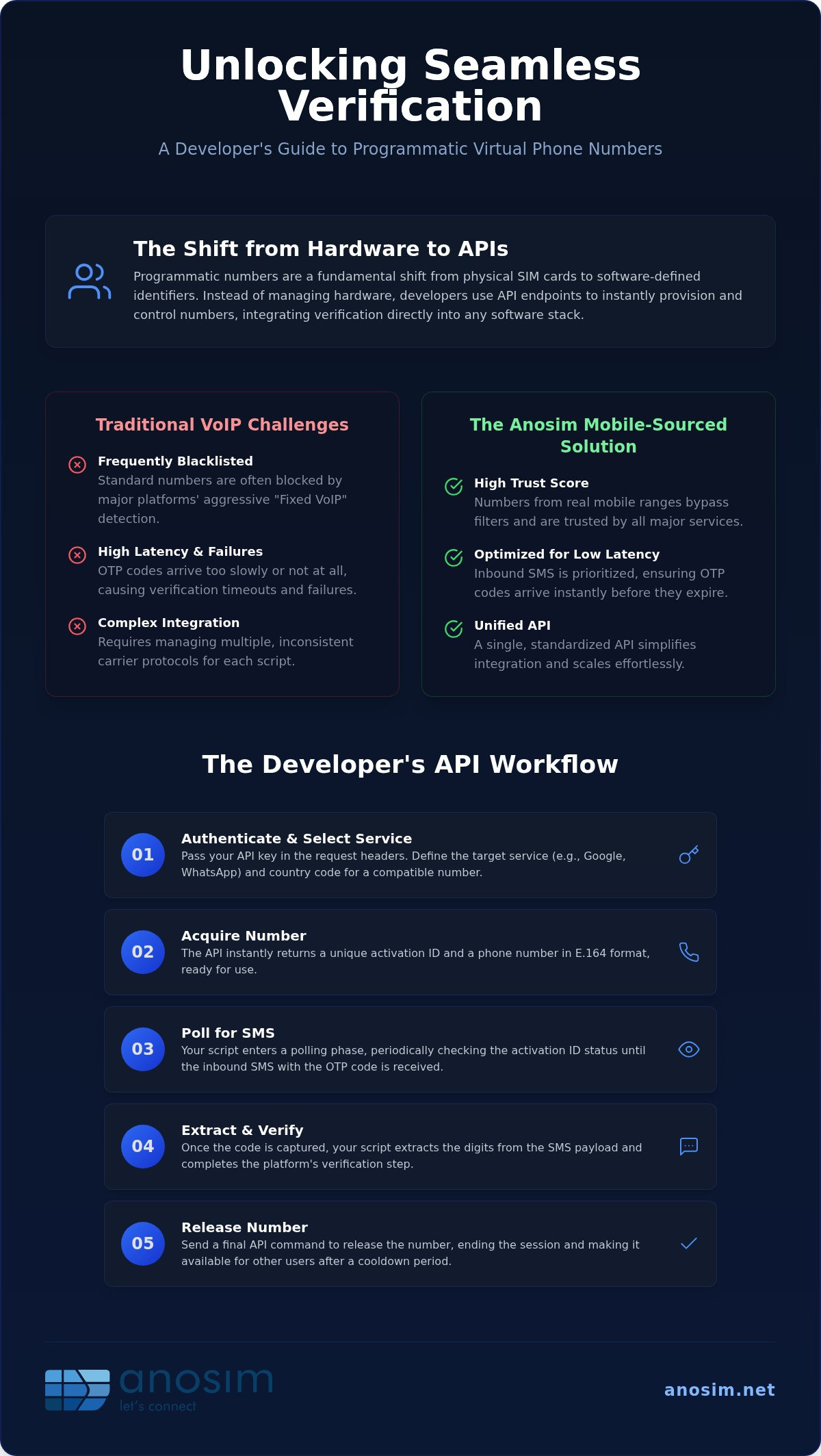
Programmatic virtual phone numbers are cloud-hosted identifiers that bypass the need for physical SIM cards. They represent a fundamental shift from hardware-dependent telephony to software-defined communication. Instead of managing plastic cards and hardware gateways, developers interact with these numbers through API endpoints. This transition allows for the automation of identity management, making it possible to integrate verification steps directly into a codebase. When you use software to provision a number, you aren't just renting a line; you're deploying a piece of digital infrastructure. To see how this shift toward intelligent automation is transforming sales outreach, you can visit Nexdial and explore their AI-driven cloud contact center tools.
Programmatic control is essential for modern verification workflows. While traditional telephony is often used for outbound marketing or customer support, verification requires a specialized inbound focus. Most platforms now use sophisticated detection to block generic numbers. Reliable programmatic virtual phone numbers are often sourced from mobile ranges to ensure they pass the strict security checks of services like WhatsApp, Google, or social media platforms. By treating numbers as code, you can build systems that automatically rotate identifiers to maintain high success rates.
Maintaining a high trust score across all communication channels is a priority for modern businesses. For those who also manage email outreach, Enginemailer provides valuable technical insights into navigating platform restrictions, such as identifying if you have been blocked in Gmail.
E.164 Standards and Global Numbering
All virtual numbers follow the E.164 international standard. This format limits numbers to 15 digits, including the country code, ensuring they are compatible with the global Public Switched Telephone Network (PSTN). These identifiers leverage Voice over Internet Protocol (VoIP) to transmit data over digital networks instead of legacy analog lines. In 2026, global numbering authorities have introduced stricter Business Registration Number (BRN) requirements for certain ranges to combat spam. For developers, this means the choice of provider determines whether a number is recognized as a legitimate mobile asset or a low-trust proxy.
Key Characteristics of API-Driven Numbers
The primary benefit of an API-driven approach is speed. You can acquire a new number in milliseconds using a standard SMS activation request. This instant provisioning is necessary for high-volume operations where accounts are created or verified in rapid succession. Beyond speed, these numbers provide deep metadata. Modern APIs allow you to query the carrier information and number type before use. Knowing if a number is classified as "Mobile" or "VoIP" helps you decide which assets to use for specific high-security platforms. Because receiving an SMS is technically more demanding than sending one, these numbers are optimized for inbound latency to ensure OTP codes arrive before they expire.
How Programmatic Number APIs Work: The Developer’s Workflow
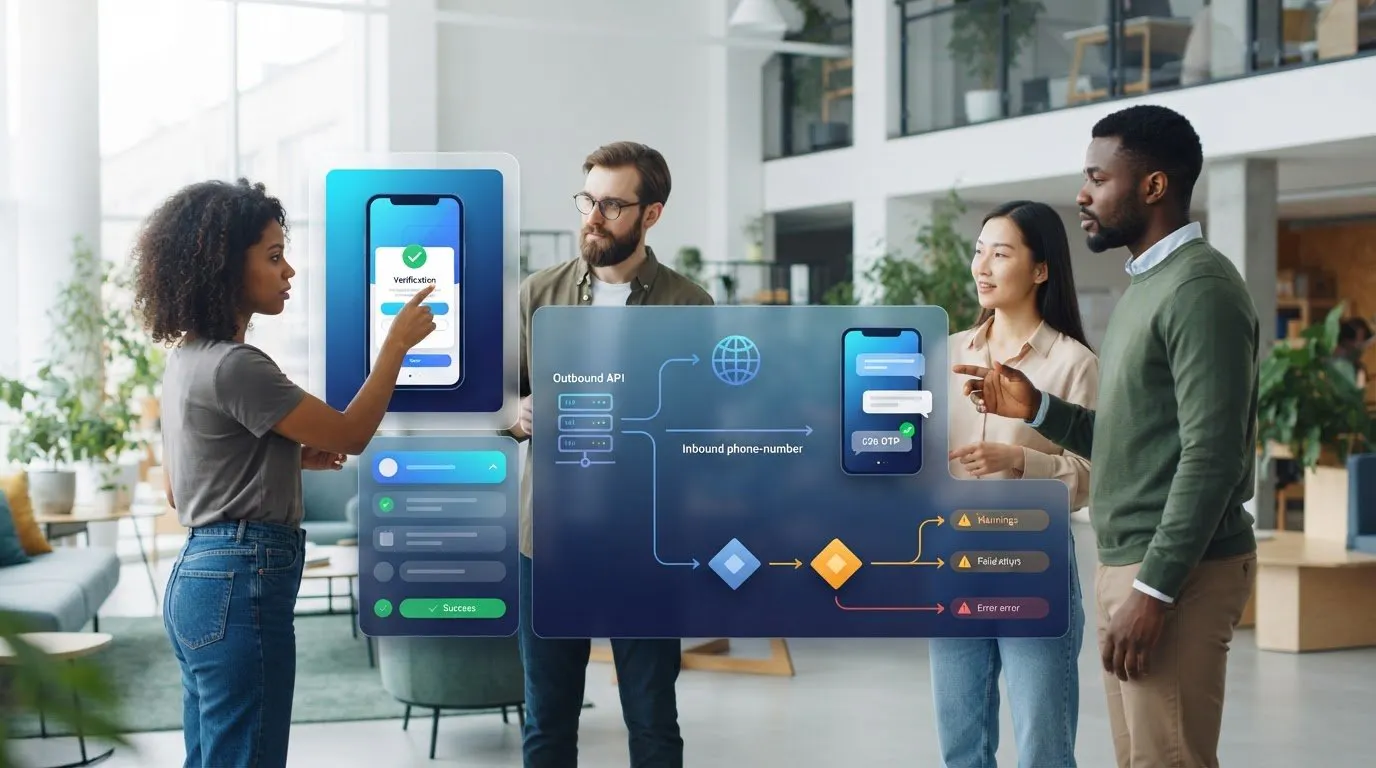
Implementing programmatic virtual phone numbers into an automation script requires a structured sequence of API calls. Unlike manual verification, where a user waits for a screen to update, a programmatic workflow relies on polling and state management. While the FCC guide to VoIP explains the general mechanics of digital telephony, developer workflows for SMS verification are more specialized. The process begins with authentication, typically using an API key passed in the request headers to the Anosim API (v1) endpoint. Once authenticated, you must define the target service and region. For instance, if you're automating a Telegram or Tinder registration, you'll send a request containing specific service and country codes to ensure the number is compatible with that platform's filters.
After selecting your parameters, the next step is number acquisition. The API returns a unique ID and the phone number itself in E.164 format. Your script then enters a polling phase. Because SMS delivery isn't instantaneous, your code must periodically check the status of the activation ID. The API will return a "waiting" status until the inbound SMS payload is received. Once the OTP code is captured, your script extracts the digits, completes the platform verification, and sends a final command to release the number. If you need more time or a second code, you can programmatically extend the session before the expiration timer hits zero.
SMS-Activate Standard API Compatibility
Standardizing on the SMS-Activate protocol is a strategic choice for many developers. It allows you to swap providers or scale your infrastructure without rewriting your entire codebase. By mapping Anosim endpoints to these standard verification frameworks, you gain access to a massive ecosystem of existing automation tools. Supporting a standardized protocol ensures that your integration remains modular and future-proof as your operational needs grow. API compatibility reduces developer friction by eliminating the need to learn proprietary routing logic for every new region you target.
Managing Long-Term Rentals via Code
One-time activations are ideal for rapid account creation, but persistent digital identities require a different approach. For projects requiring a stable presence, you can manage Anosim Rent Number assets via the same programmatic interface. This allows you to automate the renewal process, ensuring you don't lose access to a number linked to a critical account. Your script can monitor the "time remaining" field and trigger a renewal payment when the balance is low. If you're ready to scale your verification logic, you can explore the full Anosim API documentation to see how these calls fit into your existing stack.
Programmatic Numbers vs. Traditional VoIP: Critical Differences
While a standard virtual phone number might suffice for simple call forwarding, it often fails during modern verification. Platforms like Google, WhatsApp, and Tinder now perform real-time HLR (Home Location Register) lookups to determine a number's origin. Generic VoIP ranges are frequently flagged as "Fixed VoIP," a category associated with low-trust and high-spam potential. In contrast, programmatic virtual phone numbers sourced from mobile ranges carry a significantly higher trust score. These assets originate from carrier blocks assigned to mobile devices, making them indistinguishable from standard consumer lines to most security filters. This distinction is the primary factor in whether an account is successfully created or instantly shadowbanned.
Detection risks have evolved alongside telecommunications technology. In 2026, the synergy between your number and your network identity is non-negotiable. Traditional VoIP providers often rely on data center infrastructure, which is a major red flag for anti-bot systems. Cost-efficiency also separates these two categories. Traditional VoIP usually requires monthly seat licenses or long-term contracts, which doesn't align with the needs of developers running high-volume automation. A pay-per-activation model through SMS Activation provides a more granular approach, allowing you to pay only for successful OTP captures rather than maintaining idle lines.
The Role of Mobile Proxies in Verification
Your IP reputation must align with your number's geographic region to avoid triggering security alerts. If you attempt to verify a French virtual number while using a US-based datacenter IP, the mismatch will likely result in a failed registration. Using Mobile Proxies from our partner proxied.com allows you to route your traffic through actual mobile carrier networks. This ensures that both your IP address and your phone number originate from the same mobile infrastructure. This combination is essential for bypassing advanced anti-bot detection. You can learn more about this integration in our guide on Mobile Proxy: The Complete Technical Guide.
Bypassing Verification Hurdles
High-security platforms are increasingly aggressive toward non-mobile number ranges. To maintain professional operations, you should prioritize Rent Mobile VoIP options that offer the "clean" reputation required for account longevity. Accounts verified with low-quality VoIP numbers are often subjected to more frequent CAPTCHAs or sudden "suspicious activity" locks. As one industry expert noted, "The longevity of a digital identity is directly proportional to the cleanliness of the initial verification asset; if the number is flagged at birth, the account is already dead." Using high-trust mobile rentals ensures your accounts remain stable long after the initial signup process is complete.
High-Volume Use Cases for Programmatic Numbers
High-volume operations require a scalable fleet of identifiers. Programmatic virtual phone numbers enable scripts to handle thousands of verification requests without manual intervention. This is particularly useful for Automated Account Creation (AAC), where developers scale social media clusters or platform presences. Without these tools, manual verification becomes a significant operational bottleneck that prevents growth. For organizations that need to complement these verification capabilities with robust outreach infrastructure for large-scale messaging or political campaigns, you can visit Calls-Are-Us to discover their full suite of communication tools.
Web scraping and data collection also rely on this infrastructure. Many platforms gate content behind phone verification walls to prevent automated access. Programmatic numbers provide the credentials needed to bypass these gates and access data at scale. Additionally, these numbers serve as a developer's sandbox. You can test inbound message logic, regex parsers, and delivery speeds in a controlled environment using the Anosim API (v1). This ensures your production environment remains stable while you iterate on your verification logic.
Protecting Against Data Leaks
Data leaks are a persistent threat to personal security. Using a primary number for every app signup creates a massive digital footprint that is easily exploited by third parties. Programmatic virtual phone numbers act as a functional firewall, protecting your personal identity from being sold or leaked. For instance, bypassing Tinder phone verification allows users to maintain digital anonymity while accessing the service. Best practices for 2026 involve using a number for its specific activation window and then letting it expire to minimize your digital trail. This approach prevents your primary contact information from appearing in public breaches.
Automation for Enterprise Workflows
Enterprise workflows benefit from integrating numbers into CI/CD pipelines for mobile app testing. Instead of mocking SMS responses, QA teams use actual mobile-backed numbers to verify that 2FA logic works across different global carriers in real-time. For high-volume marketing research, bulk activations offer a way to analyze platform trends across multiple regions simultaneously. You can find technical details in our SMS Activation API: 2026 Guide. This level of automation is necessary for maintaining a competitive edge in fast-moving digital markets.
If you need to maintain these identities for more than a single session, you can Rent Mobile VoIP lines for dedicated, long-term access that grows with your business needs.
Getting Started with Anosim Programmatic Solutions
Deploying your infrastructure with Anosim is designed for immediate, high-volume implementation. The platform acts as a silent partner, providing the technical layer needed for high-trust digital identities without the friction of traditional telecom contracts. Whether you're a solo developer or managing an enterprise-level operation, the transition from manual verification to programmatic virtual phone numbers is straightforward. You can scale from a single test activation to managing thousands of concurrent rentals without changing your core integration logic. To help document your transition and keep track of complex API configurations, using a Free Notes App is a great way to convert your spoken ideas into organized text. If you encounter technical hurdles, the developer support resources provide specific guidance on protocol mapping, HLR lookups, and latency optimization for 2026 delivery standards.
The system is built to handle the rigorous demands of automated scripts. By using a programmatic approach, you eliminate the human error associated with manual OTP entry. Reliability is the cornerstone of this service; the infrastructure is optimized to ensure that inbound messages are captured and delivered to your API endpoint within milliseconds of receipt. This efficiency is critical for platforms that have short expiration windows for verification codes. You don't just get a number; you get a robust gateway to global digital services, much like how globalesim.pl provides travelers with an immediate eSIM connection to the internet from the first minute of their journey.
API Documentation and Integration
Your first step involves reviewing the Anosim API Documentation. You can choose between the primary v1 version and the alternative API version based on your specific software stack. Both versions utilize standard RESTful principles, making them compatible with common languages like Python, Node.js, and Go. A typical integration involves sending a GET or POST request to the activation endpoint with your unique API key. The alternative version is particularly useful if your system is already optimized for specific legacy verification protocols. This flexibility ensures that your verification scripts remain lightweight and easy to maintain over time.
Strategic Rental and Activation
Choosing the right service depends on the lifecycle of your target account. If you only need a one-time code for a disposable profile, the SMS Activation service is the most cost-effective path. For accounts that require ongoing access or long-term stability, you should utilize Rent Service or Rent Number. The "Rent Service" option is ideal for dedicating a number to a specific platform, like Telegram or WhatsApp, for a set duration. In contrast, "Rent Number" provides a broader utility for receiving messages from multiple services on a single line. Enterprise users can also leverage the Anosim Partner Program to integrate these capabilities into their own reseller platforms. When you're ready to secure high-trust identifiers, you can start your first programmatic activation with Anosim today.
Optimizing Your Verification Infrastructure for 2026
Building a resilient identity management system requires more than just a pool of numbers; it demands high-trust mobile assets that can withstand evolving platform security. You've seen how the shift from legacy VoIP to software-defined communication allows for better account longevity and reduced latency. By integrating programmatic virtual phone numbers into your existing automation scripts, you create a scalable firewall between your personal data and the services you use. This infrastructure is no longer an optional luxury but a technical necessity for any developer managing high-volume operations or sensitive digital footprints. In addition to securing your digital life, you can also explore modern ways to support your physical well-being; learn more about Numans.no to see how their natural wellness solutions can benefit your overall health.
Anosim provides the silent partnership needed to facilitate these complex workflows. With worldwide coverage for over 100 services and full compatibility with the SMS-Activate Standard API, your transition to automated verification is seamless. You can also leverage high-trust mobile IP proxies from our partner proxied.com to ensure your network reputation matches your number's origin. It's time to move past the limitations of physical SIMs and unreliable VoIP blocks that trigger instant bans. Scale your verification workflows with Anosim Programmatic Numbers and secure your digital operations with confidence.
Frequently Asked Questions
What is a programmatic virtual phone number?
A programmatic virtual phone number is a digital identifier managed through software endpoints rather than physical hardware. These numbers allow developers to automate inbound communication tasks like identity verification and account management. By using programmatic virtual phone numbers, you can provision assets in milliseconds to handle high-volume verification workflows. This software-defined approach ensures that your infrastructure remains scalable and independent of traditional telecommunications hardware or physical SIM cards.
How do I receive an OTP code via API?
To receive an OTP code, you must first authenticate with the Anosim API (v1) and request a number for a specific service. Once you've received the number, your script enters a polling phase where it periodically checks the activation ID status. When the inbound SMS payload arrives, the API returns the verification code in the response body. You then extract the digits to complete your verification process before releasing the number.
Can I use these numbers for Telegram and WhatsApp verification?
Yes, you can use these numbers for Telegram and WhatsApp by selecting the corresponding service code in your API request. Because many platforms use "Fixed VoIP" detection, it's best to choose mobile-sourced ranges to ensure a high trust score. Selecting the correct region is also vital, as some apps have strict geographic filters. This targeted approach helps you bypass common verification hurdles that often block generic virtual lines.
What is the difference between SMS activation and long-term number rental?
SMS activation is a one-time service designed for a single OTP code from a specific platform. It's the most efficient choice for rapid account creation. In contrast, long-term number rentals provide persistent access to a number for 30 days or more. This is necessary for accounts that require periodic re-verification or for users who need a stable digital presence across multiple different services simultaneously.
Are Anosim numbers compatible with the SMS-Activate Standard API?
Anosim numbers are fully compatible with the SMS-Activate Standard API, allowing for seamless integration with existing tools. This compatibility means you don't have to rewrite your entire codebase if you're already using standard verification frameworks. By supporting this industry protocol, the platform ensures that developers can scale their programmatic virtual phone numbers infrastructure without dealing with proprietary routing complexities or unique integration requirements for every new region.
What happens if I don't receive the SMS code during an activation?
If an SMS code isn't received within the activation window, the system automatically marks the attempt as failed. You aren't charged for activations that don't result in a successful message delivery. In these cases, you should cancel the current activation ID and request a new number. High latency can sometimes occur due to carrier delays, so retrying with a different region or carrier often resolves the issue.
Do I need a mobile proxy to use programmatic virtual numbers?
While not strictly required for the API to function, using a mobile proxy is highly recommended for high-security registrations. Platforms often flag accounts where the IP address doesn't match the phone number's geographic region. Pairing your virtual number with a mobile proxy ensures that your network traffic appears to originate from the same carrier infrastructure as the number. This synergy is critical for maintaining account longevity and avoiding anti-bot detection.
How much does it cost to rent a programmatic mobile number?
The cost of renting a mobile number depends on the specific country, carrier range, and the duration of the rental period. Prices are dynamic and reflect the current availability of high-trust mobile assets in different global regions. You should check the Anosim dashboard for real-time rates based on your specific operational requirements. Using a rental model is often more cost-effective for long-term projects compared to repeated one-time activations.