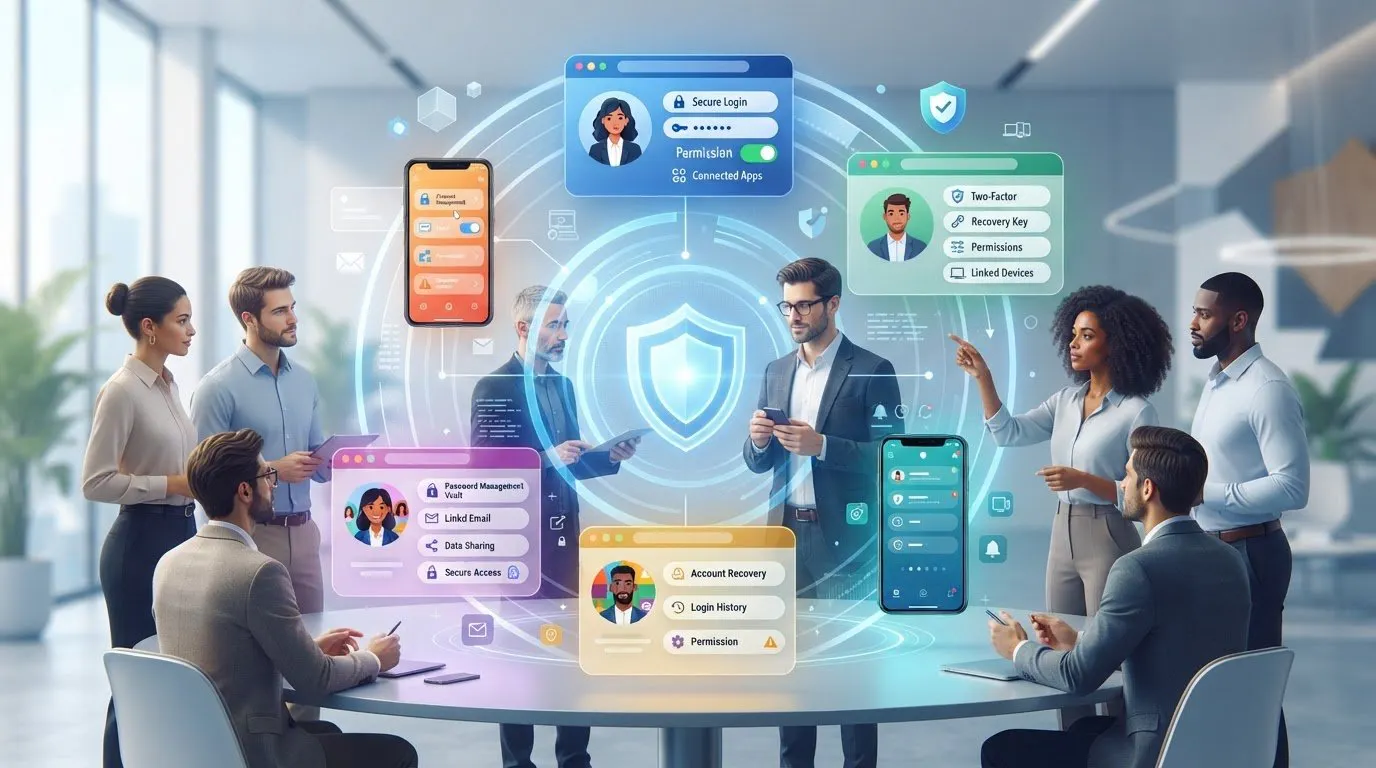
By March 2026, major regulatory bodies like the UAE's financial authorities have mandated a complete shift away from traditional SMS-based authentication for sensitive transactions. This move highlights a growing reality: your primary phone number is no longer just a way to talk; it's a high-risk digital identifier. You likely already recognize the risks of sharing your personal number with every new platform, from the inevitable flood of marketing spam to the threat of your data appearing in the next major database leak.
Protecting your digital footprint requires a more tactical approach to secure otp verification online. This article provides a comprehensive 2026 privacy checklist for verifying accounts using virtual infrastructure while keeping your primary number entirely offline. We'll examine why decoupling your identity from your phone line is essential for total anonymity. You'll also learn how to use professional tools like mobile proxies and dedicated number rentals to ensure successful, scalable verification without the risk of account bans or IP flagging.
Key Takeaways
- Learn how to decouple your personal phone number from digital services to prevent data harvesting and unsolicited marketing spam.
- Identify the critical differences between physical SIMs, virtual VoIP numbers, and SMS activation services for optimal security and cost efficiency.
- Master the 2026 checklist for secure otp verification online, including the use of mobile proxies to avoid account flagging and bans.
- Determine when to use one-time activations versus long-term number rentals to ensure ongoing account stability across different platforms.
- Explore how to scale verification workflows using API integration for professional or enterprise-level anonymity requirements.
Table of Contents
- What is Secure OTP Verification Online?
- The Hidden Privacy Risks of Using Your Primary Number
- Virtual Numbers vs. Physical SIMs: A Security Comparison
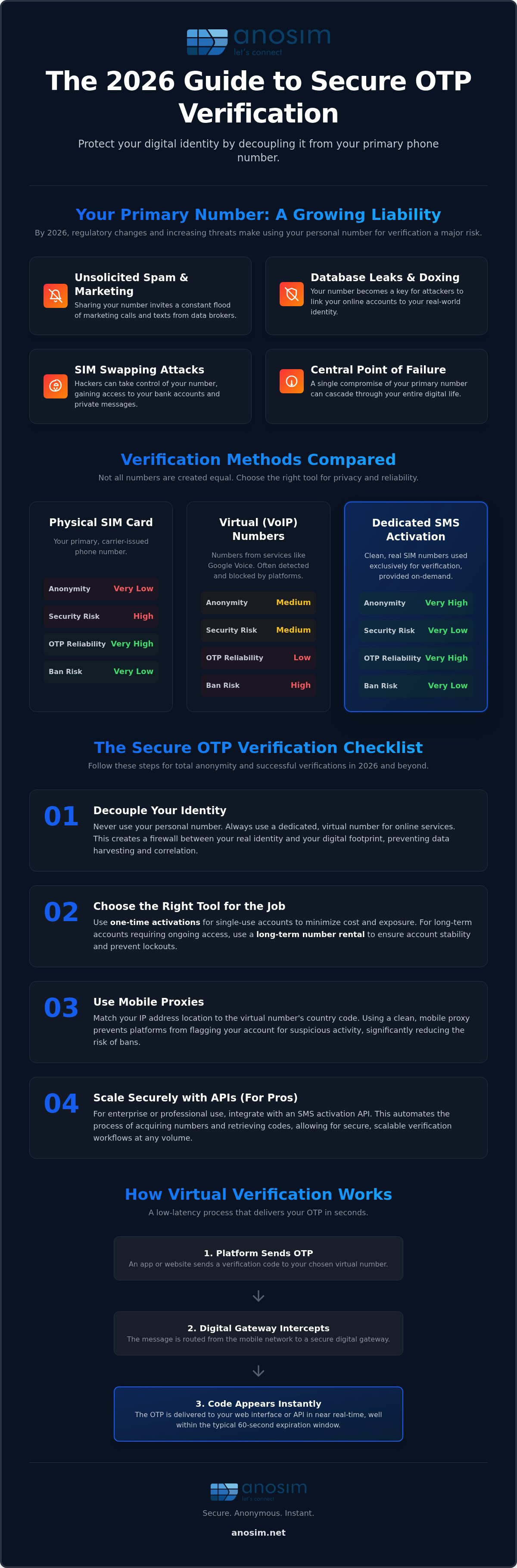
- The Secure OTP Verification Checklist: 2026 Edition
- Scaling Verification with Anosim’s Virtual Infrastructure
What is Secure OTP Verification Online?
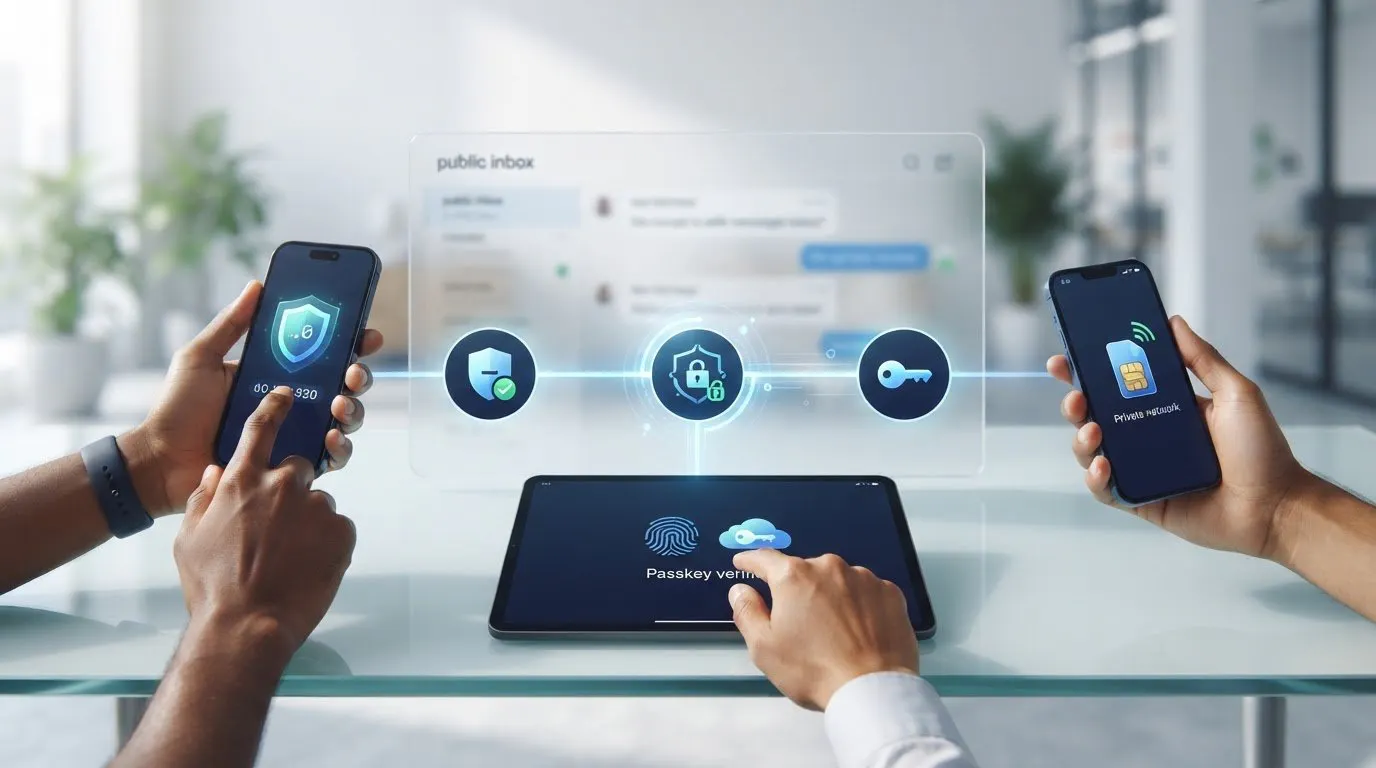
Understanding what a one-time password (OTP) is requires looking at the fundamental principles of multi-factor authentication. Security professionals categorize authentication into three distinct pillars: something you know, like a password; something you are, such as a fingerprint; and something you have, which is typically a physical device or a registered phone number. OTPs represent a temporal security layer that falls into the "something you have" category. OTP verification is a method to prove identity via a unique, short-lived code sent to a mobile device.
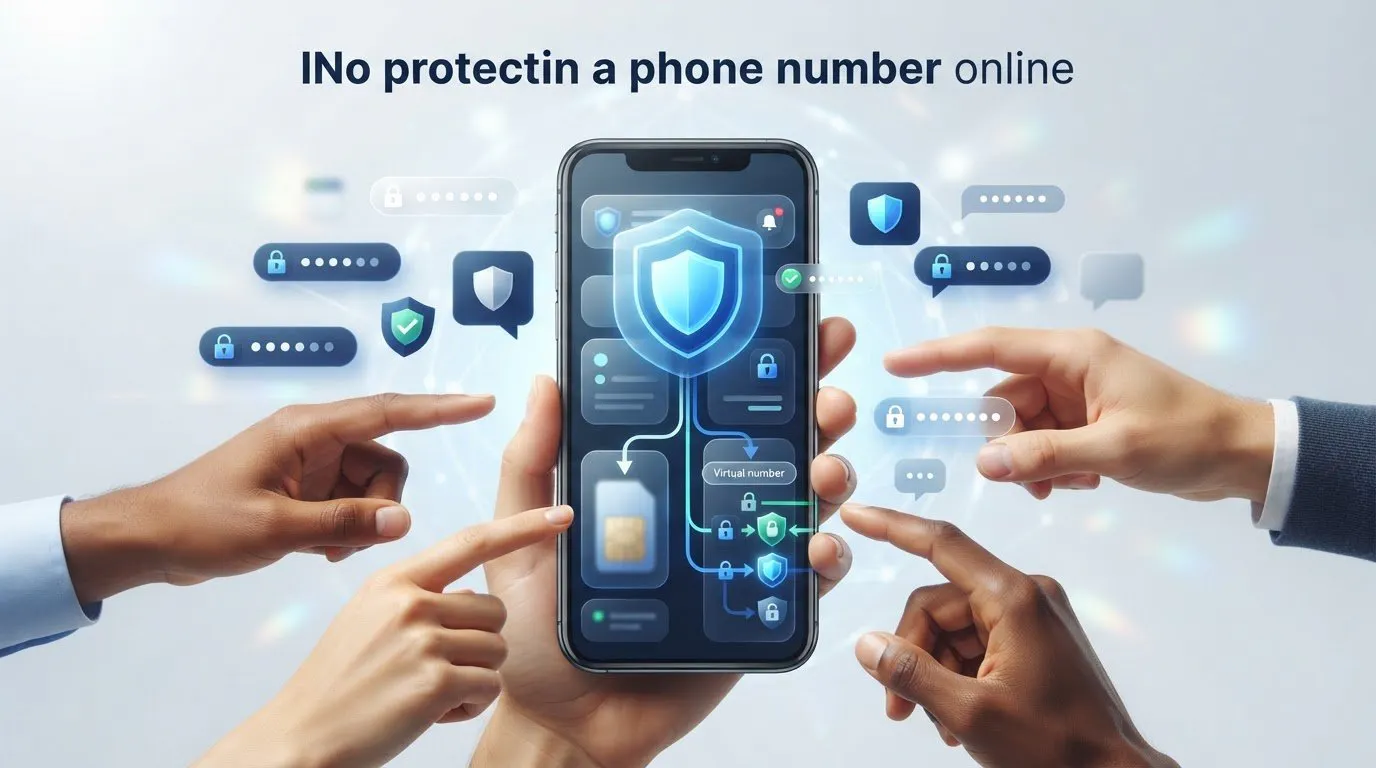
While the code itself is a standard security tool, the concept of secure otp verification online in 2026 has evolved significantly. It now specifically refers to the practice of using isolated, virtual infrastructure to receive these codes. Traditional verification relies on your primary SIM card. This creates a permanent link between your real-world identity and every digital service you join. Secure verification decouples these elements. By using dedicated SMS activation services, you create a privacy firewall. This allows you to satisfy platform requirements without exposing your personal number to database leaks or tracking.
The Mechanics of Inbound SMS Verification
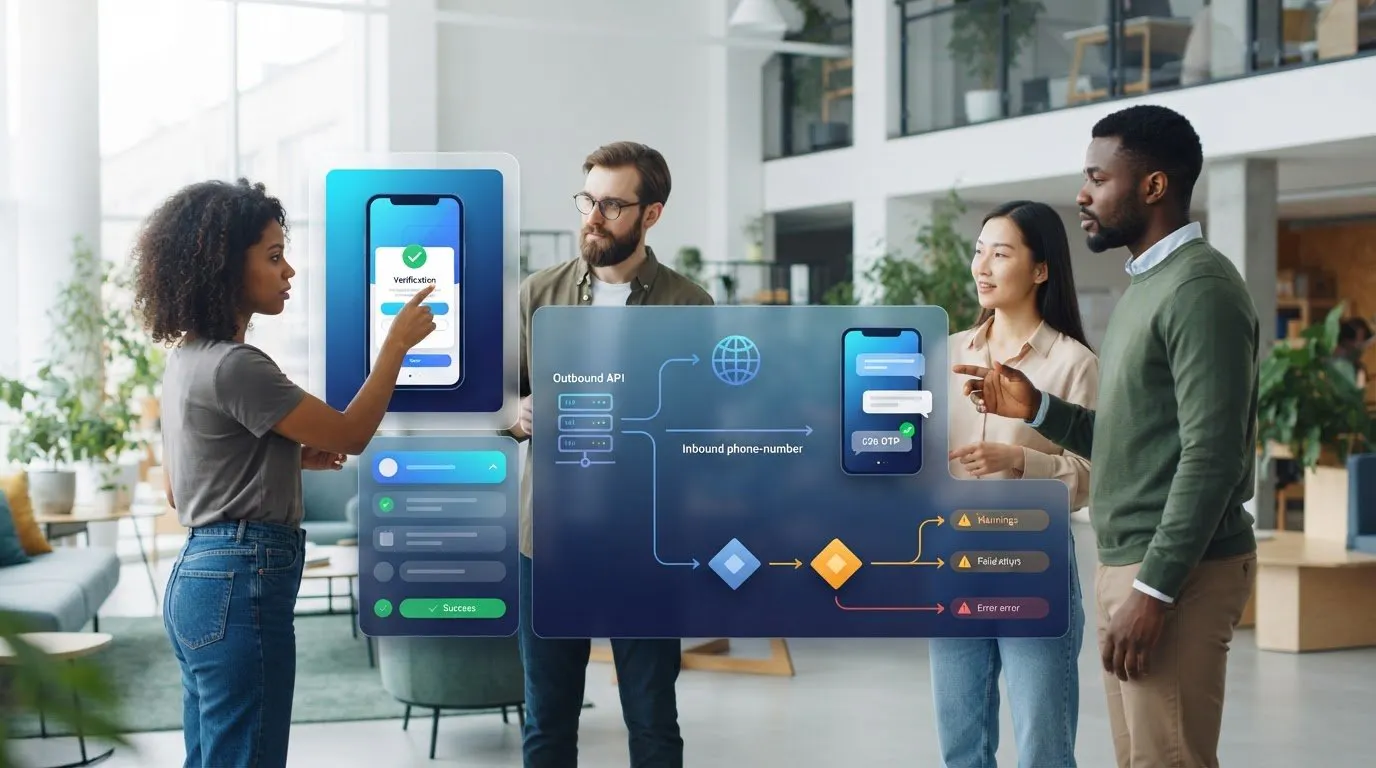
The process begins when an application triggers an SMS request to a mobile network. Instead of reaching a physical handset in your pocket, the message is intercepted by a digital gateway. This gateway routes the inbound data directly to your web interface or API. Speed is the most critical factor in this chain. Many modern services issue codes with a strict 60-second expiration window. If the virtual infrastructure lacks low-latency routing, the verification fails before you can input the digits. Reliable providers ensure that the handoff from the cellular carrier to the user interface happens in near real-time.
Why 2FA is No Longer Optional in 2026
Credential stuffing attacks and massive password leaks have made single-factor logins obsolete for any serious user. By 2026, major financial hubs like the UAE have already begun mandating a move away from basic SMS for banking, yet for the majority of global web services, SMS remains the primary gatekeeper. The U.S. National Institute of Standards and Technology (NIST) finalized guidelines in 2024 that shifted how we view SMS security, but it remains the final barrier against unauthorized access for billions of accounts. Using virtual numbers allows you to maintain this essential security layer while avoiding the "Spam Waterfall" that occurs when your primary number is harvested from an app's user database.
The Hidden Privacy Risks of Using Your Primary Number
Using your primary phone number for every digital signup creates a significant security vulnerability. While multi-factor authentication is a critical security layer, the phone number itself often becomes the weakest link in your privacy chain. Apps and services frequently harvest this data to build a detailed profile of your real-world identity. Once a primary number enters a broker's database through a leak, it is nearly impossible to remove. These records persist for years; they allow malicious actors to track your digital footprint across multiple platforms long after you have deleted an account.
Beyond simple collection, the risk of SIM swapping remains a major threat to your financial security. If a hacker convinces a carrier to port your primary number, they gain access to your bank accounts and private communications. This vulnerability exists because your primary number is likely tied to your most sensitive credentials. To achieve secure otp verification online, you must move away from this centralized point of failure. By isolating your verification codes from your main communication line, you neutralize the threat of a single compromise cascading through your entire digital life.
Implementing a strategy for secure otp verification online is the most effective way to mitigate these risks. This approach ensures that your primary line remains a private tool for communication rather than a public digital key. When you use a virtual number, you create a layer of abstraction that protects your physical device from direct targeting by automated scripts and data scrapers.
Database Leaks and Identity Correlation
Malicious actors rely on leaked phone numbers as a primary key to cross-reference data from disparate breaches. This correlation often leads to "doxing," where your private address or workplace is linked to your online handles. This risk is why many users now consult an Anonymous SMS Receiver guide to understand how to break this link. Using a separate number for each service prevents a single leak from exposing your entire identity. It also stops third-party trackers from building a unified advertising profile based on your number.
The Psychological Cost of SMS Spam
Constant interruptions from marketing notifications and phishing attempts represent a significant psychological burden. The "Spam Waterfall" is a well-documented phenomenon where a single signup triggers an endless cycle of unsolicited calls. This influx of notifications erodes your digital peace and increases the likelihood that you will accidentally click a malicious link. Virtual numbers act as a buffer zone for your attention. If a specific number starts receiving spam, you can simply discard it without affecting your primary line. If you want to maintain long-term account access without these interruptions, you might consider a dedicated number rental to act as a permanent firewall for your personal data.
Virtual Numbers vs. Physical SIMs: A Security Comparison
Selecting the right medium is essential for maintaining secure otp verification online. Physical SIM cards require a dedicated handset and are susceptible to signal dead zones, carrier outages, or roaming failures when traveling. In contrast, virtual numbers and SMS activation services operate through cloud-based gateways that prioritize uptime. This setup effectively eliminates hardware dependencies and the risk of physical device theft. While a second physical phone provides a familiar user experience, the recurring cost of the device, maintenance, and monthly carrier fees often outweighs the benefits for those managing a large volume of accounts.
While digitizing your access codes improves online security, maintaining physical access to your assets remains just as critical. For example, if you need a reliable backup for your vehicle, you can explore Car & Motorcycle Key Duplication to ensure you have a professional spare ready when hardware fails.
Scalability is where the gap between physical and virtual solutions widens. Manually swapping SIM cards to verify dozens of accounts is inefficient and prone to human error. For developers and power users, programmatic API access allows for the automation of the entire verification workflow. Virtual infrastructure handles signal routing with greater precision than roaming SIMs. By utilizing localized data centers, these services ensure the inbound SMS reaches your interface instantly. This level of reliability is a cornerstone of any strategy for secure otp verification online in 2026.
Understanding SMS Activation for One-Time Use
This service is ideal for quick signups on platforms like Tinder or WhatsApp where you need to bypass a single gatekeeper. SMS activation offers the highest level of anonymity at the lowest cost. There's zero long-term commitment required. You simply receive the code and move on. However, it's not suitable for accounts that require frequent re-verification, as the number is typically released back to the general pool after your session ends. It's a "disposable" solution for high-privacy, low-longevity needs.
When to Choose Long-Term Virtual Number Rental
Sensitive accounts like banking, primary social media profiles, or business tools require consistent access to the same number. Renting virtual phone numbers for 30 days or more ensures you remain the sole user of that digital identifier. This long-term "ownership" provides the stability needed for ongoing security checks and password resets. It effectively acts as a permanent privacy firewall. You get the reliability of a contract line without the data harvesting risks associated with traditional mobile carriers.
The Secure OTP Verification Checklist: 2026 Edition
Executing a reliable protocol is the only way to maintain digital anonymity while satisfying the strict security requirements of modern platforms. While the previous sections established the risks of identity correlation, this checklist provides the technical framework for secure otp verification online. Following these steps ensures that your accounts remain stable and your primary data stays protected from harvesting scripts.
- Step 1: Assess verification frequency. Determine if the service requires a one-time code for signup or recurring 2FA for every login. Use a standard secure SMS activation for one-off tasks and a rental service for long-term stability.
- Step 2: Select a clean IP address. Use mobile proxies to ensure your digital signature matches the geographic location of your virtual number. This prevents fraud detection systems from flagging your attempt.
- Step 3: Acquire the number. Select the specific service you are verifying to ensure the number is compatible with that platform's carrier filters.
- Step 4: Execute in an isolated environment. Perform the verification in a private browser window or a dedicated virtual machine. This blocks cross-site tracking and prevents the app from linking the new account to your existing browser cookies.
- Step 5: Document the credentials. If you are using a long-term rental, log the number and its renewal date in a secure password manager. Losing access to a number tied to a primary account can lead to permanent lockout.
For those ready to implement these steps immediately, you can get started with a secure virtual number here to protect your personal data.
Pre-Verification IP Warmup
Platform security has become highly sophisticated in 2026. Using a standard VPN often leads to an immediate block because these IP ranges are publicly known and frequently used for automated botting. To achieve secure otp verification online, you must use mobile proxies that provide a "high-trust" IP signature. These proxies route your traffic through real cellular towers, making your connection indistinguishable from a standard mobile user. Matching the proxy location to the virtual number's country is non-negotiable for high-security platforms.
Managing Your Virtual Number Portfolio
As you move more services away from your primary line, you'll find yourself managing a portfolio of virtual identifiers. Efficiency in this area requires strict organization. You don't want to lose access to a business account because a rental period lapsed. Setting automated reminders for renewals is a critical part of the 2026 workflow. You can explore more advanced organizational methods in our Mobile VoIP Rental pillar, which covers strategies for maintaining large-scale account networks without compromising security or operational speed.
Scaling Verification with Anosim’s Virtual Infrastructure
Transitioning from a manual checklist to a professional grade workflow requires infrastructure that can handle volume without compromising security. Anosim provides specialized inbound SMS and data solutions designed for high performance requirements. This system effectively replaces the need for physical hardware with a digital interface. Anosim focuses exclusively on high-utility privacy tools without the fluff of outgoing communication. This specialization ensures that the entire network remains optimized for one specific task: providing secure otp verification online at any scale.
International operations often face challenges with localized platform filters that block numbers from certain regions. Anosim addresses this through worldwide coverage; it offers access to a diverse pool of numbers that satisfy the residency requirements of global services. Whether you are managing five accounts or five thousand, the infrastructure remains consistent. By utilizing these professional tools, you move beyond the limitations of consumer-grade virtual numbers and gain access to a reliable, silent partner for your digital tasks.
For organizations operating across borders, maintaining secure access to financial portals is just one piece of the puzzle; staying current with regulatory updates from advisory experts like Samios Partners ensures that your global business remains both secure and compliant.
API Solutions for High-Volume Automation
Developers can significantly reduce operational overhead by eliminating physical SIM management. The Anosim API (v1) provides a technical framework for receipt confirmation and programmatic number acquisition. Because it maintains compatibility with the SMS-Activate Standard API, teams can transition existing scripts or tools with minimal code changes. This automation allows for the rapid creation and verification of accounts while ensuring each one is tied to a unique, secure identifier. It's an efficient way to scale verification workflows without the logistical nightmare of managing hundreds of physical devices.
Mobile Proxies and VoIP: The Ultimate Privacy Stack
Achieving total digital anonymity requires more than just a virtual number. Combining virtual numbers with Mobile VoIP and the mobile proxies of our partner proxied.com creates a comprehensive privacy stack that is difficult for fraud detection systems to penetrate. Mobile network infrastructure is inherently more reliable than residential or data center IPs. Cellular towers provide "high-trust" signatures that platforms associate with legitimate human users rather than automated bots. This combination ensures that your secure otp verification online is not just private, but also successful on the first attempt.
Maintaining a secure digital footprint is a continuous process of decoupling your identity from your data. If you are ready to implement a scalable, professional solution for your verification needs, you can explore our SMS activation services to secure your accounts today.
Future-Proofing Your Digital Identity
As digital regulators and platforms tighten authentication requirements, the risk of exposing your primary phone number increases. You've learned that secure otp verification online depends on isolating your personal data from the services you use. By implementing a systematic checklist, you prevent identity correlation and the inevitable spam that follows database leaks. Decoupling your physical identity from your digital accounts is the most effective way to maintain privacy in an increasingly transparent environment.
Professional tools eliminate the logistical friction of managing physical hardware. Anosim provides the essential infrastructure for this transition; it offers global coverage and mobile network reliability without the need for physical SIM delivery. Our system is fully compatible with the SMS-Activate Standard API, which allows for seamless integration into existing automation workflows. This technical robustness ensures your verification attempts remain successful and your accounts stay active.
Taking control of your digital footprint starts with a single, secure choice. Secure your first account with Anosim SMS Activation and experience the efficiency of a truly private verification process. You now have the checklist and the infrastructure to operate with total anonymity. Stay proactive and keep your primary data where it belongs: offline.
Frequently Asked Questions
Is it legal to use a virtual number for OTP verification online?
Yes, it is entirely legal to use virtual numbers to protect your privacy and manage your digital identity. Regulatory frameworks focus on the intent behind the usage rather than the technology itself. Using these tools for secure otp verification online is a standard practice for individuals and businesses seeking to avoid data harvesting and unwanted marketing.
Will apps like WhatsApp or Telegram block virtual phone numbers?
Some platforms employ strict filters that identify and block certain VoIP number ranges. These apps prefer numbers tied to real mobile carriers because they carry a higher trust score. To ensure a successful signup, it's best to use mobile-based virtual infrastructure rather than low-quality public numbers that have been flagged by previous users.
How do I receive an SMS if I don't have a physical SIM card?
The process is handled entirely through a web-based dashboard or an API. When a service sends an SMS to your virtual number, a digital gateway intercepts the message and displays the content in your user interface. This eliminates the need for physical hardware, a cellular signal on your device, or the logistical hassle of international roaming.
What happens if I lose access to a temporary phone number?
If you use a one-time activation, you won't be able to receive future codes on that same number once the session ends. This can lead to account lockout if the service requires recurring 2FA for logins. For accounts that need long-term access, you should use a Rent Number service to maintain control over the line for as long as necessary.
Can I use the same virtual number for multiple different apps?
Standard SMS activations are typically provisioned for a single service to ensure isolation and security. However, if you opt for a Rent Number or Rent Service package, you can receive codes from multiple platforms on that specific line. This is ideal for building a unified digital profile without using a personal SIM. It's a more efficient way to manage a professional account portfolio.
Why is my OTP not arriving on the virtual number?
Delivery failures often occur because the platform's fraud detection system has flagged your IP address or the number's carrier. You can usually resolve this by using a mobile proxy that matches the country of the number. If the issue persists, the platform might have blacklisted that specific range, requiring you to try a different region or a higher-trust mobile number.
How much does secure OTP verification cost compared to a SIM?
Virtual solutions are significantly more cost-effective than maintaining a physical SIM card. You avoid the initial hardware purchase, shipping fees, and the ongoing monthly maintenance costs of a traditional carrier contract. You only pay for the specific verification or rental period you need. This makes it a scalable choice for both individual privacy and business operations.
What is the difference between a VoIP number and a mobile number?
VoIP numbers operate over the internet and aren't tied to a physical SIM card; they're cheaper but easier for apps to detect. Mobile numbers provided through virtual infrastructure are associated with real cellular networks and carry higher authority. These high-trust lines are essential for secure otp verification online on platforms with aggressive security filters.