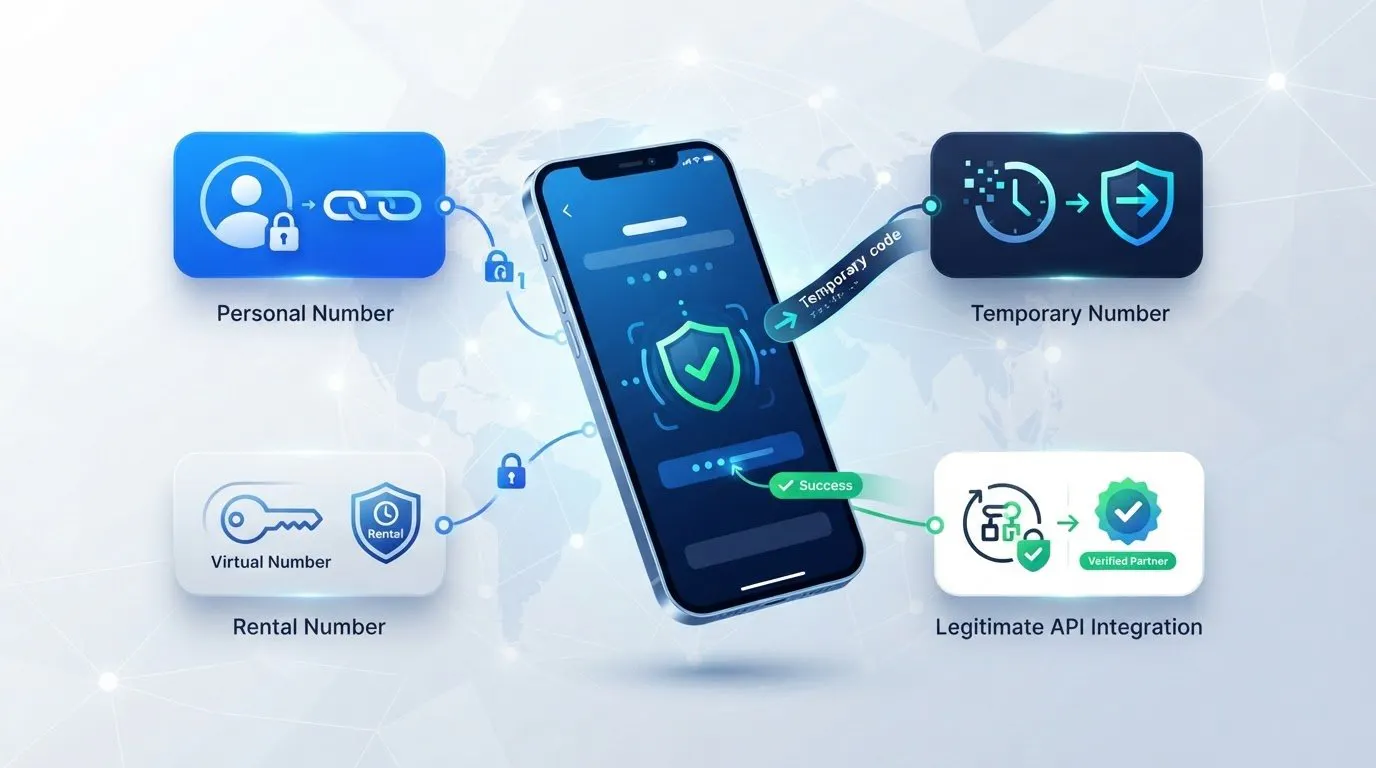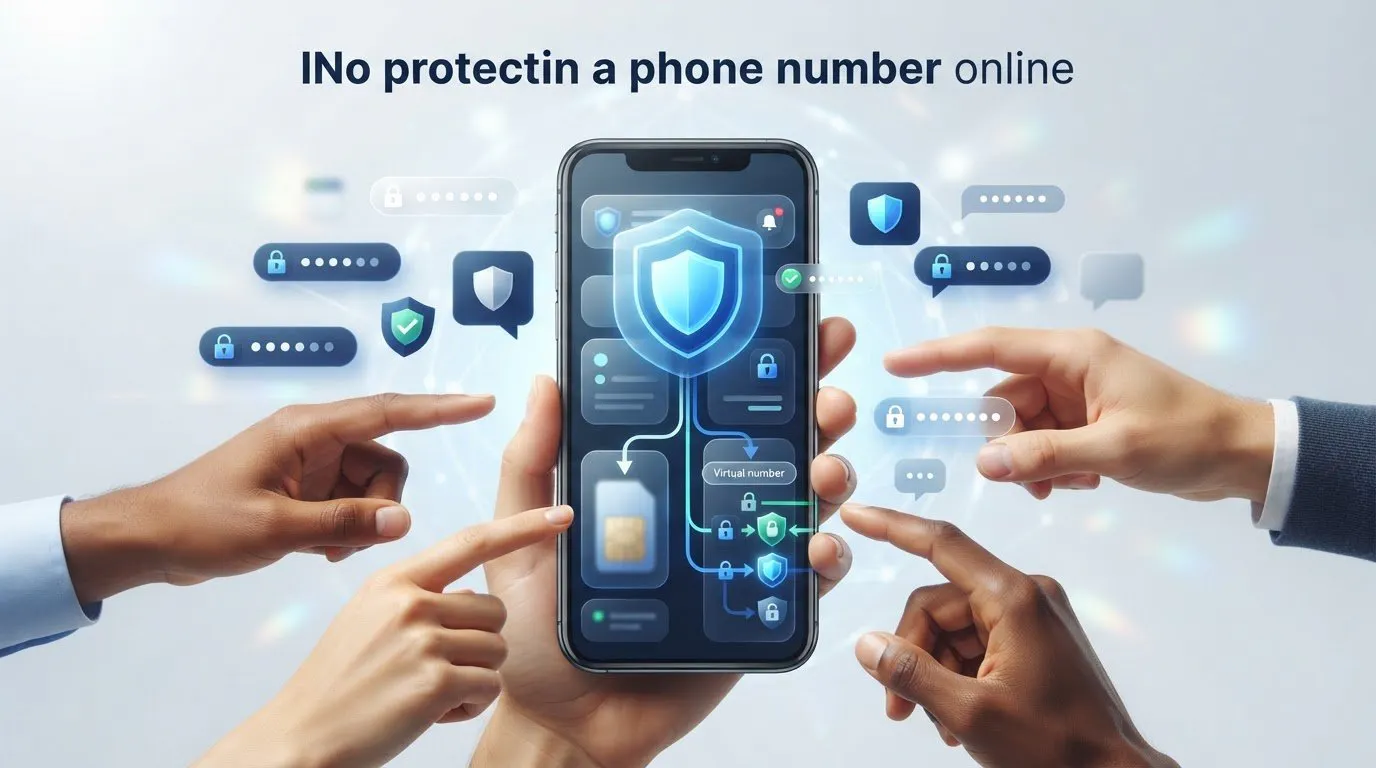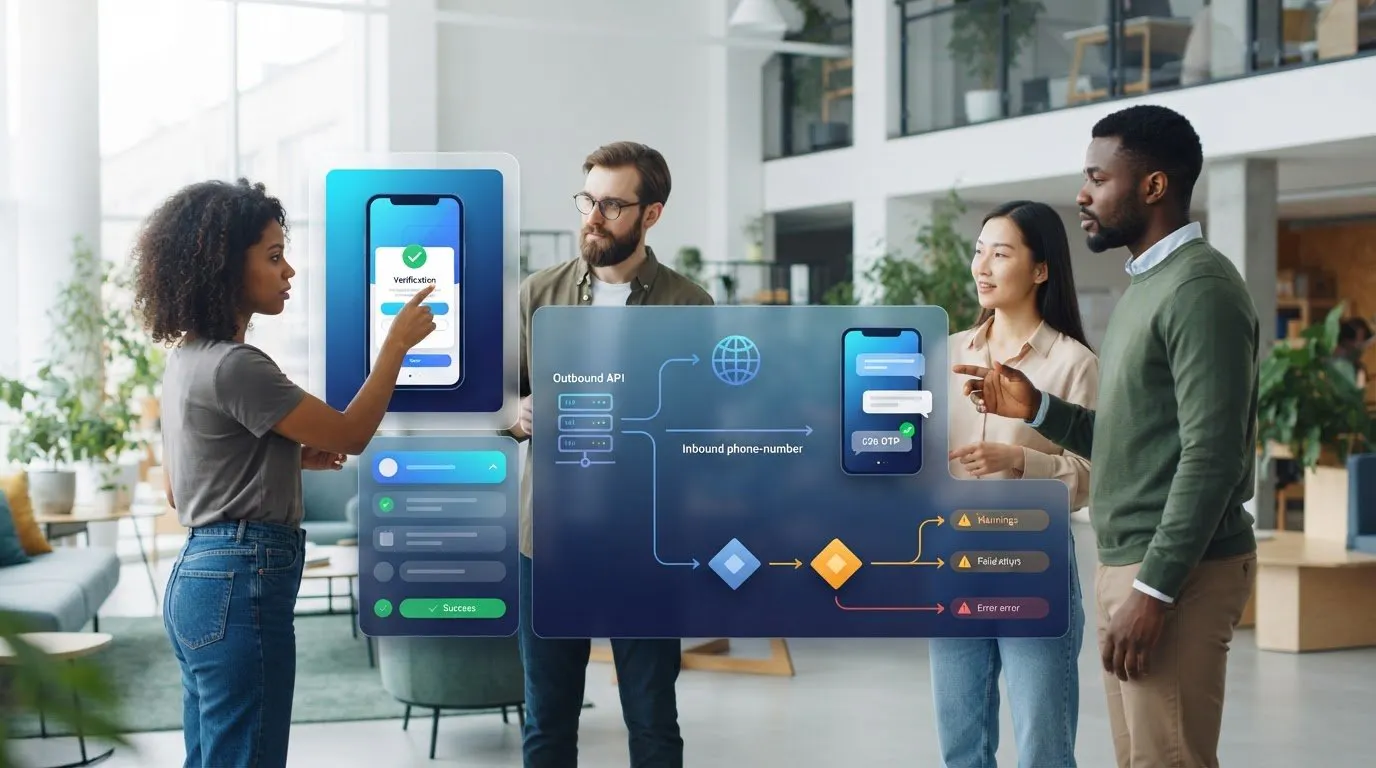
Physical hardware is no longer the gatekeeper of your digital identity. You've likely felt the frustration of needing a secondary number for a global account only to realize your phone's SIM tray is already full or that international roaming fees are prohibitive. It's a common struggle to balance the need for platform access with the desire to keep your primary contact information private. This is where a virtual number without sim card becomes an essential tool for maintaining operational security and digital distance.
We've reached a point where securing a functional mobile identity for SMS verification shouldn't require a trip to a retail store or a wait for a courier. This guide explores the mechanics of SIM-free verification, ensuring you can receive critical codes instantly without the risk of privacy leaks or hardware bloat. You'll learn how to leverage professional-grade inbound SMS solutions and mobile VoIP rentals to manage multiple accounts with technical precision. We'll cover everything from manual activations to seamless API integration for those who need to scale their digital footprint while maintaining total anonymity.
Key Takeaways
- Understand how a virtual number without sim card leverages cloud-based routing to provide a functional mobile identity without the need for physical hardware.
- Learn why mobile-sourced virtual numbers offer higher trust scores than standard VoIP, ensuring successful verification on platforms like WhatsApp and Tinder.
- Discover how to secure your digital footprint by using inbound-only SMS activations to maintain anonymity across social media and dating applications.
- Identify the most efficient methods for scaling digital operations through long-term number rentals and seamless API integrations.
Table of Contents
- What is a Virtual Number Without a SIM Card?
- How Virtual Numbers Work: The Technology Behind SIM-Free Verifications
- VoIP vs. Mobile Virtual Numbers: Choosing the Right Tool
- Key Use Cases: From Privacy Protection to High-Volume Automations
- Getting Started with Anosim: Seamless SMS Activation and Number Rental
What is a Virtual Number Without a SIM Card?
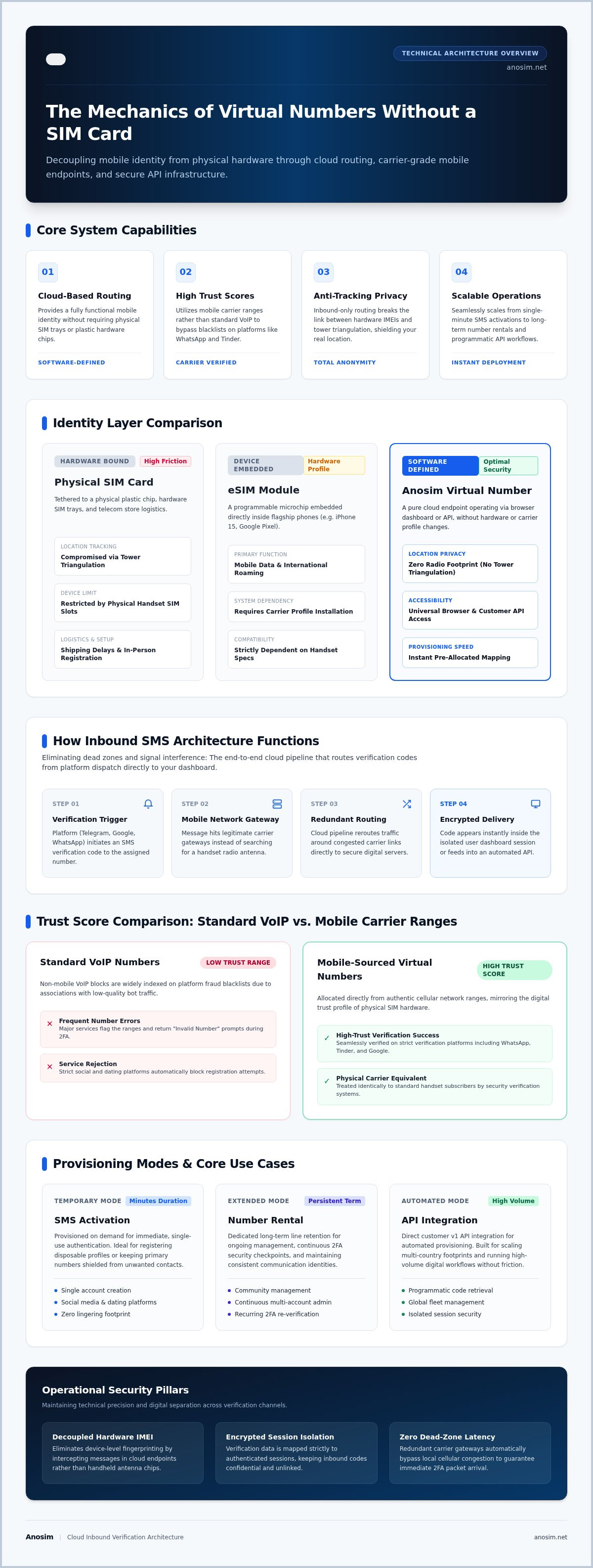
A virtual number is a telephone identifier that exists independently of any physical device or hardware component. Unlike standard mobile subscriptions, it isn't tethered to a plastic chip or a specific handset. Instead, it functions as a digital endpoint within a cloud-based infrastructure. When a service sends an SMS to this number, the signal is intercepted by a server and routed directly to a web interface or an API. This allows you to access a virtual number without sim card from any device with an internet connection, effectively decoupling your mobile identity from your physical location.
These numbers are provisioned for specific tasks and durations. If you need a one-time SMS activation for a social media account, the number is allocated for minutes. If you require a long-term solution for community management, you can opt for a rent number service. This flexibility is critical for users who have reached the physical limit of their device's SIM slots or those who prioritize keeping their primary hardware "clean" from third-party tracking. By using Voice over IP technology, providers can bridge the gap between traditional cellular networks and digital interfaces.
The Difference Between Virtual Numbers and eSIMs
While both technologies remove the need for physical plastic, they serve different operational purposes. An eSIM is a programmable chip embedded in modern hardware, such as an iPhone 15 or a Google Pixel. It still requires a hardware-level profile installation and is primarily designed for mobile data and roaming. In contrast, a virtual number without sim card is entirely software-defined. It operates through a browser or an API, requiring no hardware compatibility. Anosim provides these numbers as a service that doesn't require you to modify your device settings or install new carrier profiles.
Why Physical SIMs are Becoming Obsolete for Verification
Physical SIM cards carry inherent risks and inefficiencies that digital-first professionals can't ignore. Every physical SIM is linked to a specific IMEI and can be tracked through tower triangulation, compromising your location privacy. Additionally, the logistics of acquiring a physical SIM involve shipping times and identity registration that slows down rapid account creation. Virtual numbers eliminate these hurdles. They offer a rental layer that is provisioned instantly, allowing for immediate verification on high-trust platforms without the baggage of physical tracking or administrative delays. This makes them the superior choice for users managing multiple global accounts simultaneously.
How Virtual Numbers Work: The Technology Behind SIM-Free Verifications
Cloud-based routing transforms how we handle mobile identity. When a service like Google or Telegram sends a verification code, it doesn't search for a radio antenna in your pocket. Instead, the message hits a mobile network gateway that redirects the data packet to a digital server. This server instantly updates your dashboard, making the code accessible via your browser. This process is the core mechanism of a virtual number without sim card, allowing for global accessibility without hardware constraints or geographical limitations.
The role of Mobile VoIP is central to successful verifications. Many platforms maintain blacklists of standard VoIP ranges because they're often associated with low-quality bot traffic. By using numbers sourced from legitimate mobile carrier ranges, you ensure a trust score that matches a physical SIM. This prevents the invalid number errors common with cheaper, non-mobile alternatives. Each code is delivered only to the account that ordered the number, so no other user can read your verification data.
Provisioning happens in seconds because the infrastructure is pre-allocated. When you select a country and service, the system simply maps that number to your account session. This eliminates the days of waiting associated with physical SIM shipping or local registration. It's a high-availability setup designed for users who need to scale their digital operations without technical friction.
Operating without a radio antenna provides a distinct advantage in reliability. Cloud infrastructure doesn't suffer from dead zones or local signal interference. This is why professionals rely on the Anosim activation service for time-sensitive OTP needs. It's a pragmatic solution for those who can't afford to wait for a signal to catch up with a physical device.
Data Privacy and Anonymity
A SIM-free number serves as a technical firewall between your identity and data brokers. By using these numbers, you prevent your primary contact data from reaching registration databases that are frequently scraped or sold. It's equally important to use mobile-sourced IPs to ensure your digital footprint remains consistent with the number's origin, preventing security algorithms from flagging your account for suspicious activity. Digital anonymity is the ability to operate online without linking a physical SIM to a personal ID. If you require this level of discretion for your projects, you can explore mobile VoIP rentals to secure your digital presence efficiently.
VoIP vs. Mobile Virtual Numbers: Choosing the Right Tool
Not all digital identifiers are created equal. When you source a virtual number without sim card, the underlying infrastructure determines whether your account registration succeeds or triggers an immediate ban. Standard VoIP numbers, often provided by free apps, are frequently flagged as "non-mobile" by high-security platforms like WhatsApp, Tinder, or banking services. These services query carrier databases in real time to identify the line type. If the number is recognized as a data-center range rather than a legitimate mobile carrier line, the verification code may never be sent, or the account might be restricted shortly after creation.
Mobile-sourced virtual numbers provide a technical advantage by carrying the same trust score as a physical SIM. These numbers are provisioned from actual mobile network operator ranges, ensuring they pass the "mobile" check during automated security audits. While "free" numbers often reuse public pools that have been blacklisted across multiple services, professional-grade numbers offer a clean slate. Investing in a high-reputation number is a pragmatic choice for users who cannot afford the downtime or data loss associated with account suspensions.
Identifying High-Trust Numbers
A high-trust number is defined by its metadata and the reputation of the IP addresses associated with its routing. When you use mobile VoIP numbers, you are accessing infrastructure that mimics the behavior of a standard handset. Security algorithms look for consistency between the number's origin and the network behavior. To ensure account stability, professionals often check if a number is recognized as a mobile carrier line through HLR (Home Location Register) lookups. This technical verification ensures the number is "clean" and ready for business-critical operations without the risk of being filtered as spam by the receiving platform.
When to Rent vs. When to Activate
Choosing between a one-time activation and a long-term rental depends on your specific project requirements. If you're performing a one-off signup for a service where you won't need to receive future codes, a standard SMS activation is the most efficient path. It's a low-cost, high-speed solution for bypassing initial gates. However, for primary business accounts on Telegram or community management tools, long-term retention is necessary. If a platform requires re-verification after a password change or a login from a new location, you'll need continued access to the same number. In these scenarios, the Anosim rent number service provides 30-day or longer options to ensure you never lose access to your digital identity. This scenario-solution framework allows you to balance cost with operational security based on the account's longevity.
Key Use Cases: From Privacy Protection to High-Volume Automations
Theory is only useful when applied to specific operational challenges. While we've established how the technology routes data, the practical value of a virtual number without sim card lies in its ability to solve real-world access and privacy issues. For many, the primary driver is the protection of personal data. When you sign up for a new service, you're often forced to hand over a mobile number that becomes a permanent part of your digital profile. By using a virtual alternative, you ensure that if that service suffers a data leak, your primary contact information remains secure and unlinked from the breach.
Beyond individual privacy, these numbers are indispensable for professional community managers and digital marketers. Maintaining multiple accounts on platforms like Discord or WhatsApp is technically impossible with a single physical SIM card. Virtual numbers provide the infrastructure to scale these operations safely. You can assign unique identifiers to different projects or client accounts, ensuring that a restriction on one doesn't trigger a domino effect across your entire network. This compartmentalization is the cornerstone of professional digital management.
Bypassing Tinder and Telegram Verification
Platforms like Tinder and Telegram are notoriously aggressive with their verification protocols because they prioritize user authenticity. They often flag accounts that appear to be using low-quality VoIP ranges. To succeed here, you must match your virtual number without sim card to your proxy's geographic location. If your proxy is based in the UK, your virtual number should also be from a UK mobile range. This consistency reduces the risk of automated bans triggered by mismatched metadata. For a deeper dive into the technical nuances of this process, you can read our guide on how to Bypass Tinder Phone Verification Without Data Leaks.
Developer Workflows and Automation
For technical users, manual activation is too slow for high-volume tasks. Developers often need to verify hundreds of accounts for testing environments or large-scale marketing campaigns. Integrating these flows into Python or JavaScript workflows allows for complete automation of the OTP reception process. The Anosim API (v1) provides the necessary hooks to request numbers and retrieve SMS codes programmatically. This eliminates human error and drastically reduces the time required for bulk verification workflows. If your project requires high-volume throughput, you can get started with our API documentation to streamline your verification pipeline.
Getting Started with Anosim: Seamless SMS Activation and Number Rental
Selecting your first virtual number without sim card requires a pragmatic assessment of your technical goals. You don't simply purchase a number; you provision a specific digital gateway based on the security requirements of your target platform. The Anosim dashboard is engineered for high-speed utility, allowing you to filter by country and service in seconds. Once a number is allocated, the incoming OTP appears in your active sessions list, providing a direct route from the mobile network to your digital interface. This process eliminates the technical friction typically associated with traditional carrier setups.
Your choice between a one-time activation and a long-term rental should be dictated by your Job to be Done (JTBD). If you only need to bypass a single gate for a non-critical account, a standard activation is the most efficient path. However, if you're building a persistent digital presence or managing a business-critical Telegram account, long-term rentals are mandatory. Mixing these use cases can lead to lost access if a platform requires re-verification at a later date. Matching the service duration to the account's lifecycle ensures operational continuity.
Selecting Your Service
For users who need to manage multiple platforms using a single identifier, the Rent Service is the appropriate choice. This option allows you to receive codes from various services on the same number over an extended period. When selecting your number, always align the country and carrier with the geographic region of your target account. This consistency is vital for passing automated fraud checks. If you encounter delivery delays or platform-specific quirks, the Anosim FAQ provides documented troubleshooting protocols to help you resolve common carrier-side issues quickly.
Integrating with Mobile Proxies
Pairing a virtual number without sim card with a mobile proxy creates a comprehensive privacy shield for your digital operations. While the virtual number manages the identity layer, the mobile proxy secures the network layer. These proxies, available for example from our partner proxied.com, route your data traffic through real cellular infrastructure, ensuring your IP address matches the reputation of a standard mobile user. This dual-layer strategy is the industry standard for maintaining high-trust scores on aggressive platforms. To understand the full technical implementation of this setup, refer to our pillar guide: Mobile Proxy: The Complete Technical Guide.
Maintaining a secure SIM-free identity in 2026 requires a modular approach to digital tools. Never reuse the same virtual number for unrelated high-risk projects. Keep your API credentials isolated and rotate them periodically to prevent unauthorized access. By treating your virtual communication tools as professional infrastructure rather than disposable assets, you ensure a stable, anonymous, and efficient digital footprint.
Future-Proof Your Digital Identity
The shift toward software-defined mobile identity is a pragmatic necessity as platforms increase their verification demands. You've seen how a virtual number without sim card bypasses the limitations of physical hardware, providing a high-trust alternative for global account management. By leveraging mobile-sourced infrastructure, you ensure your registrations are recognized as legitimate by even the most aggressive security algorithms. Whether you need a one-time activation or a long-term rental, the key is matching your tool to your specific operational requirements.
Modern verification workflows don't have to be complex. With the Anosim API v1, developers can automate number orders and SMS retrieval, while mobile-sourced numbers pass carrier checks far more reliably than standard VoIP lines, without ever touching a SIM tray. It's time to reclaim your digital privacy and manage multiple accounts with technical precision. Secure your infrastructure and stop relying on physical hardware that limits your scalability.
Get your first virtual number for SMS verification on Anosim and start securing your digital footprint today.
Frequently Asked Questions
Can I receive SMS online without a physical SIM card?
Yes, you can receive SMS online by using a virtual number without sim card. These numbers exist as software-defined endpoints on a server rather than physical chips. When a service sends a message to the number, it's intercepted and routed directly to your web interface or API. This allows you to manage verifications from any browser without needing a radio antenna or a spare device slot.
Do virtual numbers work for WhatsApp and Telegram verification?
Yes, provided the number is sourced from a mobile carrier range. Platforms like WhatsApp and Telegram often block standard VoIP numbers because they lack a mobile trust score. By using mobile VoIP rentals or SMS activations from legitimate mobile pools, you can bypass these security gates. It's essential to match the number's country to your proxy's location to ensure the verification succeeds without triggering automated account restrictions.
Is it legal to use a virtual number for app signups?
Using a virtual number is legal in most jurisdictions for privacy protection and account management. These tools are standard for professionals who want to avoid data leaks or manage multiple digital identities. However, you should always review the specific Terms of Service of the application you are joining. While using these services isn't illegal, some platforms may have internal policies regarding the use of non-physical numbers for registration.
What is the difference between SMS activation and renting a number?
SMS activation is a one-time service designed for a single verification code. Once the code is received, the session ends and the number is released. Renting a number through the Rent Service provides exclusive access for a longer duration, such as 30 days or more. You should choose a rental if your account might require re-verification in the future, whereas activations are more efficient for one-off signups that won't require persistent access.
Can I use a virtual number for outgoing calls?
No, the virtual numbers provided by Anosim are designed for inbound use only. The infrastructure is optimized for receiving verification codes and maintaining digital anonymity, not for placing calls. If you require a service for outgoing calls or voice messages, you would need to look for a traditional VoIP provider. Anosim focuses strictly on inbound activations and rentals to ensure maximum reliability for verification tasks.
How long can I keep a virtual number without a SIM?
The duration depends on the specific service you select. One-time activations typically last for a few minutes until the code is received. If you choose to rent a number, you can maintain access for extended periods, often starting from 30 days. This allows you to keep a consistent mobile identity without the need for physical hardware. You can renew these rentals through the dashboard to ensure your long-term accounts remain active.
Will banks accept virtual numbers for 2FA?
Acceptance varies between financial institutions. Many banks use high-security filters that specifically look for mobile carrier lines. Using a mobile-sourced virtual number without sim card increases your chances of success compared to using standard data-center VoIP. However, some banks strictly require a physical SIM registered to a personal ID. We recommend testing a single activation first to confirm if your specific bank accepts virtual mobile ranges for their 2FA protocols.
Do I need to provide ID to get a virtual number on Anosim?
No, Anosim doesn't require personal identity documentation to provision numbers. The service is built as a privacy-first tool for users who value digital anonymity. You can secure a functional mobile identity for SMS verification without linking it to your passport or government ID. This allows you to protect your personal data while managing global accounts, making it a pragmatic choice for professionals who prioritize operational security and discretion.