Can a virtual number protect your identity when you sign up for an online service? It can reduce exposure of your primary phone number, but it won’t make you completely anonymous. If you want to protect identity with virtual numbers, it helps to know what information a number can shield and what it can’t.
It’s reasonable to hesitate before sharing your personal number with an unfamiliar app or website. Using a separate number for supported SMS verification can limit where your primary number is disclosed. However, account activity and other personal details may still identify you. A virtual number is one privacy measure, not a substitute for secure account habits.
This guide explains what signup services may learn from a phone number, where virtual numbers have limits, and how to choose an option for a one-time code or a longer-term need. It compares SMS Activation, Rent Service, and Rent Number, then covers practical safeguards, including why temporary numbers aren’t suitable for critical accounts you need to keep. The goal is to reduce unnecessary exposure without mistaking number privacy for total anonymity.
Key Takeaways
- A virtual number lets a supported signup service receive a different contact number instead of your primary one, reducing unnecessary exposure.
- To protect identity with virtual numbers, remember that a number changes the contact detail you provide, not every signal linked to your online activity.
- Choose an option based on how long you need access and whether you expect one verification code or repeated SMS access. Anosim covers a wide range of websites, Android apps, and iOS applications.
- Strengthen the account with a unique password and available protection measures, and avoid logging into many accounts from the same browser profile.
- Learn how SMS Activation, Rent Service, and Rent Number differ so you can match their uses and billing models to your verification needs.
Table of Contents
- How Virtual Numbers Help Protect Your Identity During Online Signups
- What a Virtual Number Reveals, and What It Cannot Hide
- Choose the Right Virtual Number for Your Privacy Goal
- Use a Virtual Number Safely: A Signup Privacy Checklist
- Protect Your Identity With Anosim's Virtual Number Options
How Virtual Numbers Help Protect Your Identity During Online Signups
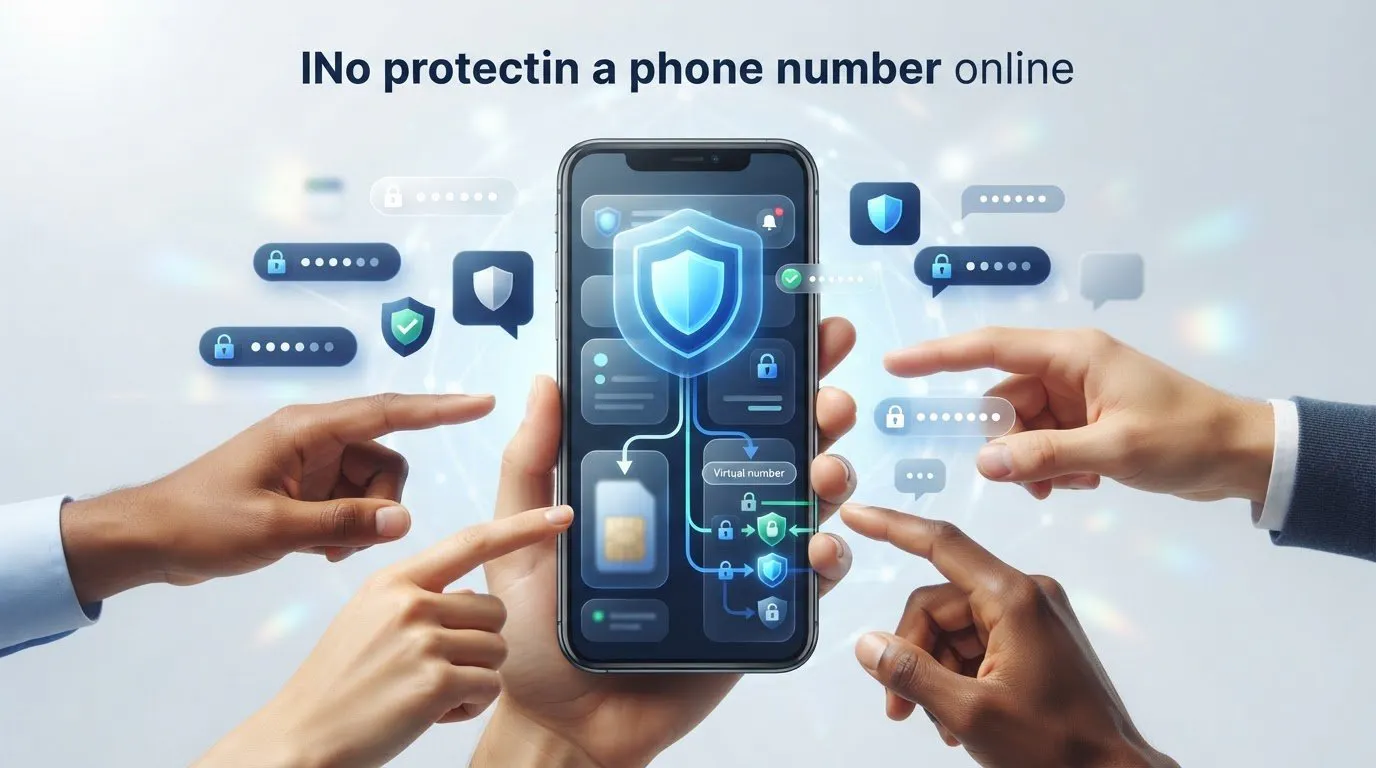
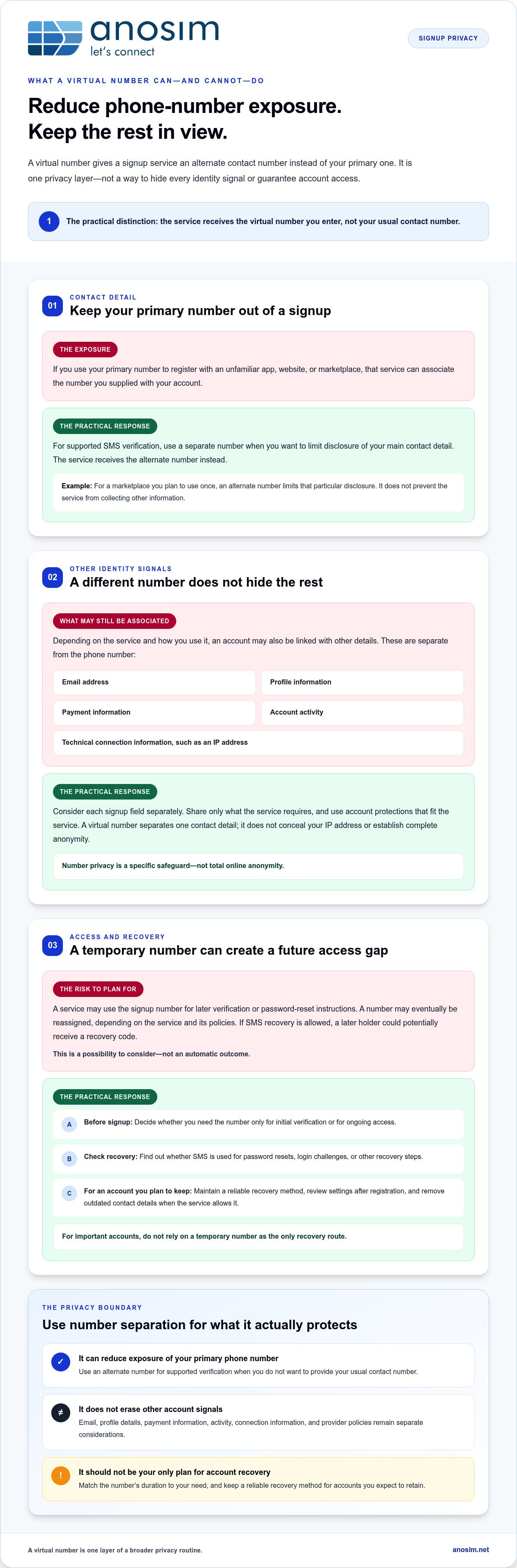
A virtual number is a separate phone number used to receive messages, such as an SMS verification code, without giving a signup service your primary number. The term covers different kinds of number services. A virtual number can route communications without being tied to a conventional phone line in the same way. For an online signup, the practical distinction is simple: the service receives the virtual number you enter, not your usual contact number.
What does a virtual number protect during signup?
That separation can reduce how widely your primary number is exposed. You might use a separate number when registering with an unfamiliar app, creating an account on a website, or completing an online transaction that asks for SMS verification. If the account later receives notifications or the service stores the number in its records, it has the alternate contact detail you supplied rather than your main one.
Consider signing up for a marketplace you plan to use once. If you enter your primary number, the marketplace can associate that contact detail with your account. If you use a virtual number instead, you limit that particular disclosure. This doesn’t prevent the service from recording other information you provide or collect during the session, and it doesn’t conceal your IP address. The benefit is specific: separating a phone contact from your primary number.
Virtual-number privacy is not total anonymity
A different number changes one piece of account information, not every identity signal. A website may still associate an account with its email address, profile details, payment information, or activity on the service. Network information, including an IP address, is separate from the phone number entered at signup. A virtual number alone doesn’t establish who is behind an account or conceal those other signals.
A virtual number reduces number exposure, not every identity signal.
Also consider the number provider’s role. A provider may retain account or service information under its own policies, so using a separate number shouldn’t be treated as proof that no one can trace it. Privacy depends on more than the number itself, including what details you give each service and how you manage the account afterward.
Use a virtual number when your goal is to avoid disclosing your primary number during supported verification, not to hide all account activity. That distinction helps you decide where number separation is useful and where stronger account protections or another verification method may be more appropriate. To protect identity with virtual numbers, treat the number as one layer of privacy, alongside careful sharing and sound account security.
What a Virtual Number Reveals, and What It Cannot Hide
A virtual number changes the phone contact supplied during signup. It doesn’t control what else the service records or what information may be associated with the account. Treat number privacy as a specific safeguard, then consider the other details you share and how you’ll retain access to the account.
Why a phone number is only one identity signal
Depending on the service and how you use it, account records may include details such as an email address, profile information, or activity within the platform. A service may also process technical connection information, such as an IP address. These details don’t all identify a person on their own, and collection practices vary. A separate number limits exposure of your primary contact detail, but it doesn’t replace reviewing what information you provide.
For example, registering with an alternate number while using an email address that includes your full name still connects identifying information to the account. The number and email serve different purposes, so consider each field separately. Share only what the signup requires, and use account protections that fit the service. That keeps a virtual number in its proper role: one part of a broader privacy routine.
How number reuse and account recovery affect privacy
Access matters if a service uses the signup number to send future verification codes or reset instructions. A number may eventually be reassigned, depending on the service and its policies. If it remains attached to an account, a later holder could potentially receive a recovery code where SMS recovery is allowed. This is a possibility to plan for, not an automatic outcome.
Before signing up, look at how the platform lets you recover access. If you expect to keep the account, consider whether you can maintain access to the number or add another recovery method. For important accounts, don’t rely on a temporary number as the only recovery route. Review recovery settings after registration, too, so you know which contact methods remain connected to the account.
- Short-term signup: Decide whether the number is needed only for initial verification or for ongoing access.
- Account recovery: Check whether SMS is used for password resets, login challenges, or other recovery steps.
- Long-term access: Keep a reliable recovery method available, and remove outdated contact details when the service allows it.
Phone-number privacy is not complete online anonymity. A virtual number separates one contact detail from your primary number, while account records and connection information remain separate considerations. If you need repeated SMS access across services, Anosim’s Rent Number option gives you the whole number for the rental period, with unlimited SMS across services. Choose based on how long you need access and how the account handles recovery.
Choose the Right Virtual Number for Your Privacy Goal
Choose based on the account’s expected lifespan, how often it may request SMS verification, and whether you’ll need the number for recovery. A one-time signup and an account you plan to use over time have different access needs. Privacy is one part of the decision; convenience and the ability to receive later codes matter too.
Match the option to the access you need
- SMS Activation: pay per received code. Best fit for a supported signup where you need a code for verification.
- Rent Service: one number for a selected rental period. Best fit for an account that may need more than one code during that period.
- Rent Number: the whole number for the rental period, with unlimited SMS across services. Best fit for ongoing access across services.
These options address different access patterns, but none guarantees that a platform will accept a number. Compatibility varies by service. Anosim covers a wide range of websites, Android apps, and iOS applications. Select the intended service carefully and consider its verification process before choosing an option.
When a single verification code may be enough
If you’re creating an account for a short-term purpose and expect to receive just one verification code, a per-code option may fit the task. SMS Activation charges per received code, so billing is tied to the code received rather than a selected rental period. Before choosing it, consider whether you might need another code later for login or account recovery.
When continuing access matters
Some accounts request another SMS after signup, such as when you sign in again or recover access. If that’s likely, think beyond the initial verification step. Rent Service reserves a number for one service for the selected duration, while Rent Number gives you the whole number across services. For more detail on that use case, read this dedicated virtual number guide.
Set the duration according to the account’s expected use and recovery needs, not just how quickly you want to complete signup. If SMS is the only recovery method and you can’t receive messages later, regaining access may be difficult. For important accounts, review recovery options before registration and keep a reliable method available.
To protect identity with virtual numbers, separate the privacy goal from the access plan: use a one-code model for a one-code task, and choose continued access when future verification is plausible. This makes the choice practical without treating a separate number as a guarantee of acceptance or anonymity.
Use a Virtual Number Safely: A Signup Privacy Checklist
A virtual number can reduce exposure of your primary contact detail, but careful setup still matters. Use this sequence to keep verification predictable, limit unnecessary information sharing, and make sure you can recover the account later.
Before requesting a verification code
Decide whether you need a code for signup only or may need SMS access again. Then confirm the intended website or app is among the supported options. Anosim covers a wide range of websites, Android apps, and iOS applications, though acceptance can vary by service. Use a clean, dedicated browser profile for the account, and avoid adding personal details the signup doesn’t require.
- Define the use case. Identify whether you’re creating a short-term account or one you expect to keep. Consider whether the service might require SMS later for sign-in or recovery.
- Choose the right number arrangement. Match your expected access period and code needs to the option you select. Don’t assume a number will be accepted by every platform.
- Prepare a consistent setup. Use the same device, browser profile, and network connection throughout verification. Avoid switching between VPNs, proxies, or devices during the process, since changing connection conditions can complicate a signup flow.
- Keep accounts separate. Use a dedicated browser profile for the signup rather than logging into many accounts from one profile. Don’t rotate browser fingerprints, devices, or environments to complete verification.
- Share selectively. Provide the information needed to create the account, but avoid linking extra personal details without a clear reason. A separate number doesn’t make other details anonymous.
After verification: protect access to the account
Verification completes signup, not account security. Create a strong, unique password, ideally stored in a password manager, and enable available account-protection measures. Where supported, an authenticator app or hardware security key can be an alternative to SMS-based multi-factor authentication. Choose from the protection methods the service provides.
- Save recovery information. Store recovery codes and account credentials securely, separate from the verification number. Keep a recovery method you can access if the number is no longer available.
- Review account recovery. Check whether the service uses the phone number for password resets or future login codes. Update recovery settings if you add a more durable method.
- Keep verification consistent. Complete the process with the same device, browser environment, and network connection. Avoid changing VPNs, proxies, or devices mid-verification.
If you need help understanding the verification steps, Anosim’s verification and setup FAQ provides relevant guidance. A consistent process and secure recovery plan make it easier to protect identity with virtual numbers without relying on number separation alone.
Ready to use a separate number for a supported signup? Explore SMS Activation for verification.
Protect Your Identity With Anosim's Virtual Number Options
Anosim is a privacy-focused service for receiving inbound SMS verification codes. Using a separate number can help keep your primary number out of supported signup flows, while the right option depends on whether you need one code, access for a set period, or ongoing use. Anosim covers a wide range of websites, Android apps, and iOS applications, but acceptance varies by platform and isn’t universal.
Match the Anosim option to your verification needs
- SMS Activation: For a signup that needs a verification code, SMS Activation charges per received code, with each OTP billed individually. It may suit a one-time verification task when you don’t expect to need the number again.
- Rent Service: If you expect more than one code or need continued access for a limited period, Rent Service reserves one number for that service for a selected rental duration, which you can extend while the rental is active. Choose a duration that reflects how long the account may require SMS verification.
- Rent Number: For ongoing access across services, Rent Number gives you the whole number for the rental period, with unlimited SMS from all services. Consider this model when repeated access matters across several services, not just one.
These options differ by billing structure and intended use. Before selecting one, consider the account’s likely verification pattern: whether signup is the only step, whether later login checks are possible, and how you’ll recover the account if you can’t receive another message. A longer access model may fit recurring verification needs, but it doesn’t guarantee that a platform will accept the number.
Start with a privacy-conscious verification choice
A separate number reduces exposure of your primary phone number during supported verification. It doesn’t hide every detail connected to an account or guarantee anonymity, so pair number separation with careful sharing and strong account security. For accounts you expect to keep, consider recovery needs before choosing a short-term option.
Keep the scope of number separation in mind: it doesn’t change the limits of number-based privacy or determine how a signup platform handles its own account records.
Match the option to the task: SMS Activation for individual received codes, Rent Service for access over a selected period, or Rent Number for unlimited SMS and use across services. Choose a virtual number for verification.
Make Your Next Signup More Deliberate
Let the account’s purpose guide your next step. Before entering any contact detail, decide what information the service genuinely needs, how long you expect to use the account, and how you’ll regain access if verification is requested again. That pause turns privacy into a repeatable habit, rather than a one-time adjustment.
A virtual number can help you protect identity with virtual numbers by reducing exposure of your primary phone number during supported verification. Treat it as one layer in a broader approach: keep credentials unique, store recovery information securely, and share personal details selectively. Most Anosim numbers are carrier-issued numbers on physical SIM cards, and support is available 24/7 via Telegram, website chat and email if you need help with your verification choice.
When you’re ready to use a separate number for an eligible signup, choose the option that matches your access needs. Choose a virtual number for verification, and take a measured step toward better control of your contact information.
Frequently Asked Questions
Is a virtual number completely anonymous?
No. A virtual number can help you protect identity with virtual numbers by keeping your primary phone number out of a signup, but it doesn’t make every part of your online activity anonymous. A service may have other account details, and technical connection information is separate from the number. For example, using an alternate number while registering with an email that identifies you still links that detail to your account.
Can a virtual number protect my identity when I sign up for a banking service?
A virtual number can keep your primary number out of a signup, but it can’t replace a bank’s identity checks or guarantee that the number will be accepted. Financial services may have specific verification and recovery requirements, and temporary numbers are a poor choice for critical accounts you need to retain. Use a number you control long term and follow the bank’s stated process for verification and account recovery.
Will a virtual number hide my IP address?
No. A virtual number is used for receiving SMS; it doesn’t conceal the IP address associated with your internet connection. These are separate pieces of information. If a signup requires a code, keep your device and network setup consistent while completing it rather than changing connections partway through. Also avoid assuming that a different phone number makes an account untraceable or conceals other details you provide to the platform.
Can I receive verification codes with a virtual number?
Yes, a virtual number can receive inbound verification messages when the number and service are supported. Anosim covers a wide range of websites, Android apps, and iOS applications, but individual platforms decide which numbers they accept. Before starting, select the intended service and country in the activation flow, then use the number for that signup. If a platform doesn’t accept it, remember that acceptance differs between services.
What happens if I lose access to the virtual number linked to an account?
You may be unable to receive a later login code or SMS recovery message. The practical impact depends on the platform’s recovery process, so set up alternatives while you can still access the account. Save recovery codes in a secure password manager or another protected location, and add an available non-SMS recovery method if the service offers one. Don’t make an inaccessible number your only route back into an important account.
Should I use the same virtual number for multiple online accounts?
It depends on whether simpler management or separating account contexts matters more to you. Reusing a number can make access easier to organize, but it also associates that contact detail with multiple services. Separate numbers may keep those signup contexts apart, though they don’t provide anonymity by themselves. Whichever approach you choose, use distinct passwords, keep recovery details current, and avoid managing many accounts from the same browser profile.