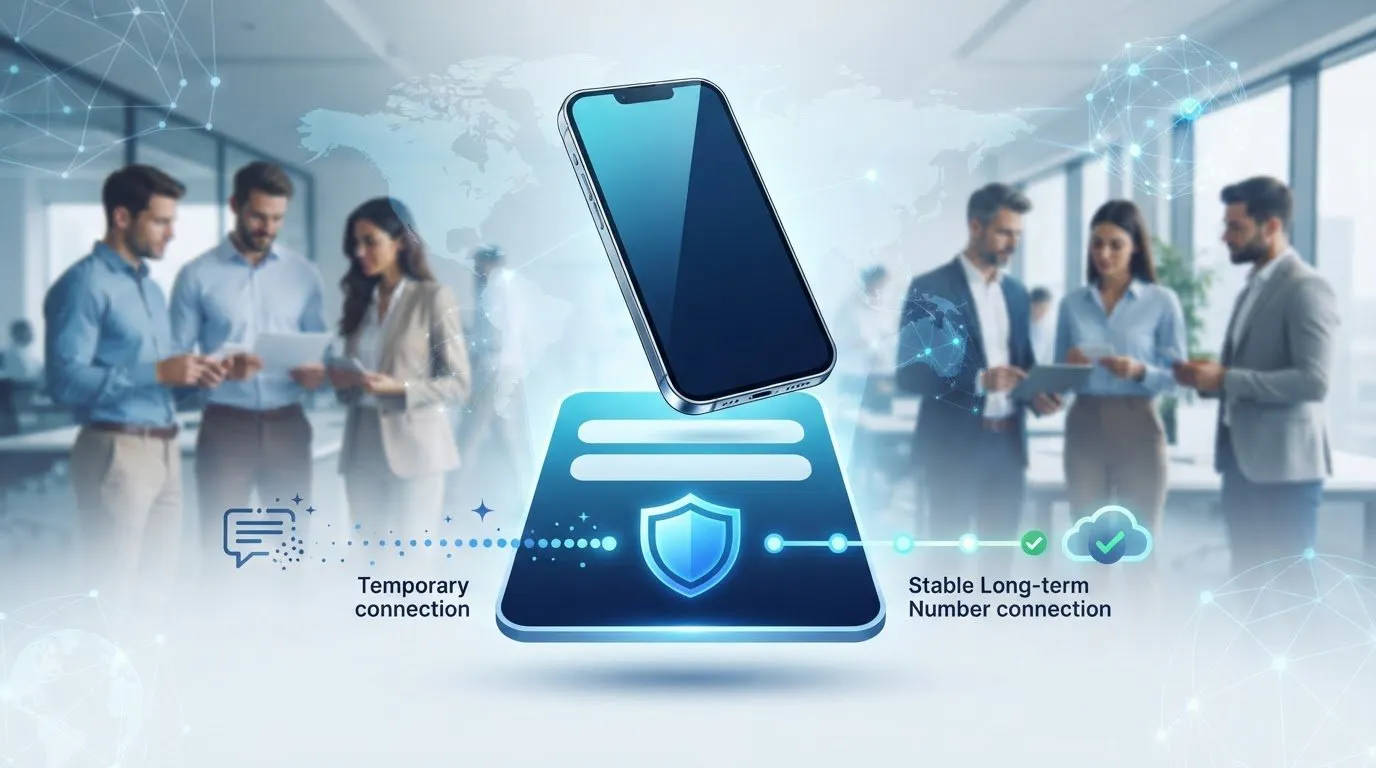
Your personal number doesn’t have to be the number clients or online contacts see. A virtual number for professional privacy can keep your personal number separate from work communications, but it doesn’t make you invisible to the service handling the number. Calls and messages may pass through provider systems, which can process communication data.
That distinction matters if you freelance, run a side business, or use a separate number for business accounts. A second number creates a practical boundary, while the provider may still process account or usage information under its privacy practices.
This article explains how virtual numbers work, what information a provider may process, and what separating your personal number does and doesn’t protect. You’ll also learn how a separate number can support online business tasks without tying the number to one physical phone line or SIM card.
Key Takeaways
- Review a provider’s privacy policy to understand what account and communication data it may collect, process, retain, or erase.
- A separate number can keep your personal contact details private from clients, but it doesn’t make your communications invisible to the provider.
- Assigning numbers distinct roles can help keep business, side-hustle, and personal communications organized.
- Internet-based calling routes communication through online systems; learn how Anosim’s SMS Activation and number rental offerings fit specific verification needs.
Table of Contents
- What data does a virtual phone number provider store about me?
- How can a virtual business phone number protect your privacy?
- Business and side-hustle communication
- How virtual phone numbers work over the internet
- Anosim: SMS Activation
What data does a virtual phone number provider store about me?
A virtual number for professional privacy can keep your personal number from callers, but the provider may still process information about your account and communications. Calls and SMS can pass through provider systems. Read the privacy policy for the categories collected, how long records are retained, and how to request deletion. This helps you assess what separation the number actually provides.
Features can affect what information a service handles. Caller ID, call blocking, and call recording may involve caller details or stored audio. Compare services by their features and terms, not just the monthly charge. For example, look at how recording works and what support can help with, such as account access or privacy requests. Clear explanations make the service easier to evaluate.
Provider records may also be obtained through legal processes, including subpoenas, court orders, and CALEA-compliant requests. The European Union says GDPR applies to companies processing personal data belonging to individuals in the EU. A virtual number for professional privacy is therefore a boundary around the number you share, not a promise that provider records are inaccessible.
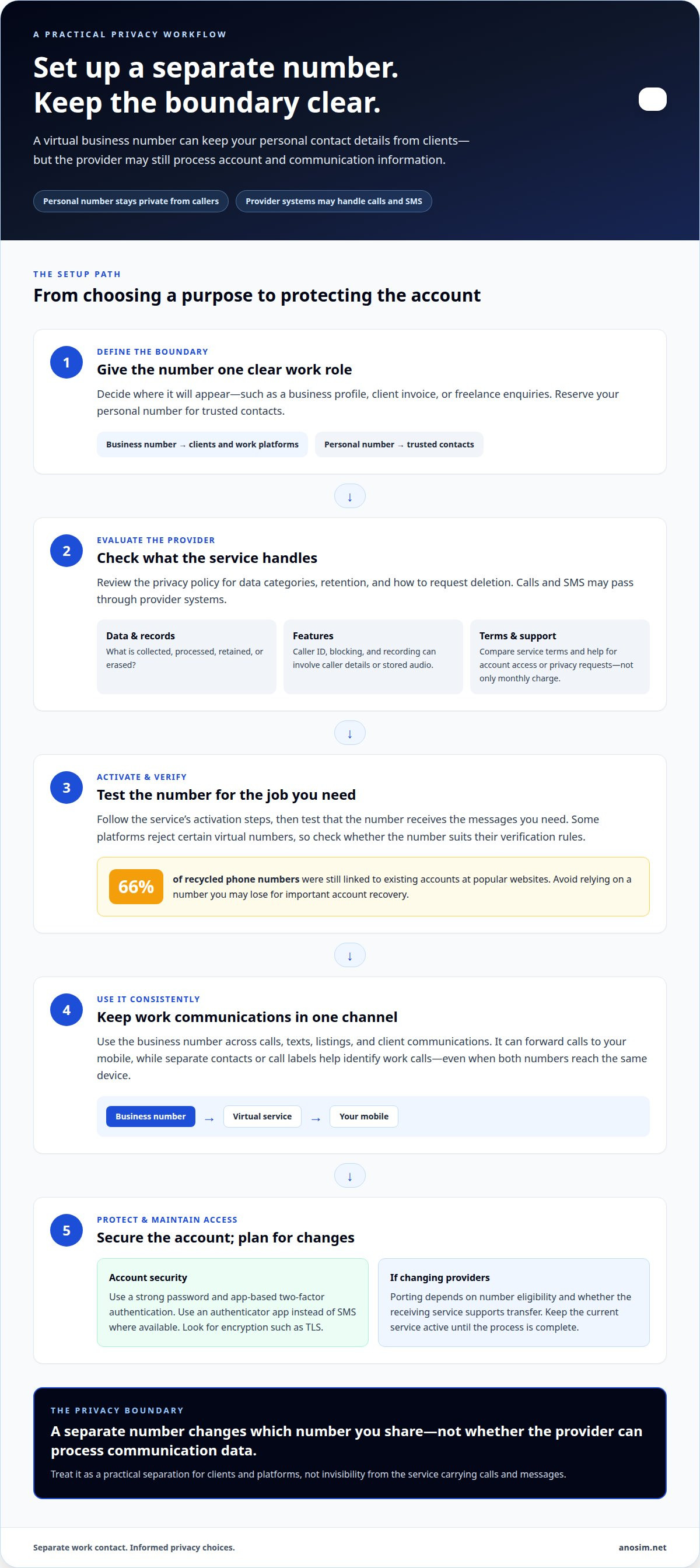
For account security, look for encryption such as TLS and protect the account with a strong password and app-based two-factor authentication. SOC 2 or ISO 27001 certifications indicate recognized security and operational standards. The National Institute of Standards and Technology identifies PSTN use for out-of-band authentication as a restricted authenticator. Use an authenticator app instead of SMS where available.
Can you keep or port a virtual number when changing providers? Porting depends on the number’s eligibility and whether the receiving service supports the transfer. Keep the current service active until the process is complete to avoid losing access.
Are local US area codes or toll-free numbers available? Virtual-number services can offer numbers from different regions, including local US area codes. Toll-free numbers are a distinct type, and availability varies by service. Consider how the number will represent your business and the privacy boundary you need.
How can a virtual business phone number protect your privacy?
A separate business number reduces how often you share your personal number. The protection works best when you use the business number consistently across calls, texts, and platforms.
Virtual Numbers Compared with Personal Lines
A virtual phone number gives you a separate contact number without requiring you to share your personal mobile number. Unlike a landline tied to a fixed location, it can connect to a mobile device through an internet-based service. This can help freelancers take client calls while away from a home office. Use the virtual number on business profiles and reserve your personal number for trusted contacts.
Protecting Numbers During SMS Verification
Using a separate number for SMS verification keeps your personal phone number out of that platform’s account records. For example, use a dedicated number for a work-related sign-up instead of the number friends and family use. Some services reject certain virtual numbers, so choose one that suits the platform’s verification rules. Avoid using a temporary number for an account you may need to recover later.
Recycled numbers create another privacy risk: 66% of recycled phone numbers were still linked to existing accounts at popular websites. A number previously used by someone else could therefore receive account-related messages. Treat verification as sensitive, and avoid relying on a number you may lose access to for important account recovery.
Separating Personal and Work Communications
A virtual business number gives work calls and messages a distinct contact channel, even when both numbers reach the same device. This separation helps you identify a client call before answering and keep professional contacts out of your personal address book. Assign the number a clear purpose, such as freelance enquiries, then use it consistently on business listings and in client communications.
In the United States, virtual numbers are subject to the same regulatory framework as traditional phone numbers. Use them for legitimate business communications and follow the terms of the platforms where you use them. A virtual number changes which number you share; it doesn’t remove the rules that apply to communications.
Business and side-hustle communication
A separate business number gives clients a dedicated way to reach you without publishing your personal mobile number. It can also help keep enquiries, messages, and work records organized.
Setting Up and Activating a Business Number
Setting up a business number means choosing one for a defined work purpose and activating it through a virtual-number service. Start by deciding where it will appear, such as on a business profile or client invoice. Then follow the service’s activation steps and test that the number receives the messages you need. A clear purpose helps prevent client contacts from getting mixed with personal accounts.
Receiving Calls on a Mobile
A virtual business number can forward incoming calls to your mobile, so you can answer away from a fixed office while keeping your personal number private from callers. For example, a freelance consultant can publish the business number and receive enquiries on the same device they use personally. Use separate contacts or call labels to recognize work calls and decide when to answer.
Privacy in Business Communications
A dedicated number limits where you disclose your personal number, but it doesn’t remove privacy risks from business infrastructure. Calls and messages may be processed by the service carrying them. Keep sensitive client details out of voicemail greetings, and restrict access to business accounts. These steps help limit exposure if a device is shared or an account is compromised in a breach, though larger organizations often partner with cybersecurity providers like OAD Technologies to enforce enterprise-grade data loss prevention and monitoring.
For CRM and business-app workflows, treat the number as a consistent contact identifier. Record client calls and follow-ups under the business number in your CRM, rather than adding your personal mobile number to each customer record. Before connecting a number to an app, review its permissions and authentication settings. This makes communication history easier to manage while keeping personal and professional records distinct.
How virtual phone numbers work over the internet
A virtual phone number is an address for communications, not a physical line attached to one device. Internet-based services can route calls between the number and a chosen destination.
For an incoming call, the caller dials the virtual number. The service routes it through its system to a connected phone or application. For example, a freelancer can answer a business call on a mobile while keeping their personal mobile number private. The destination device can change without changing the number shared with callers.
Outgoing calls follow a related path: the user starts a call through the service, which presents the virtual number to the recipient. The internet connection affects call quality, while the service handles routing. A virtual number isn’t automatically anonymous. Provider systems may process communication data, and other online interactions can still reveal personal information.
Some services also route SMS through their systems. A single virtual number may support calls, SMS, RCS, WhatsApp, or chat, depending on the service. That capability can establish one contact point for customers, but it doesn't mean every channel uses identical technology. Choose the number based on the interaction you need, such as receiving a business call or a verification message.
Because the number isn't tied to a SIM card or landline, it can support communication across locations. Some services provide numbers from different regions for SMS verification across geographical boundaries. That flexibility doesn't override platform rules: use a number only where the platform accepts it, and avoid unwanted messages or deceptive activity.
If you need a separate number for a specific online task, explore virtual number rental options.
Anosim: SMS Activation
Anosim offers SMS Activation for receiving verification codes without sharing your personal number. For a number to use for online tasks, Rent Number and Rent Service provide rental options. Anosim also offers Rent Mobile VoIP for internet-based communication needs.
Choose based on the interaction you need: SMS Activation for verification messages, or a rental option for a separate number. A virtual number can reduce personal-number exposure, but it doesn’t conceal information held by the service or guarantee acceptance by every platform. Keep important accounts connected to a number you can continue accessing.
Explore SMS Activation for verification-code use, or visit anosim.net to learn more about Anosim’s offerings.
Make Your Number Choice Work for You
Make privacy a regular practice, not just a number change. Before using a virtual number for professional privacy, decide which people and platforms should receive it, then keep that boundary consistent. Separating business and personal contact details makes it easier to spot when an account or customer request asks for more information than the interaction requires.
Plan how you’ll manage access over time. Keep the number associated with the accounts and communications that need it, and review those connections when your work changes. For sensitive accounts, prioritize reliable recovery methods so changing a number doesn’t interrupt access. This makes a separate number a deliberate part of your communication setup rather than an isolated privacy measure.
If you’re ready to choose an option for your communication needs, contact Anosim to discuss your options. A thoughtful setup can help you work with clearer boundaries and greater confidence.
Frequently Asked Questions
Can I compartmentalize my digital identity?
Yes. Use separate contact details and account profiles for distinct roles, such as freelance work and personal banking. Keep each role consistent: a work email, business number, and dedicated browser profile can reduce accidental overlap. Avoid reusing profile photos, usernames, or recovery details across identities if separation matters. Compartmentalization limits routine connections, but it doesn’t erase information already associated with you.
Can I receive calls on my mobile through a virtual number?
Yes. A virtual number can route incoming calls to a mobile device, so callers dial the virtual number rather than your personal one. For example, a consultant can publish a business number and answer through a connected phone while travelling. The service handles routing, and your mobile needs a suitable connection. Set a distinct ringtone or contact label to recognize work calls before answering.
Can I use the virtual number for SMS or two-factor authentication?
Some virtual numbers receive SMS verification codes, but individual platforms decide which number types they accept. For accounts you rely on, prefer an authenticator app where available and keep recovery methods current. The National Institute of Standards and Technology identifies PSTN use for out-of-band authentication as a restricted authenticator. Don’t make a number you may lose your only way back into an important account.
Can someone trace a virtual phone number back to my real identity?
A virtual number doesn’t guarantee anonymity. A provider may hold account and usage records, while the service or people you contact may connect the number to details you share. For example, using the same name, email, or public profile with both numbers can link them. Legal processes can also obtain provider records. Treat the number as a way to limit disclosure, not to conceal your identity from everyone.
Does it limit location data leakage?
A virtual number alone doesn’t hide your device’s location or internet address. Apps and websites may receive location permissions or process IP data independently of the number you give them. Review location access on your device and disable it for apps that don’t need it. A call recipient seeing a different phone number doesn’t mean your device or network activity is untraceable.
Does it reduce exposure of my personal number?
Yes, if you give the virtual number to clients, online services, and business platforms instead of your personal number. This can reduce how often your primary number appears in contact lists, account records, and public profiles. Keep the separation consistent: adding your personal number as a recovery detail or displaying it on a public page can undo that boundary. Choose which accounts truly need your personal contact information.