The era of the cheap, disposable virtual number is officially over as major platforms now detect and block standard VoIP ranges with near-perfect accuracy. You've likely experienced the frustration of a "number not supported" error on Telegram or Google, even after paying for a "premium" service. It's a common pain point for anyone trying to maintain digital privacy or scale automated workflows. Finding a reliable virtual number for online platform verification has become a technical hurdle rather than a simple purchase.
We understand that reliability and API compatibility are your top priorities when managing digital identities. This guide provides a technical breakdown of the 2026 provider landscape to help you distinguish between high-trust mobile infrastructure and low-quality disposable options. We'll compare business VoIP solutions, SMS activation services, and long-term privacy rentals. By the end, you'll know exactly which infrastructure matches your specific verification or automation goals without the risk of hidden costs or immediate account flags.
Key Takeaways
- Distinguish between standard VoIP and high-trust mobile infrastructure to ensure your accounts aren't flagged by strict security filters.
- Evaluate providers based on their success rates and support for standard integration protocols like API v1 and SMS-Activate.
- Learn how to choose a virtual number for online platform verification by matching number types to specific platform requirements and account lifespans.
- Determine when to deploy one-time SMS activations versus long-term rentals to optimize your budget and maintain data privacy.
- Discover how to integrate mobile proxies and developer-ready infrastructure to scale automated account management securely.
Table of Contents
- Understanding the 3 Types of Virtual Number Services
- Key Criteria for Comparing Virtual Number Providers
- Service Comparison: Features, Security, and Use Cases
- How to Choose Based on Your Specific Platform
- Anosim: The Pragmatic Choice for Verification and Privacy
Understanding the 3 Types of Virtual Number Services
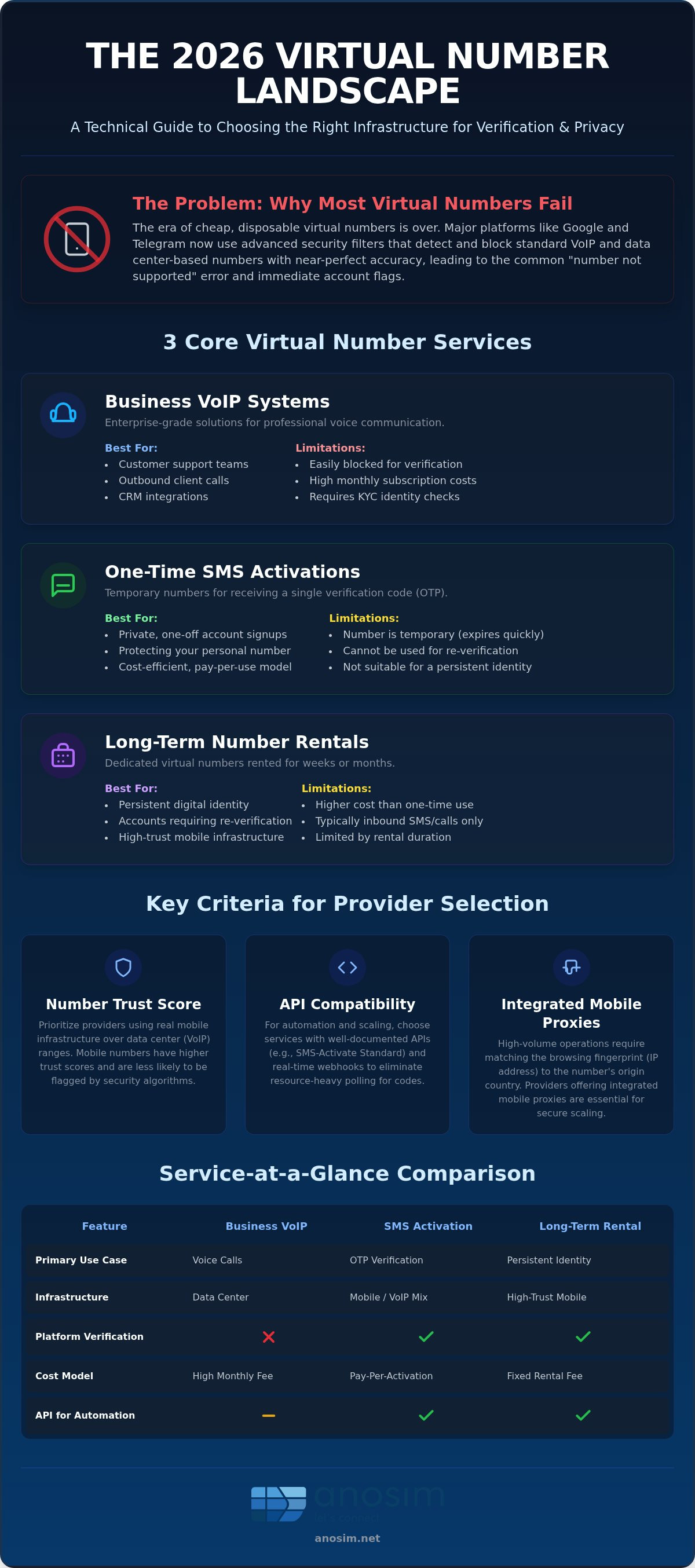
The virtual communication market has diverged into specialized niches based on infrastructure and user intent. A Virtual number functions as a telephone number without a directly associated physical line, but the technology powering it determines its success rate. In 2026, choosing the wrong type of service often results in immediate account flagging or wasted budget. You must identify your goal before selecting a provider: are you building a corporate communication hub, or do you need a virtual number for online platform verification to maintain privacy?
There are three primary categories to consider. Business VoIP systems, such as RingCentral or Nextiva, are designed for voice calls and team collaboration. SMS activation services provide one-time use numbers specifically for receiving an OTP (One-Time Password). Finally, long-term virtual rentals offer dedicated numbers for ongoing inbound communication. Each serves a specific operational purpose, and using them interchangeably is a common mistake that leads to service rejection.
When to Choose Business VoIP
Business VoIP is the standard for customer support and professional outbound calling. These systems are enterprise-grade, offering features like auto-attendants, call recording, and CRM integrations. If you manage a remote team that needs to make voice calls to clients, this is the appropriate choice. However, these services typically come with high monthly subscription costs and require a mandatory Know Your Customer (KYC) process. Because they use data center IP ranges, they're often the first to be blocked by social media platforms during sign-up attempts. In addition to communication tools, modern businesses often require specialized mobile applications to handle data-heavy tasks; for instance, field professionals can check out PHOTO iD to automate their inspection photo labeling and organization.
When to Choose SMS Activation or Rental
For users who need to bypass verification walls on apps like Telegram, Tinder, or Google, specialized activation tools are more effective. An SMS activation is perfect for protecting your privacy during a single signup. It's a cost-efficient model because you pay only for the successful delivery of a verification code. This is a pragmatic solution for developers who need to scale digital operations without the overhead of a full VoIP suite.
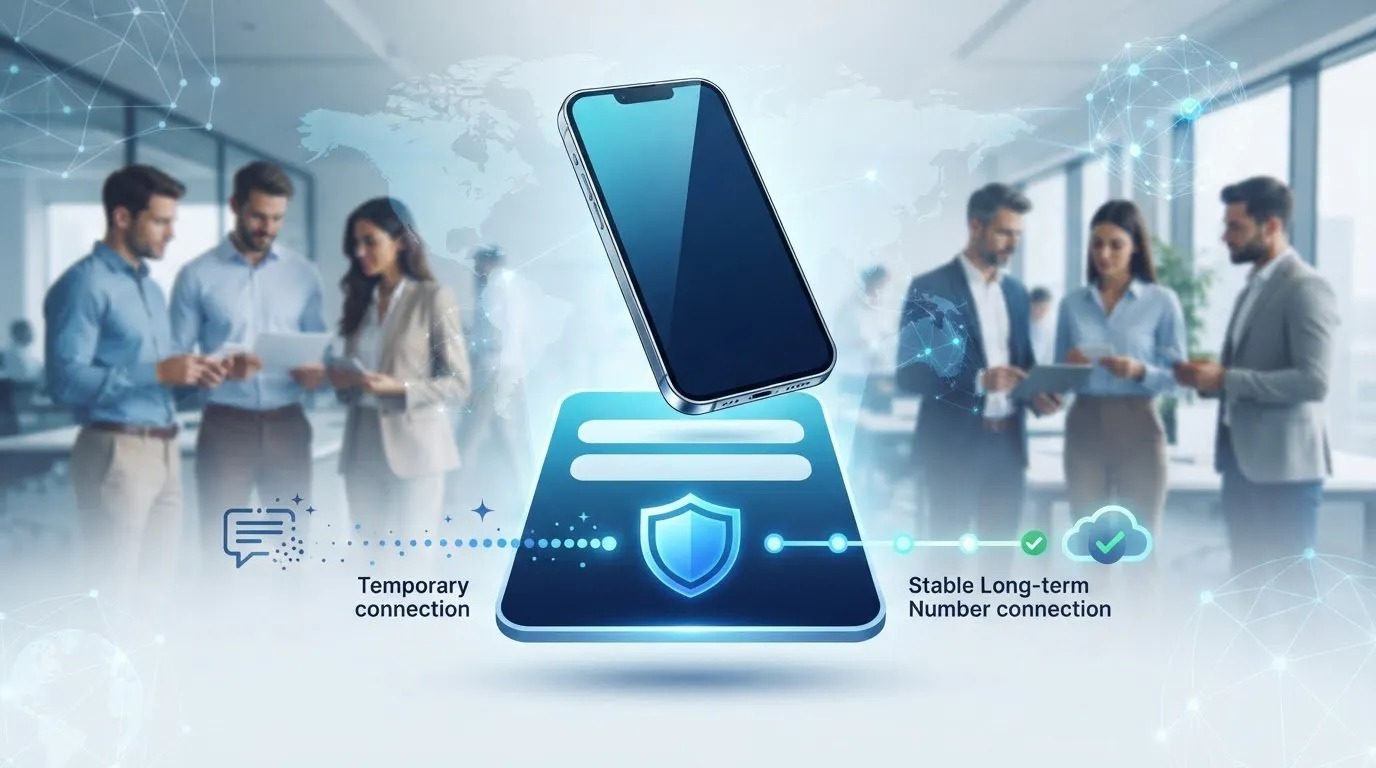
If your project requires a persistent identity, a rent number is the superior path. Unlike one-time activations, a rent service provides a dedicated inbound line for weeks or months. This is essential for accounts that trigger periodic security checks or re-verifications. These numbers often leverage mobile-based infrastructure, which provides the high-trust signals necessary to pass strict platform filters while keeping your personal data shielded from potential leaks.
Key Criteria for Comparing Virtual Number Providers
Selecting a provider based solely on price or setup speed is a tactical error. In the current environment, the technical infrastructure behind a number dictates its success rate. High-quality providers distinguish themselves through number diversity, offering a mix of landline and mobile VoIP options. If you're managing high-volume accounts, you also need to evaluate whether the provider offers integrated mobile proxies to ensure your browsing fingerprint matches your number's origin.
API Compatibility for Automated Workflows
Efficiency in 2026 relies on seamless automation. Developers prioritize services that support the SMS-Activate Standard API because it allows for immediate integration with existing account management tools. If your workflow requires real-time responses, look for providers that utilize webhooks. These push notifications deliver verification codes the moment they arrive, eliminating the need for constant, resource-heavy polling. Detailed v1 API documentation is a prerequisite for any professional operation; without clear integration protocols, your scaling efforts will stall during the implementation phase.
The Importance of Number Trust Scores
Not every virtual number for online platform verification carries the same weight in a platform's security algorithm. Most "free" or low-cost services use recycled numbers that have already been flagged by major databases. Platform security teams often reference frameworks like the NIST Digital Identity Guidelines to categorize the risk of different authentication methods. If a service uses a data center range instead of a mobile range, your account is likely to face a "shadowban" or immediate suspension. Using a high-trust virtual number for online platform verification backed by physical SIM infrastructure ensures your digital footprint appears legitimate to automated filters. Dedicated numbers reduce account ban risks by providing a clean, exclusive identity that hasn't been associated with previous spam or fraudulent activity.
Service Comparison: Features, Security, and Use Cases
Effective digital operations require a strategic match between your technical requirements and the provider's infrastructure. While "free" public SMS receivers exist, they offer zero privacy and are almost universally blacklisted by high-security platforms. Security-conscious users prioritize providers that maintain strict data retention policies and offer inbound-only services to minimize their digital footprint. A reputable provider mitigates the risks highlighted in the FTC warning on VoIP service providers, ensuring that your communication tools aren't associated with fraudulent network ranges.
Disposable vs. Dedicated Virtual Numbers
Choosing between a one-time activation and a long-term rental depends entirely on your account's lifecycle. Disposable numbers are the most efficient option for one-off verifications where you don't expect to need access again. This is a common choice for testing new services or creating temporary profiles. However, for core accounts on platforms like Telegram or WhatsApp, a Dedicated Virtual Number for SMS is essential. These platforms often trigger security checks that require re-verification weeks or months after the initial setup. If you used a disposable number, you'll lose access to the account permanently. Dedicated rentals ensure the virtual number for online platform verification remains exclusive to you, providing a stable anchor for your digital identity.
Mobile Proxies: The Hidden Comparison Factor
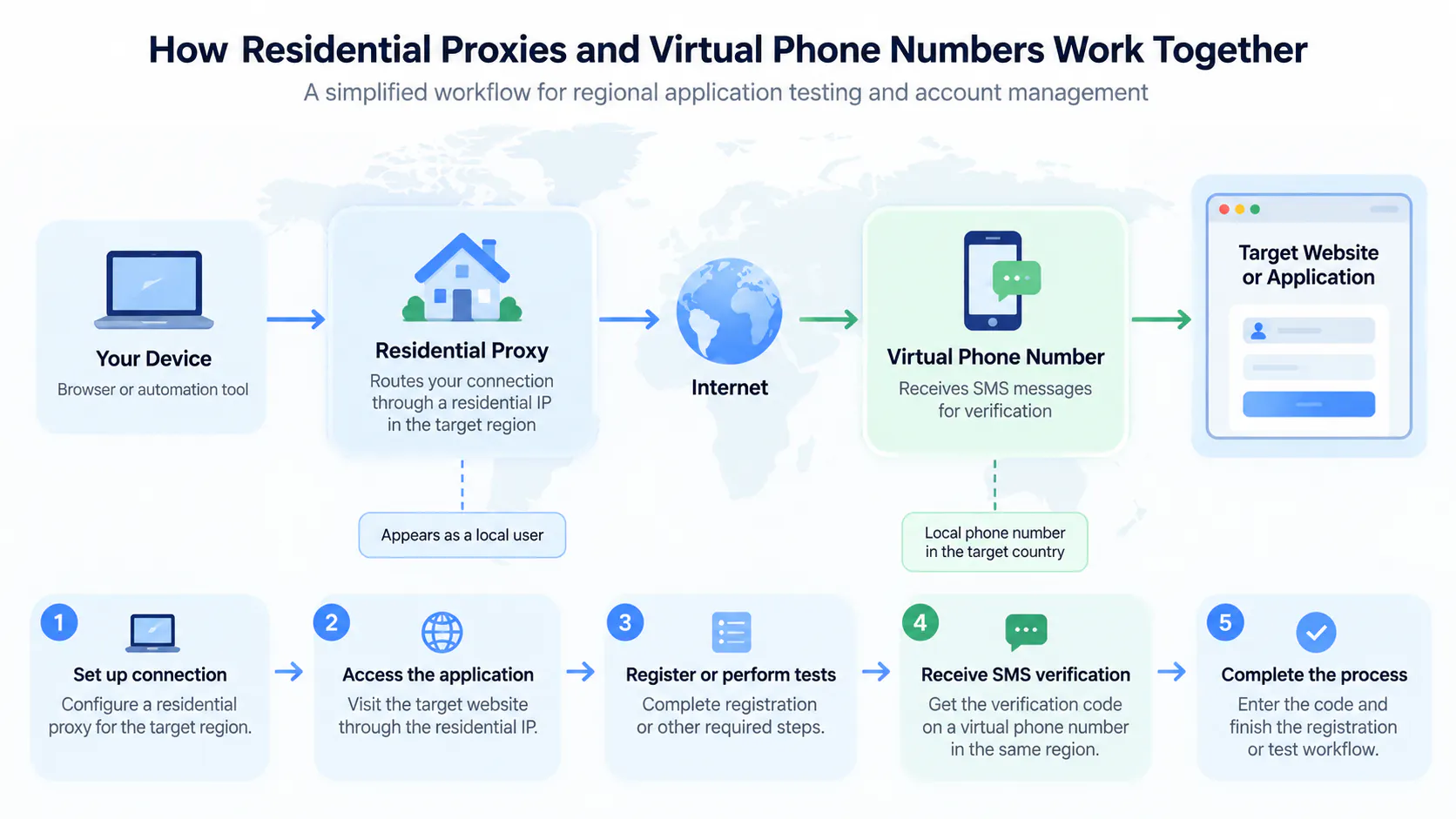
High-trust operations fail when there's a mismatch between the phone number's origin and the user's IP address. If you're using a UK-based virtual number for online platform verification while your browser traffic originates from a data center in a different region, platforms will flag the activity as suspicious. This is where a Mobile Proxy becomes a critical component of your setup. By routing your traffic through actual mobile carrier networks, you mimic the behavior of a genuine mobile user. This bridges the "IP Trust" gap that most competitors ignore. You can choose between rotating proxies, which change IP addresses at set intervals to avoid detection, or static mobile proxies that provide a consistent IP for long-term account stability. Combining these with mobile-based virtual numbers creates a robust, high-trust environment that bypasses the most advanced anti-bot filters.
Global coverage is another vital metric for professional use. A reliable provider should offer regional availability across major markets, including the US, Europe, and Asia. This geographic diversity allows you to manage localized accounts and navigate regional content restrictions while maintaining a professional appearance. Whether you're scaling a business automation workflow or simply protecting your personal data, the right combination of number type and proxy infrastructure determines your operational longevity.
How to Choose Based on Your Specific Platform
Choosing a virtual number for online platform verification isn't a one-size-fits-all decision. The infrastructure required for a niche forum differs significantly from what's needed for a Tier-1 tech giant. To avoid wasted budget and account flags, follow this logical selection process:
- Step 1: Assess Platform Strictness. Services like Google, Telegram, and major banks use advanced risk scoring. They detect data center IP ranges and VoIP metadata instantly. If your target platform is high-security, you'll need mobile-based infrastructure.
- Step 2: Define Duration. Determine if you only need to clear a sign-up wall or if the account is a long-term asset. One-time activations are efficient for the former, while persistent rentals are mandatory for the latter.
- Step 3: Evaluate Volume. If you're managing more than five accounts, manual verification is a bottleneck. Check for API support to automate your workflow.
- Step 4: Prioritize Trust. Opt for mobile VoIP numbers. These appear as genuine mobile devices to carriers, bypassing the filters that block standard virtual ranges.
Bypassing Strict Verification Walls
High-security applications like Tinder and WhatsApp have aggressive anti-fraud filters. If you're bypassing Tinder phone verification, you can't rely on low-quality, public number pools. These ranges are often blacklisted before you even attempt a sign-up. When you use a high-trust virtual number for online platform verification, you're utilizing numbers sourced from mobile carrier blocks. This ensures the number appears as a legitimate mobile device to the platform's security algorithm, significantly increasing your success rate on apps that monitor device-type metadata.
Privacy-First Signups
Protecting your primary identity starts with separating your personal data from secondary app accounts. Using a temporary phone number minimizes your digital footprint and prevents your real number from being caught in data leaks or sold to telemarketers. This is equally useful when interacting with local lifestyle services; for example, if you want to discover Haomanim and their professional hair design services in Holon, using a virtual number ensures your contact details remain private. This pragmatic approach allows you to scale digital operations without compromising your personal security.
For secure account creation, follow this checklist:
- Match your IP location to the number's country code using a mobile proxy.
- Clear browser cookies or use a hardened browser profile before each sign-up.
- Select "mobile" rather than "landline" if the platform offers a choice.
- Verify if the provider supports inbound-only SMS to maximize anonymity.
If you're ready to secure your digital presence with reliable infrastructure, get started with a professional virtual number today.
Anosim: The Pragmatic Choice for Verification and Privacy
Anosim functions as a silent, technical partner for users who require more than just a basic phone line. While general VoIP providers prioritize outgoing calls and team meetings, we focus exclusively on the infrastructure necessary for a reliable virtual number for online platform verification. This specialization allows for a high-trust environment where numbers are sourced from mobile carrier ranges, ensuring they pass the strict filters of major platforms without the overhead of unnecessary features. By adding the mobile proxies of our partner proxied.com to your setup, you create a comprehensive privacy stack that addresses both IP reputation and number cleanliness simultaneously.
Built for Developers and Professionals
The Anosim API is engineered to simplify complex, high-volume verification tasks. We provide full compatibility with both our proprietary v1 API and the SMS-Activate Standard API, allowing you to plug our infrastructure into your existing automation tools with minimal configuration. This interoperability is essential for professionals managing hundreds of accounts where manual entry isn't feasible. Our systems prioritize high-speed delivery, ensuring that time-sensitive OTPs arrive within seconds. This technical robustness prevents the common issue of expired codes that plagues lower-tier providers who rely on congested data center lines.
Security and Operational Efficiency
Maintaining anonymity requires a toolset designed specifically for that purpose. Anosim enhances security by focusing on inbound-only communication, which significantly reduces the digital footprint associated with each number. Because we don't offer outgoing calls or SMS, your number is less likely to be flagged by anti-spam databases or regulatory monitoring systems. This pragmatic approach provides the operational efficiency needed for global account management without the logistical burden of physical SIM cards. Whether you need a rent number for long-term access or a quick verification, our worldwide coverage ensures you have the right tools for any regional requirement.
Digital privacy shouldn't be a complex manual process. By choosing a provider that understands the nuances of trust scores and API integration, you protect your personal data while maintaining a scalable presence online. If you're ready to secure your accounts with professional-grade infrastructure, start your first SMS activation now and experience the difference that dedicated verification tools provide.
Securing Your Digital Identity in 2026
The landscape of digital verification continues to evolve as platforms implement more aggressive detection algorithms. Success now depends on using infrastructure that mirrors legitimate user behavior rather than relying on outdated data center ranges. By prioritizing high-trust mobile VoIP ranges and developer-ready API integration, you eliminate the friction of blocked accounts and failed OTP deliveries. A reliable virtual number for online platform verification is no longer a luxury; it's a technical necessity for maintaining privacy and operational scalability in a data-sensitive environment.
Anosim provides the stability you need with a global reach covering over 100 platforms. Our infrastructure is built for efficiency, offering full compatibility with API v1 and SMS-Activate standard protocols. This ensures your automated workflows remain uninterrupted while your personal data stays shielded from leaks. You don't have to compromise on speed or security when choosing your communication tools.
Secure your first virtual number with Anosim to experience a professional-grade verification stack. Protecting your digital footprint is a pragmatic step toward long-term online security.
Frequently Asked Questions
Are virtual number services safe to use for banking?
Virtual number services are generally not recommended for primary banking security. While they provide a layer of anonymity, many financial institutions use strict filters that detect non-standard carrier ranges. If you lose access to a temporary number used for multi-factor authentication, recovering your account becomes a significant hurdle. For banking, a persistent mobile-based rental is safer than a disposable activation, but traditional carrier lines remain the standard for high-stakes financial security. For businesses that require a more comprehensive approach to their financial health and security, Samios Partners provides expert accounting and advisory services to ensure robust fiscal management.
Can I use a virtual number for WhatsApp or Telegram verification?
You can use a virtual number for online platform verification on apps like WhatsApp or Telegram, provided the number originates from a mobile carrier range. These platforms have aggressive filters that block standard data center VoIP numbers instantly. To ensure success, you should opt for a dedicated rent service rather than a shared public number. This approach allows you to receive the necessary OTP while keeping your personal phone number shielded from the platform's database.
What is the difference between a virtual number and a VoIP number?
A virtual number is a broad category for any number not tied to a physical SIM card, while VoIP refers to the specific technology used to transmit data over the internet. Most basic VoIP numbers use data center IP ranges, which are easily flagged by security systems. In contrast, premium virtual services utilize mobile VoIP infrastructure. This mimics the metadata of a physical device, making it significantly more effective for bypassing strict verification walls on social media.
How much does a virtual number service typically cost in 2026?
Industry pricing in 2026 varies based on the service tier and infrastructure quality. Standard business-grade VoIP plans from providers like Nextiva or RingCentral typically start around $20 per user per month. Personal-use options, such as Google Voice for business, begin at approximately $10 monthly. Specialized SMS activation services usually operate on a pay-per-use model for one-time codes, while dedicated long-term mobile rentals carry higher monthly fees due to the maintenance of high-trust carrier infrastructure.
Why do some platforms reject virtual phone numbers?
For organizations looking to optimize their communication workflows with artificial intelligence, it is helpful to explore Monthly SaaS Subscription Fees from Hello Voice AI and see how virtual receptionists fit into a modern business budget.
Platforms reject virtual numbers to combat automated spam and fraudulent account creation. Security algorithms check the Numbering Plan Area (NPA) and the service provider type. If a number is identified as originating from a data center or a known disposable range, it's often blocked immediately. Additionally, if a recycled number has a history of policy violations, it will carry a low trust score, making it unusable for new account registrations or security re-verifications.
Can I receive SMS from any country with a virtual number?
Receipt of international SMS depends entirely on the provider's global network and the specific country code assigned to the number. Most professional services offer coverage across 100 or more countries, allowing you to manage localized accounts from anywhere. However, some platforms restrict verification to numbers from the user's detected IP region. To maximize success, it's essential to match your virtual number's country with a high-quality mobile proxy from the same geographic area.
How do I integrate a virtual number service into my own app?
Integration is typically handled through standard API protocols that allow your software to request a virtual number for online platform verification programmatically. Developers often prefer using a v1 API or an SMS-Activate compatible interface for seamless connectivity with existing automation frameworks. You'll need to generate an API key from your provider's dashboard and configure webhooks to receive instant notifications when a verification code arrives. This enables scalable, automated account management without manual intervention.