In 2026, identity theft is no longer a single event. Recent data shows that 25.6% of victims now manage two or more concurrent security incidents at once. Most of these breaches start with a piece of information you give out daily: your phone number. When this data point is exposed, the consequences of phone number leak events escalate far beyond simple spam calls. Your number has become a de facto biometric-adjacent identifier that links your bank accounts, social media, and private communications together.
You've likely noticed the overwhelming influx of sophisticated smishing attempts and feel the anxiety of wondering if your primary accounts are truly safe. It's a valid concern because a leaked number is often the first step toward a SIM swap or a total identity takeover. We'll help you understand the technical risks of phone number exposure and show you how to decouple your identity from public databases using professional privacy tools. You'll learn how to secure your high-value accounts and implement a strategy to prevent future exposure, moving from a reactive state to proactive digital anonymity.
Key Takeaways
- Learn how hackers use Open Source Intelligence (OSINT) to transform a single 10-digit number into a complete profile of your social and professional life.
- Understand the technical escalation from a simple contact exposure to unauthorized bank transfers, highlighting the severe consequences of phone number leak scenarios in 2026.
- Discover why AI-generated phishing texts have become nearly indistinguishable from official bank communications and how to identify these "smishing" attempts.
- Implement an "Identity Layer" strategy to decouple your primary phone number from high-risk digital accounts and public databases.
- Use professional SMS Activation and virtual number rentals as a disposable shield to maintain anonymity during account creation and verification.
Table of Contents
- Phone Number Leaks in 2026: Myths vs. Digital Reality
- The Anatomy of a Pivot: How Hackers Escalate a Phone Number Leak
- Immediate Consequences: Beyond the Spam Inbox
- Strategic Decoupling: How to Protect Your Primary Number
- Professional Solutions: Using Anosim to Prevent Data Leaks
Phone Number Leaks in 2026: Myths vs. Digital Reality
A phone number leak is the unauthorized exposure of your primary contact digit, typically linked to Personally Identifiable Information (PII). In the 2026 digital landscape, the concept of a "private" number has largely vanished. Data brokers and AI-driven scrapers now operate with unprecedented efficiency, scanning social media profiles and public records to connect your 10-digit identifier to your home address, workplace, and family members. This automated aggregation means that once your number is exposed, it's no longer just a way to reach you; it's a key that unlocks your entire digital history.
One prevalent myth is that the only consequences of phone number leak events are an influx of spam calls. While Americans reported $470 million in losses to text-message fraud in 2024, the modern threat is far more technical. Telemarketing is the least of your concerns when compared to targeted account takeovers. Another common misconception is that your data is safe if you only provide it to "trusted brands." The reality of third-party data sharing and frequent corporate breaches means your information is rarely contained. Even the most reputable companies often share data with marketing partners whose security protocols may be significantly weaker than your own.
Myth: 'My 2FA makes me unhackable'
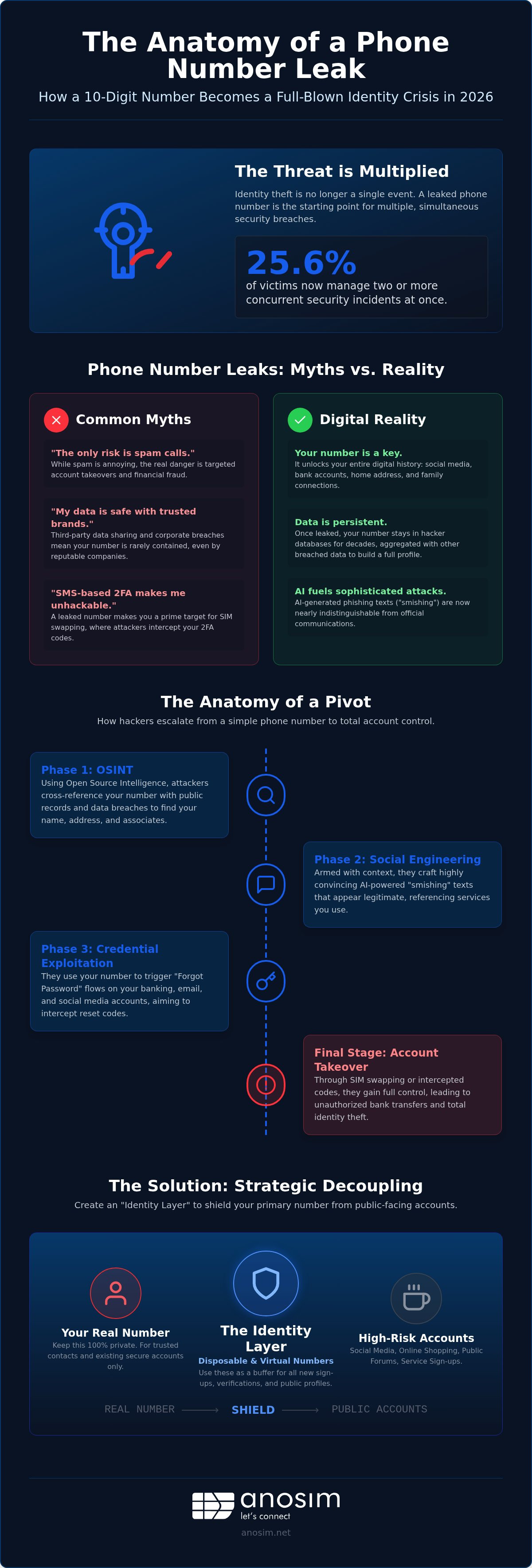
Many users believe that SMS-based two-factor authentication (2FA) provides an impenetrable shield. However, a leaked number actually makes you a prime target for SIM swapping. In this scenario, an attacker convinces a mobile carrier to transfer your number to a SIM card in their possession. This allows them to intercept the very security codes meant to protect you. The Anatomy of a Pivot: How Hackers Escalate a Phone Number Leak often starts with these fraudulent messages designed to exploit your trust in 2FA. The 2FA Trap occurs when the security measure meant to verify your identity becomes the primary vulnerability used to lock you out of your own accounts.
The Reality of Data Persistence
When your number is leaked, it doesn't just disappear after the initial breach is patched. It remains in hacker databases for decades. Criminals utilize what is known as the "Aggregation Effect," where they combine small pieces of data from multiple leaks over several years to build a comprehensive identity profile. By 2026, the Dark Web has become a sophisticated marketplace for verified phone lists, which are traded as premium commodities for AI-powered smishing campaigns. This persistence makes it nearly impossible to "clean" your digital footprint once the exposure has occurred without using professional tools like SMS Activation or Rent Number services to decouple your real identity from public-facing accounts.
The Anatomy of a Pivot: How Hackers Escalate a Phone Number Leak
Once a data breach occurs, your 10-digit number acts as a pivot point for sophisticated exploitation. This isn't just about receiving unsolicited calls. It's about how attackers use that single data point to map your entire digital and physical existence. Understanding the consequences of phone number leak incidents requires a look at the multi-stage attack chain that follows the initial exposure. Hackers don't just stop at your contact info; they use it to bridge the gap between your public persona and your private accounts.
The process begins with the OSINT (Open Source Intelligence) Phase. Attackers use reverse-lookup APIs and services to cross-reference your number against other leaked databases. They don't just find your name. They find your physical address, voter registration data, and family members. This allows them to build a high-fidelity target profile before they ever send a single message. For those looking to minimize their digital footprint, implementing OPSEC for Online Account Management is a critical first step in breaking these data associations.
Next comes the Social Engineering Phase. Because the attacker now knows your context, they can craft "smishing" messages that appear legitimate. They might reference a specific service you use or a local utility provider. By understanding what cybercriminals can do with your phone number, you can see that these messages are designed to trigger the Credential Phase. Here, the hacker uses your number to initiate "Forgot Password" flows on major platforms like Google or Microsoft. If your email uses your phone for recovery, the Hijacking Phase is imminent. Once they control your primary email, they control every account linked to it.
OSINT Mapping: Your Number as a Master Key
Bad actors don't manually search for you. They use automated scripts that query reverse-lookup APIs to link numbers to LinkedIn profiles and professional credentials. This data aggregation makes it easy to impersonate you to your colleagues or your bank's customer service department. If you want to avoid this level of exposure, using SMS Activation for new service signups keeps your primary number out of these weaponized databases.
Account Recovery Exploitation
The "Recovery Loop" is a specific technique where an attacker uses a leaked number to reset an account password, then uses that newly accessed account to reset others. Even if you think your number is "hidden" on privacy-focused apps like Discord or Telegram, it remains vulnerable if the underlying database is compromised. A typical account takeover timeline following a leak looks like this:
- Hour 1-2: Automated OSINT tools link the number to your email and social handles.
- Hour 3-6: Contextual smishing attempts are sent to your device to harvest 2FA codes.
- Hour 6-12: Hackers initiate recovery flows on high-value targets like banking or crypto exchanges.
- Hour 12+: Complete lockout as recovery emails and backup numbers are changed by the attacker.
Immediate Consequences: Beyond the Spam Inbox
The immediate consequences of phone number leak incidents have shifted from minor telemarketing annoyances to severe financial and reputational risks. In 2026, a leaked number is a primary tool for facilitating unauthorized bank transfers. Criminals use intercepted "authorized" SMS codes to validate high-value transactions. Because many legacy banking systems still treat a mobile number as a trusted identifier, an attacker with access to your message stream can bypass traditional security layers with ease. This financial exposure is often paired with AI-generated smishing campaigns that mimic your bank's exact communication style, making it nearly impossible for the average user to distinguish a fraud alert from a legitimate notification.
Reputational damage follows closely behind financial theft. Once a hacker gains control of a number, they often hijack social media and messaging platforms like Telegram or WhatsApp. This leads to "Impersonation Scams" where the attacker contacts your professional and personal network, requesting urgent funds or sensitive data under your name. Beyond the digital sphere, the psychological toll of doxing and persistent digital harassment can be overwhelming. When a number is published in malicious directories, the result is often a relentless stream of unwanted contact that forces users to abandon their primary communication channel entirely.
The Smishing Surge of 2026
Modern attackers frequently utilize "Class 0" SMS, also known as Flash SMS, to bypass standard spam filters. These messages appear immediately on the home screen and do not save to the traditional inbox, making them difficult to track or block. A common case study is the "Delivery Failure" scam, where users receive a high-priority flash notification about a missed package. To identify these attempts, look for mismatched URLs or requests for "re-delivery fees" that require credit card input. Legitimate carriers will never use Flash SMS for standard delivery updates.
Identity Theft Escalation
There is a direct link between your phone number and your Social Security or National ID within most institutional databases. A leaked number allows hackers to verify your identity with credit bureaus, often leading to the opening of unauthorized credit lines in your name. Total losses from identity fraud reached $27.3 billion in 2025, a figure that remains high as criminals exploit these number-based vulnerabilities. If you suspect your data has been compromised, you should follow the steps in this Privacy Checklist to initiate an immediate lockdown of your high-risk accounts. Taking proactive steps to decouple your identity from your primary digits is the only way to mitigate these long-term risks.
Strategic Decoupling: How to Protect Your Primary Number
To mitigate the severe consequences of phone number leak events, you must adopt an "Identity Layer" strategy. This approach treats your primary phone number as a high-security credential, similar to a physical house key, rather than a public identifier. By auditing your current exposure, you can identify which "high-risk" applications currently hold your primary digit. Most users find that their number is tied to dozens of low-security platforms, from food delivery services to niche forums, each representing a potential entry point for automated scrapers and bad actors.
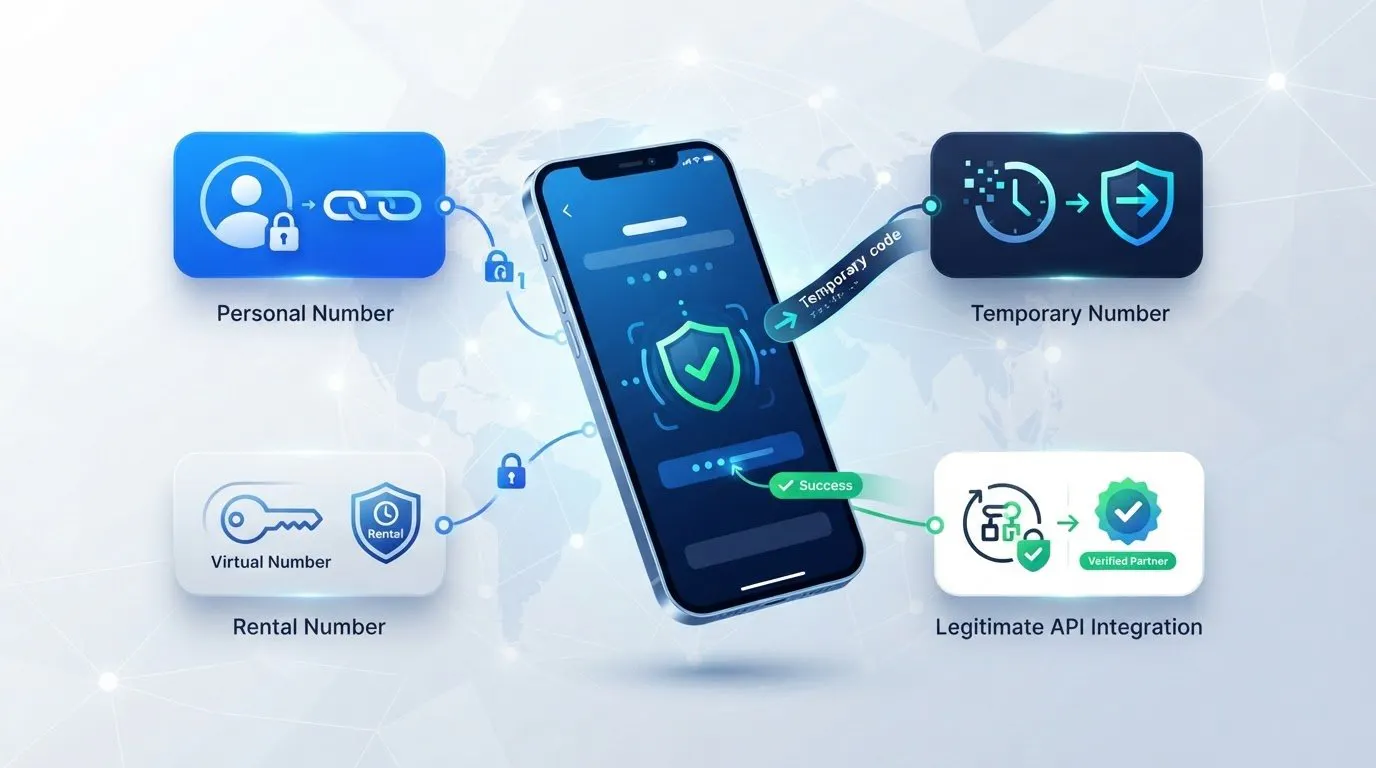
Transitioning away from SMS-based 2FA is a critical technical step. You should replace text-based codes with Authenticator apps or hardware security keys wherever possible. This removes the "2FA Trap" discussed earlier, ensuring that even if your number is compromised, your core accounts remain inaccessible to attackers. Implementing these changes prevents the cascading consequences of phone number leak incidents from affecting your most sensitive financial assets. For all new signups and verification flows, use virtual numbers as a buffer. This "Burner" philosophy ensures that if a service suffers a data breach, the leaked number has no technical connection to your banking or primary communication tools.
The Decoupling Workflow
Implementing a privacy-first identity layer requires a methodical approach. Follow these three steps to secure your footprint:
- Step 1: Identify your "Core" accounts. These are your banking portals and primary email addresses. Ensure these are locked down with non-SMS 2FA and are never shared with third-party services.
- Step 2: Move all "Peripheral" accounts to virtual numbers. Platforms like Tinder, Discord, and retail shopping sites are frequent targets for data scraping. Using a secondary number prevents these leaks from reaching your private life.
- Step 3: Gradually phase out your primary number from public-facing directories and social media profiles. If a service doesn't strictly require a phone number for functionality, remove it or replace it with a rental.
Virtual Number Management
When selecting a buffer, avoid "free" virtual number services. These numbers often use recycled data and are frequently blacklisted by major platforms, creating a security risk where previous users might still have access to verification logs. Professional SMS Activation provides a clean, private channel for bypassing verification without the risk of future leaks. For services you use daily, consider long-term Rent Number options, while one-time activations serve as the perfect "disposable shield" for temporary signups.
If you're ready to secure your digital identity and prevent your primary contact from appearing in hacker databases, you can get a secure SMS activation number to start decoupling your accounts today.
Professional Solutions: Using Anosim to Prevent Data Leaks
While reactive security services focus on monitoring the dark web after your data has been compromised, Anosim provides the infrastructure for proactive prevention. In 2026, the only way to effectively mitigate the consequences of phone number leak events is to ensure your primary contact never enters a vulnerable database. Anosim's SMS Activation service acts as a technical barrier, allowing you to verify accounts on global platforms without exposing your physical SIM identity. This "disposable shield" methodology ensures that if a service suffers a breach, the only data leaked is a virtual identifier with no link to your financial or personal life.
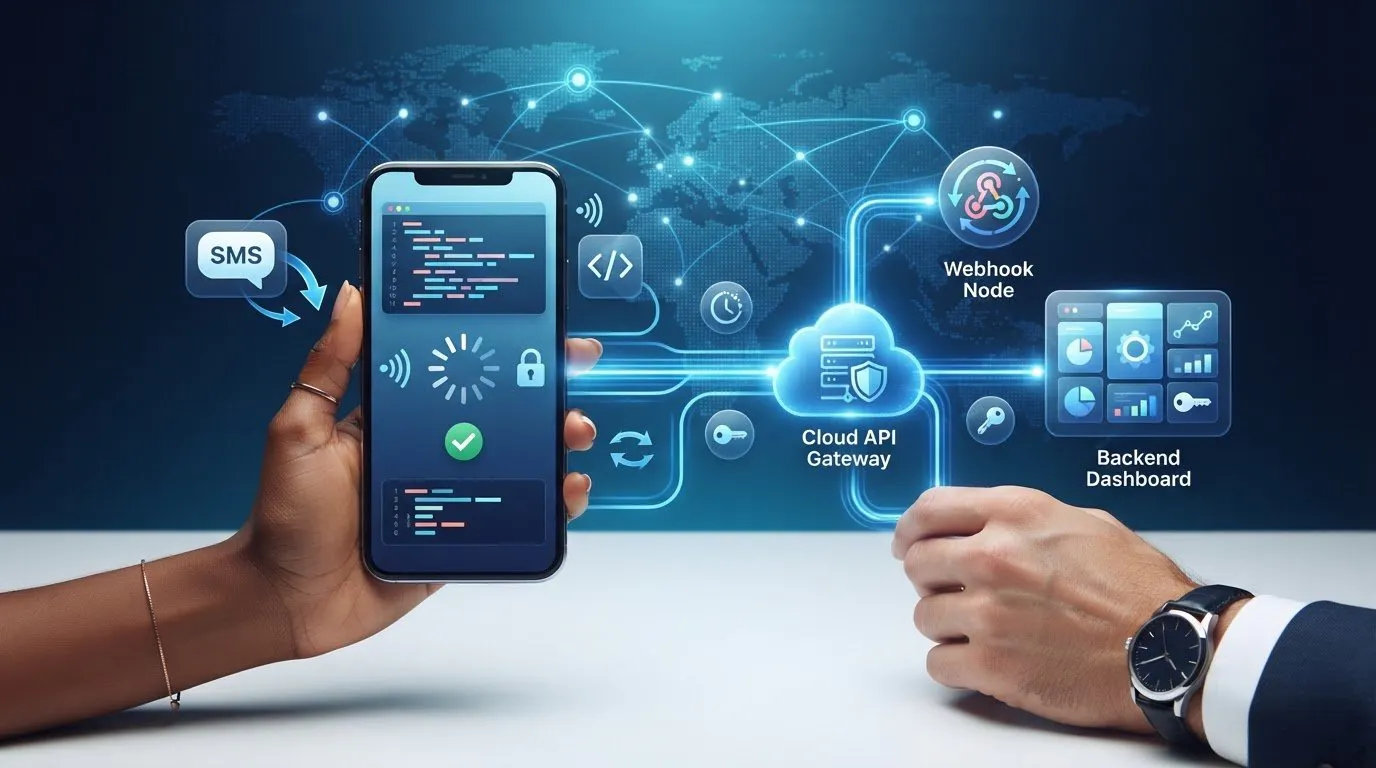
Professional use cases often require more than just a single temporary number. By utilizing Mobile VoIP and virtual number infrastructure, you create a buffer that makes traditional OSINT mapping impossible. Attackers cannot pivot from a virtual number to your home address or family records because there is no underlying telecommunications link to your primary identity. Scaling this level of privacy is straightforward through the Anosim API (v1), which automates number and Mobile VoIP rentals, orders and SMS retrieval. This is particularly useful for developers and enterprise users who need to manage multiple digital footprints with high-utility integration protocols. For enterprise users looking to optimize their outreach, the option to explore AI Dialer technology provides a secure way to automate business communications.
Anosim SMS Activation vs. Primary Number Usage
The difference in security outcomes between virtual isolation and direct exposure is stark. When you use your primary number, you risk the "Recovery Loop" where a single leak leads to total account takeover. Virtual isolation through Anosim Number Rental ensures long-term account stability for sensitive platforms like Telegram or Tinder. These numbers are inbound-SMS-only, which provides a significant security advantage; they cannot be used for unauthorized outgoing calls or messages that might flag an account for suspicious activity. This creates a "Zero Leak" environment where your physical SIM remains entirely decoupled from your digital personas.
Getting Started with Virtual Privacy
Effective OPSEC in 2026 requires a "Virtual-First" mindset for all digital communications. When you select a number, you have the option to choose from global locations, which helps you avoid regional tracking and bypass local data retention laws. Integrating these tools into your daily routine is a pragmatic step toward digital survival. You don't need to change your primary number every time a leak occurs; you simply need to ensure it's never the number you provide to third-party services. To secure your identity and protect your primary number from future leaks with Anosim, start by replacing your most exposed accounts with secure virtual activations.
Securing Your Digital Identity in a Post-Privacy World
The digital landscape of 2026 requires a fundamental shift in how you manage your primary identifiers. We've established that a phone number is no longer just a contact point; it's a high-value identity key. To effectively mitigate the consequences of phone number leak events, you must move beyond reactive monitoring and embrace strategic decoupling. By isolating your high-risk accounts from your primary SIM card, you break the technical escalation chain that hackers use for identity theft. This proactive approach ensures that even if a service provider suffers a breach, your personal life remains protected.
Anosim provides the professional infrastructure needed to implement this security layer. With professional-grade SMS activation for 500+ services and a global reach spanning 100+ countries, you can reclaim control over your digital footprint. Our API-ready platform facilitates secure automation, allowing you to manage your privacy with technical precision and ease. You don't have to leave your security to chance or wait for the next major database exposure. You have the tools to build a robust defense today.
Secure your digital identity with Anosim SMS Activation and start your journey toward a more secure and anonymous digital presence.
Frequently Asked Questions
Can I check if my phone number has been leaked for free?
Yes, services like Have I Been Pwned allow you to check your number against known database breaches. Many mobile security apps also offer free scanning against dark web directories. It's a reactive measure, but it helps you identify which specific platforms were compromised so you can update those credentials immediately.
What should I do immediately if I find my number in a data breach?
You should immediately switch your 2FA methods from SMS to an authenticator app or hardware key for all high-value accounts. Contact your mobile carrier to set a "Port-Out PIN" or secondary password to prevent SIM swapping. These steps mitigate the technical consequences of phone number leak incidents before hackers can pivot to your bank or email.
Is it possible to 'un-leak' a phone number from the internet?
No, it's technically impossible to remove a number once it has been mirrored across multiple hacker databases. While the California Delete Act of 2026 helps remove your data from legitimate brokers, it doesn't affect the dark web. Your focus should shift to decoupling your identity from that number rather than attempting to delete the leak itself.
How do hackers get my phone number from a 'secure' app?
Most leaks occur through third-party data aggregators or inadvertent API exposures rather than direct hacking of an app's core infrastructure. AI-driven scrapers also correlate "secure" profiles with public social media data to verify your identity. Even if an app is encrypted, the metadata containing your contact info is often stored in less secure marketing databases.
Will changing my phone number stop the consequences of a leak?
Changing your number stops future spam and smishing, but it doesn't undo the aggregation effect of existing leaks. Hackers already have your name and address linked to your old number in their permanent records. If you change your number, you must immediately implement a virtual-first strategy for new signups to keep the new number private.
Can someone hack my bank account with just my phone number?
No, but your number is the primary tool used to intercept recovery codes and bypass security filters. By combining a leaked number with OSINT data, an attacker can impersonate you to bank support or trigger a password reset. This makes the consequences of phone number leak events a major precursor to unauthorized financial transactions and account takeovers.
What is the difference between a virtual number and a burner phone?
A burner phone is a physical device with a prepaid SIM card, while a virtual number is a software-based identifier that works over the internet. Virtual numbers from services like Anosim are more efficient for digital privacy because they don't require physical hardware. They allow you to manage multiple activations and rentals through an API or web dashboard.
Why is SMS verification considered insecure in 2026?
SMS was never designed for security; it lacks end-to-end encryption and is vulnerable to interception via SIM swapping or SS7 exploits. In 2026, the rise of Flash SMS and AI-powered smishing has made text-based codes a liability. Professional security standards now mandate the use of app-based authenticators or FIDO2 hardware keys to protect sensitive digital identities.