What if signing up for an app didn’t require handing over the phone number tied to your identity? If you want to protect your personal phone number online, separating routine account verification from your primary SIM is a practical first step. Your number can connect accounts and personal details, attract unwanted marketing, and give attackers a starting point for SIM-swapping attempts.
It’s reasonable to want OTP access without adding your main number to another service’s database. A virtual number can keep your personal line out of some signup flows while receiving verification texts. It doesn’t guarantee anonymity or account acceptance, since services set their own verification rules. The goal is to reduce unnecessary exposure while keeping a reliable way to access accounts that matter.
This guide explains how to separate your number from digital services, when a one-time SMS activation makes sense, and when a longer-term rental is more suitable for ongoing account access. You’ll also learn how to plan for account recovery and reduce marketing messages reaching your primary line.
Key Takeaways
- Sharing your primary number across services can increase exposure to spam, data leaks, and account attacks.
- Choose between a one-time SMS activation and a long-term virtual number based on whether you need one verification or recurring account access.
- Compare virtual numbers with burner apps and secondary SIMs by considering access, number type, and your need for future verification.
- Before signup, identify the service’s country-code requirements and choose a suitable number to help protect personal phone number online.
- Anosim’s inbound SMS solutions and SMS-Activate Standard API compatibility can support verification workflows.
Table of Contents
- The Risks of Using Your Primary Phone Number for Digital Signups
- Virtual Number Solutions: SMS Activations vs. Long-Term Rentals
- Comparing Methods to Shield Your Identity in 2026
- A Step-by-Step Strategy for Secure App Signups
- Leveraging Anosim for Enterprise-Grade Privacy Infrastructure
The Risks of Using Your Primary Phone Number for Digital Signups
Your primary number can act as a persistent identifier across services. It may be used for account recovery, delivery updates, banking alerts, and identity checks, making it easier to connect otherwise separate parts of your digital footprint. The risks of telephone number privacy and disclosure go beyond whether strangers can see your number on a profile: a service may retain it in account records after verification.
Every signup adds another organization that stores your number. If an app has weak data security or shares information with marketing partners, your number could be exposed or used for unsolicited messages. A leak doesn’t automatically give an attacker access to your accounts, but it can provide a starting point for targeted phishing or social engineering. Unwanted promotional texts and calls may be a more immediate consequence.
Why 'Privacy Settings' Aren't Enough
Profile visibility controls determine what other users can see. They don’t necessarily remove a number that an app requires for verification, account recovery, or internal records. Registration information may also be processed by service providers or analytics and marketing tools, depending on how the app is configured. Treat a hidden profile number as less publicly visible, not as erased from every system involved in your signup.
The Rise of SIM Swapping and Social Engineering
A phone number alone is usually not enough to take over a SIM. An attacker may combine it with leaked personal details and impersonation tactics to persuade a mobile carrier to transfer the number to a SIM or device they control. If they receive your calls or texts, they may try to intercept password-reset links or one-time codes for accounts that rely on phone-based recovery.
SMS-based two-factor authentication can add a useful layer of security, but it has limits. Codes sent to a number may be exposed if that number is compromised or redirected. For high-value accounts, use passkeys or an authenticator app when available, and secure your carrier account with a strong, unique password and any available account protections.
Keep your primary SIM for essential services and trusted contacts rather than routine app registrations. To protect personal phone number online, separate verification needs from your main line where practical. A virtual number can keep your primary number out of selected signup flows and reduce how often it enters new databases. It doesn’t replace strong account security, but it can limit unnecessary exposure.
Virtual Number Solutions: SMS Activations vs. Long-Term Rentals
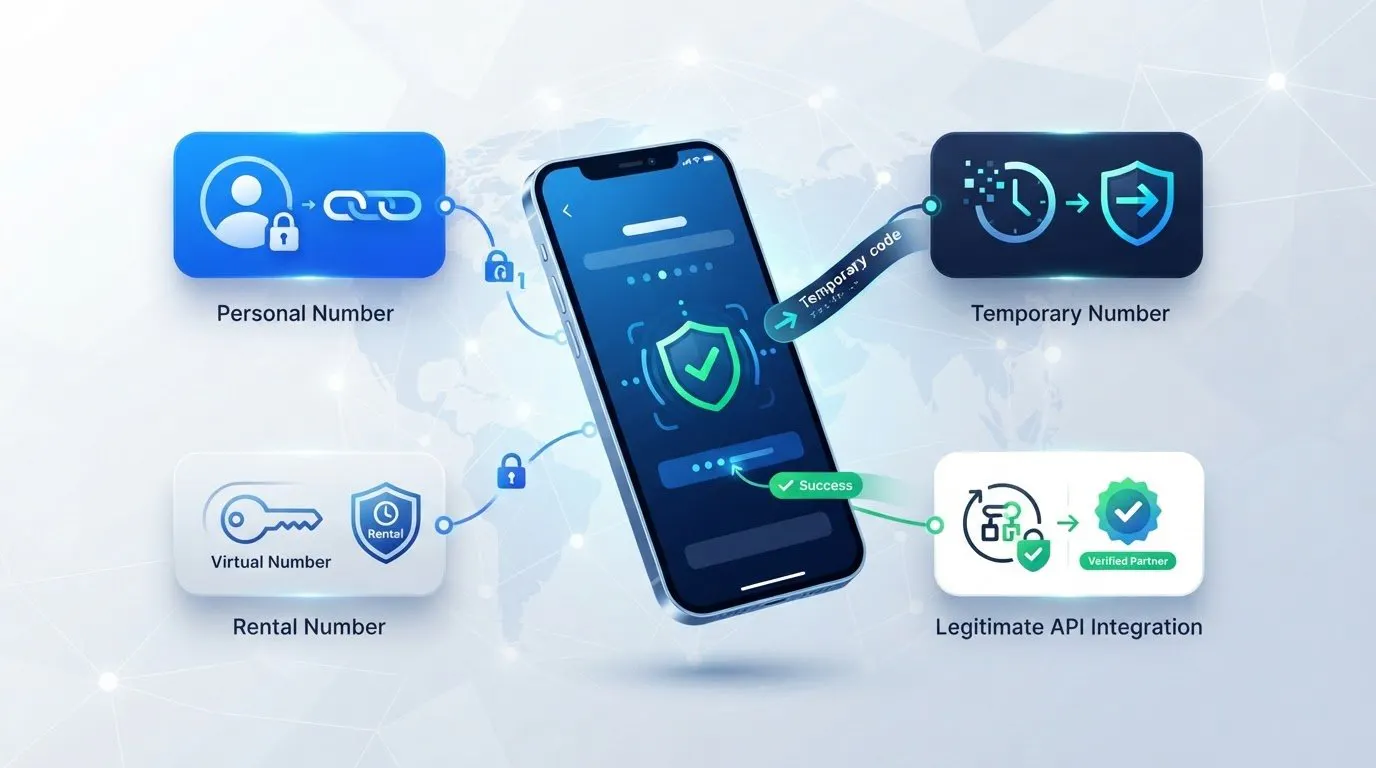
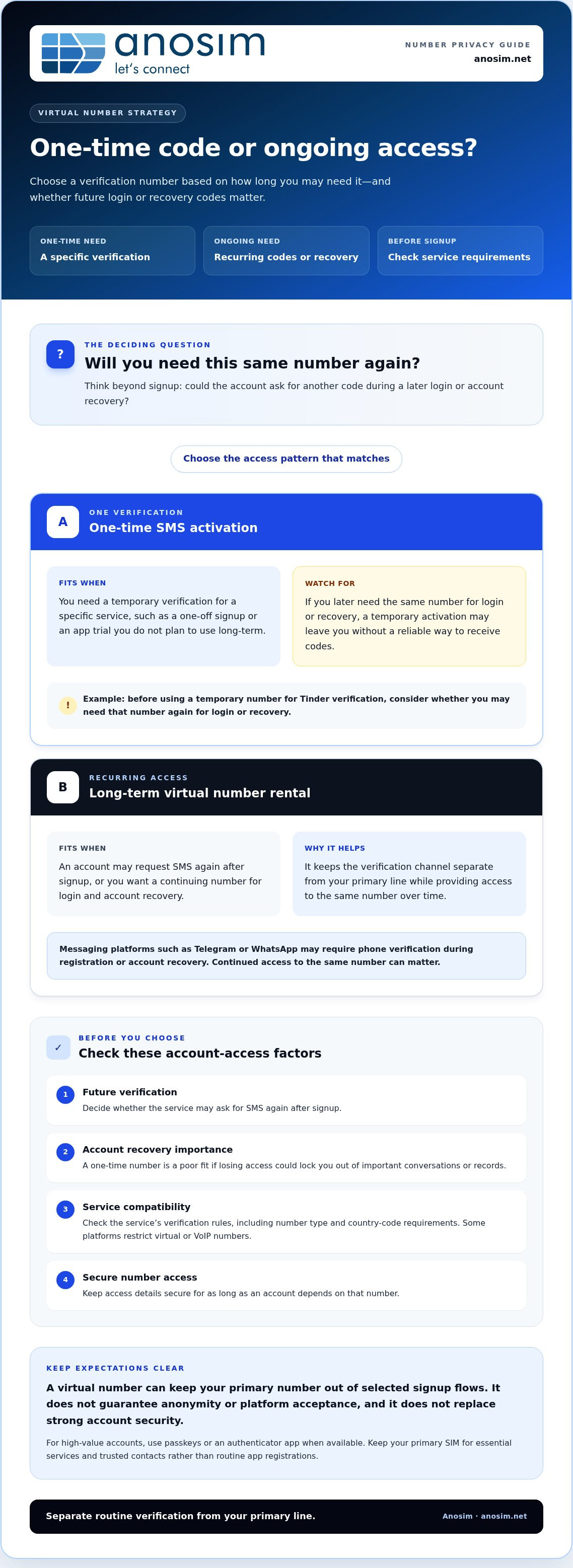
A virtual number separates SMS verification from your primary line. The right option depends on how long you’ll need access. A one-time SMS activation is intended for a specific verification, while a long-term rental gives you a number for recurring codes on an account you expect to keep. Both can help protect personal phone number online, but they fit different account needs.
Mobile VoIP numbers operate through online infrastructure rather than a physical SIM in your device. They can receive inbound SMS, but compatibility depends on the service you’re signing up for. Some platforms restrict virtual or VoIP numbers, so treat acceptance as a service-specific requirement rather than an automatic feature.
When to Use One-Time SMS Activations
An SMS activation is a temporary verification option for a specific service, rather than a number to rely on for routine account access. It can suit a one-off signup or app trial you don’t plan to use long-term. For example, if you’re considering Tinder verification, decide first whether you’ll need the same number for future login or recovery. If you will, a temporary number could leave you without a reliable way to receive later codes.
The Case for Dedicated Virtual Number Rentals
Choose a rental when an account may request SMS again after signup. Messaging platforms such as Telegram or WhatsApp may require phone verification during registration or account recovery, so continued access to the same number matters. A rental keeps that verification channel separate from your primary line, but it doesn’t guarantee anonymity or platform acceptance. For a persistent number, explore Anosim’s Rent Number options.
Plan for account recovery before choosing. A number used once may suit a low-priority signup, but it’s a poor fit if losing access could lock you out of important conversations or records. A rental is more appropriate when you need to receive codes over time. Since number control is part of account security, consider how hackers exploit phone numbers when deciding which accounts should rely on SMS verification.
Use a simple rule: one verification with no expected follow-up points to activation; recurring logins or recovery needs point to a rental. Before signup, review the service’s requirements and keep the number’s access details secure for as long as the account depends on it.
Comparing Methods to Shield Your Identity in 2026
There isn’t one number strategy that fits every signup. Burner apps, secondary SIMs, and virtual numbers differ in how they receive verification texts, how long you can access the number, and how services may classify it. Choose based on whether you need one code, continued account access, or a separate connection for managing online activity.
- Burner apps: Convenient for temporary use, but many rely on VoIP number ranges that some platforms may reject.
- Secondary SIM: Provides a separate mobile line, but requires physical hardware and ongoing management of the SIM and service, including keeping airtime active (you can learn more about Recarga Rapido for adding mobile credit to international lines).
- Professional virtual number: Provides an online route for receiving inbound SMS without using your primary line. Number type and platform acceptance can vary.
- Mobile proxy: Routes internet traffic through a mobile IP address. It complements number privacy, but doesn’t replace SMS verification.
Keep these functions separate. A phone number is the destination for a verification code; an IP address identifies the network route used to connect. Changing one doesn’t automatically change the other, and neither method guarantees that a platform will accept a signup or avoid account review.
VoIP vs. Mobile Network Numbers
Some services filter virtual numbers or reject ranges they associate with temporary signups. A number connected to mobile network infrastructure may be treated differently from a standard VoIP range, but acceptance is still controlled by the platform. Anosim’s SMS activation service provides virtual numbers for receiving verification texts, helping keep your primary number out of selected signup flows. Choose between one-time verification and ongoing access based on how you expect to use the account.
Enhancing Privacy with Mobile Proxies
A mobile proxy routes a device’s internet connection through a mobile IP address. This can provide a distinct network path when managing multiple accounts, but it doesn’t make separate accounts undetectable or prevent shadow-bans. Platforms may consider other signals, including account behavior and verification details. Use proxies responsibly and follow each service’s account rules. For more on the technical side, read Mobile Proxy: The Technical Guide.
If your goal is to protect personal phone number online, treat a virtual number and a mobile proxy as separate privacy tools: one handles inbound SMS, while the other routes internet traffic. Select each for the task instead of assuming either provides complete anonymity.
A Step-by-Step Strategy for Secure App Signups
Separate verification from your personal line, then secure the account so you don’t depend on SMS indefinitely. Before signing up, review the service’s verification and recovery requirements. Some platforms restrict virtual numbers, and no number type guarantees acceptance.
- Identify the service and country code. Check which country or region the signup flow supports. Choose a number that matches the available options.
- Select a number for the account lifecycle. Use an SMS activation for a single verification, or a rental if you may need future login or recovery codes. Anosim provides virtual numbers for receiving inbound verification SMS.
- Prepare a consistent connection. Use a trusted, updated browser and avoid switching networks or devices during registration. A mobile proxy can route internet traffic through a mobile IP, but it doesn’t guarantee acceptance or prevent platform review. Follow the service’s rules.
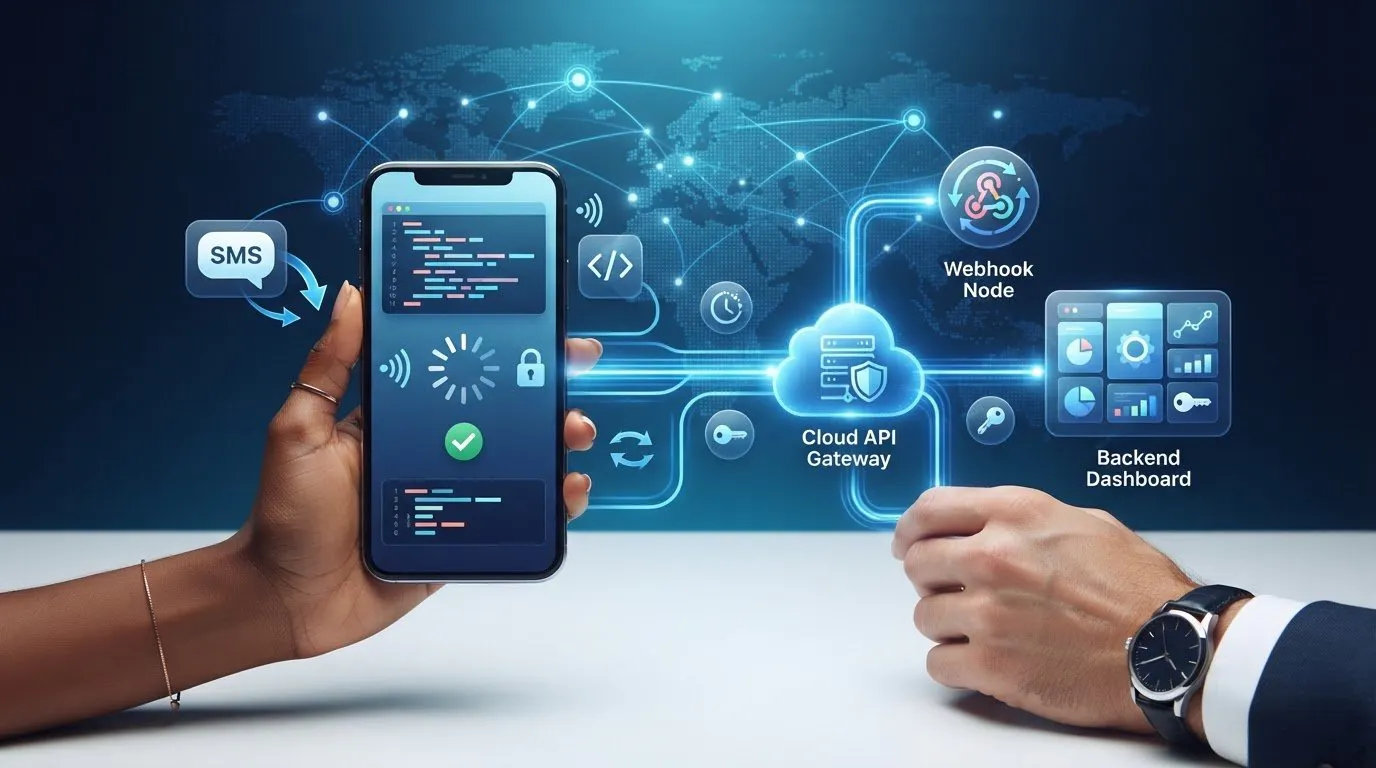
- Request and receive the OTP. Submit the number and retrieve the incoming code through the available dashboard or API workflow. Enter it promptly, since one-time codes expire and an activation may be temporary.
- Strengthen account security. After signup, enable an authenticator app or passkey if the service supports one. Save recovery codes securely and review recovery settings before removing any phone-based option.
Bypassing Verification Hurdles
If a service reports that a number is already in use, it may have been assigned to a previous account. Don’t repeatedly retry or attempt to defeat the platform’s checks. Choose another eligible number, or use the service’s account recovery or support process if you’re entitled to the existing account. For code-delivery troubleshooting, see How to Receive SMS Online.
Hardening Your New Account
Once access is established, replace SMS-based two-factor authentication with TOTP through an authenticator app, or a passkey, where available. Keep recovery codes offline or in a secure password manager, and avoid adding your primary number back unless the account requires it. For receiving verification messages across multiple services, consider Anosim Rent Service.
A virtual number can help protect personal phone number online, but account recovery still depends on retaining access to the number used at signup. Choose a long-term option for accounts that may request codes again, and explore Rent Service for ongoing SMS verification.
Leveraging Anosim for Enterprise-Grade Privacy Infrastructure
For teams handling recurring verification workflows, privacy can be built into the system instead of managed manually for every signup. An API can connect an authorized workflow to virtual number services, allowing applications to request verification numbers and retrieve inbound SMS programmatically. This keeps staff members’ personal phone numbers out of routine testing and other approved processes while making verification easier to manage.
Anosim supports API integration and compatibility with the SMS-Activate Standard API. Teams can incorporate virtual number access into existing tools and workflows, then select numbers based on the service and country requirements. Anosim also provides global coverage for virtual mobile VoIP. Coverage and acceptance vary by service, so choose a number type and country that suit the verification task.
Programmatic Privacy for Developers
Developers can review the Anosim API documentation to connect an integration to verification workflows. This can support repeatable testing or legitimate marketing operations that require SMS verification, without exposing staff members’ personal numbers. Use automation in accordance with the target platform’s rules. An API streamlines the workflow but doesn’t override signup limits or guarantee account approval. For practical implementation context, see the SMS Activation API: 2026 Guide.
Why Reliability Trumps Free Services
Public SMS inboxes can expose incoming codes to anyone who can view the shared number. Because the same number may be reused, other users could also see a code or message, and a previously used number may not work for a new signup. That makes public receivers a poor fit for accounts containing sensitive information or requiring dependable recovery.
Use a dedicated verification workflow for accounts where access matters, and retain access to the number if the service may request another code. No provider can guarantee acceptance by every platform or delivery in every situation, so plan recovery options and use non-SMS authentication where available. A virtual number can keep your primary SIM out of selected signup flows, while API integration helps teams apply that separation consistently. It’s one practical way to protect personal phone number online as part of a broader security approach.
Learn more about Anosim’s virtual number services at Anosim.
Make Number Privacy Part of Your Security Routine
Keeping your primary number out of routine signups reduces how widely it’s shared and can help limit unwanted marketing exposure. Match the verification method to the account: use a one-time activation for a short-term need, or a long-term virtual number when you may need recurring codes. For accounts you plan to keep, strengthen recovery with an authenticator app or passkey where available.
To protect personal phone number online at scale, build privacy into the tools and workflows you already use. Anosim provides global virtual number coverage for inbound SMS verification, plus API v1 integration for developers who want to manage verification flows programmatically. These tools help separate personal contact details from digital services.
Secure your digital identity with Anosim virtual numbers, and take a practical step toward more controlled signups and a quieter primary inbox. Start with the accounts where keeping your personal number private matters most.
Frequently Asked Questions
Is it legal to use a virtual phone number for app verification?
Legality depends on your location, how you use the number, and the rules of the platform you’re joining. Using a virtual number for legitimate verification is different from using it to impersonate someone, commit fraud, or evade a service’s safeguards. Check the app’s terms and follow applicable local requirements. A number’s ability to receive an OTP doesn’t mean the platform must accept it or permit its use.
Can I use a temporary phone number for WhatsApp or Telegram?
Possibly, but acceptance depends on the platform and the number. A temporary number may work for initial verification, yet create a recovery problem if you later need another code and no longer have access to it. For an account you plan to keep, use a number you can access for future verification. Platform rules and number eligibility can change, so successful signup isn’t guaranteed.
Why do some apps block my virtual number?
Apps may reject a number because their verification systems classify it as VoIP, temporary, previously used, or associated with unusual signup activity. These checks are set by each platform, and a different virtual number isn’t guaranteed to work. Confirm that the country code is supported and enter the number accurately. If it’s rejected, use the platform’s recovery or verification options rather than repeatedly attempting to bypass its controls.
What is the difference between a VoIP number and a mobile number?
A VoIP number handles communication through internet-based infrastructure, while a conventional mobile number is associated with a mobile network connection and SIM-based service. Both may support inbound SMS, but apps can classify and accept them differently. “Virtual number” describes a number accessed online, not a guarantee that it will be treated as a standard mobile line. Review the signup service’s requirements before relying on a number for verification.
How long can I keep a rented virtual number?
The available rental period depends on the selected number rental option. Before using a number for an important account, make sure the rental arrangement fits how long you may need to receive login or recovery codes. If the account depends on that number, losing access to it could complicate account recovery. Keep your authentication and recovery methods current, and switch to a non-SMS method where the service allows it.
Can I receive multiple SMS codes on the same temporary number?
A one-time SMS activation is intended for verification with a specific service, so don’t rely on it for codes later. If you need to receive multiple messages from the same service, a service rental is designed for that use. A full number rental can support ongoing access, subject to its rental terms and the platform’s rules. Choose based on whether you need one code or continued verification access.
Do I need a physical SIM card to use Anosim services?
No. Anosim provides virtual number services for receiving inbound SMS verification codes, along with mobile VoIP rentals; mobile proxies are available through Anosim’s partner proxied.com. You don’t need a physical SIM delivered to use these services. They aren’t for outgoing SMS or voice calls. Choose SMS activation for a specific verification need or a rental when you need continued access to inbound messages, and follow the target app’s number requirements.
How do I protect my primary number if it’s already been leaked?
You can still protect personal phone number online by limiting where you use it from now on and strengthening accounts tied to it. Change reused or exposed passwords, enable passkeys or authenticator-based two-factor authentication where available, and review account recovery settings. Contact your mobile carrier about available protections against unauthorized number transfers. Watch for unexpected password-reset messages, and use a separate virtual number for suitable future verifications.