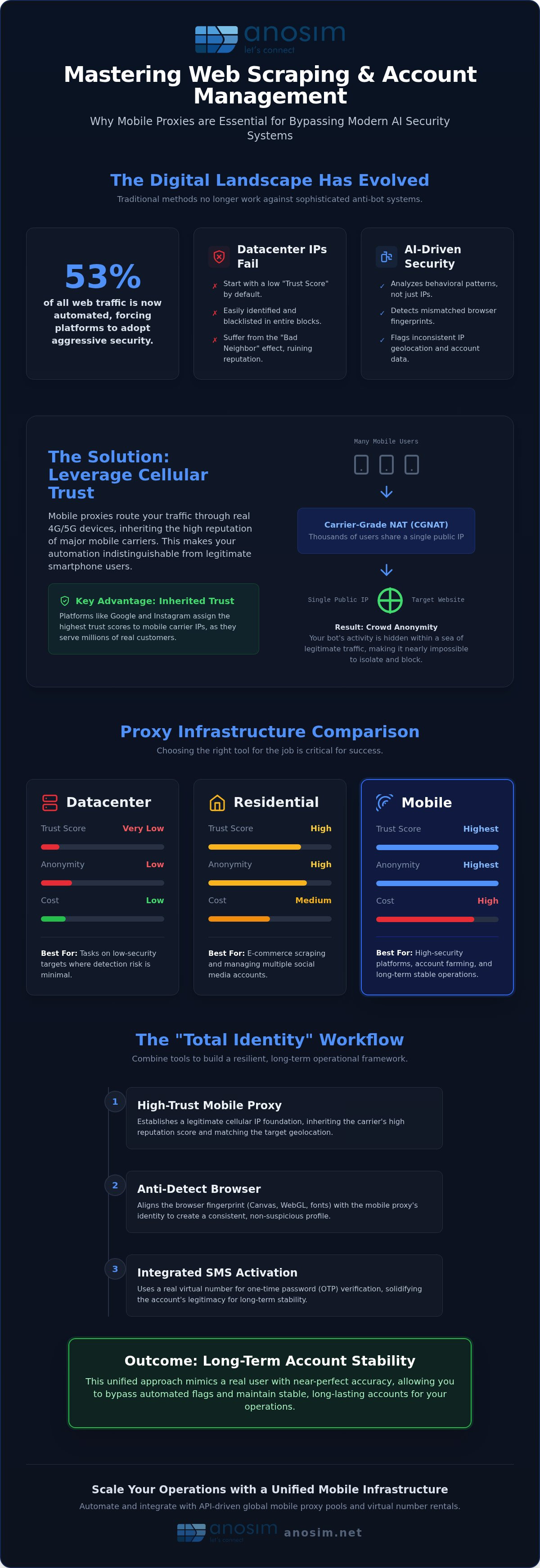
In 2026, the success of your data extraction isn't determined by your code quality, but by the cellular identity you project to AI-driven security systems. Automated traffic now accounts for 53% of all web activity, forcing platforms like TikTok and Amazon to deploy aggressive fingerprinting that renders traditional proxies useless. You've likely experienced the frustration of account bans and the high costs of low-quality IP pools that fail under pressure. It's a common pain point when your IP geolocation doesn't match your account data, leading to instant flags and lost progress.
This guide helps you master the technical landscape of mobile proxies for web scraping to bypass modern anti-scraping systems and manage multiple accounts securely. We'll show you how to leverage high-trust cellular IPs and integrated SMS verification to build a stable, long-term operational framework. You'll learn to use the Anosim API to unify your workflow, ensuring your automation mimics legitimate smartphone users with the highest possible success rates. We'll cover everything from 5G transition benefits to the strategic use of mobile VoIP for account longevity.
Key Takeaways
- Identify why datacenter IPs fail against modern AI-driven security and how to transition to high-trust cellular infrastructure.
- Leverage Carrier-Grade NAT (CGNAT) to provide your bots with a legitimate cellular "crowd" to hide in, ensuring higher anonymity.
- Evaluate the cost-to-performance ratio between mobile, residential, and datacenter proxies for specific use cases like account farming or data extraction.
- Implement a "Total Identity" workflow that combines mobile proxies for web scraping with anti-detect browsers and SMS activation for long-term account stability.
- Automate and scale your scraping tasks through API-driven integration with the mobile proxy pools of our partner proxied.com and Anosim’s virtual number rentals.
Table of Contents
- The Evolution of Anti-Scraping: Why Datacenter IPs Fail in 2026
- The Technical Advantage: How Mobile Proxies Leverage Cellular Trust
- Mobile vs. Residential vs. Datacenter: Selecting the Right Infrastructure
- Implementing a "Total Identity" Workflow with Proxies and SMS
- Scaling Web Scraping with Anosim’s Mobile Infrastructure
The Evolution of Anti-Scraping: Why Datacenter IPs Fail in 2026
Modern anti-scraping systems in 2026 have evolved from primitive blacklists to sophisticated behavioral profiling engines. Relying on a traditional Proxy server hosted in a datacenter often results in immediate detection. These IP addresses originate from known server farms, making them easy targets for platforms like Amazon or TikTok that prioritize genuine human traffic. High-security platforms now assign a "Trust Score" to every incoming connection. Datacenter IPs start with a baseline penalty because they lack the organic history associated with residential or cellular users. If your scraper uses a static datacenter IP, you'll likely face instant shadowbans or persistent CAPTCHAs that disrupt your workflow.
The Death of Static IP Reputation
AI-driven security now identifies non-human traffic patterns within specific server ranges with high precision. When you use shared datacenter pools, you're susceptible to the "Bad Neighbor" effect. If another user on the same subnet engages in aggressive scraping or malicious activity, the entire range's reputation is compromised. While datacenter proxies are cheaper, the risk of losing valuable accounts makes them an expensive liability. Professional operations now prioritize mobile proxies for web scraping to ensure their traffic blends with millions of legitimate cellular users. It's a pragmatic shift from seeking the lowest cost to seeking the highest reliability.
Platform Detection Algorithms: What They See
Modern detection goes much deeper than the IP address alone. Algorithms analyze WebRTC leaks and browser fingerprints to see if they align with the reported connection type. If your ISP headers don't match your intended user profile, platforms trigger endless verification loops. For instance, an account supposedly based in London but connecting via a New York datacenter IP is a high-risk event. Achieving stable operations requires a unified approach where the network identity matches the browser environment. Using Anosim’s mobile infrastructure allows you to match IP geolocation with account data accurately. This consistency is vital for bypassing the automated flags that plague low-quality proxy setups. When the IP, headers, and behavior align, the platform's security systems treat the bot as a standard mobile user.
The Technical Advantage: How Mobile Proxies Leverage Cellular Trust
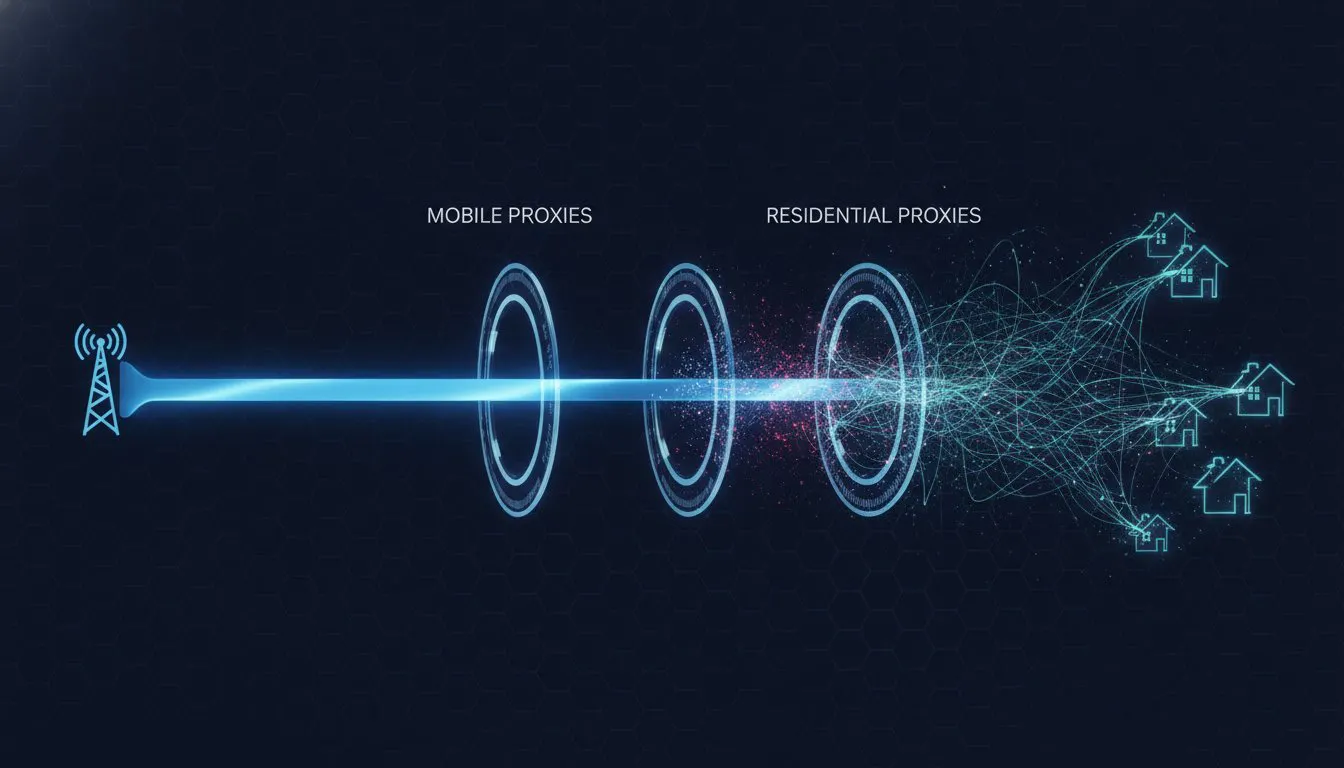
Mobile proxies function by routing your data requests through physical 4G, 5G, or LTE cellular hardware rather than virtualized servers. This infrastructure isn't just a layer of anonymity; it's a direct connection to the world's most trusted network ranges. Platforms like Instagram, Google, and Amazon assign exceptionally high reputation scores to major mobile carriers. Since these carriers manage millions of legitimate subscribers, their IP addresses are treated as high-trust by default. Using mobile proxies for web scraping allows your automated tasks to inherit this established credibility, making it significantly harder for security systems to distinguish your bot from a real human user.
CGNAT and the Mechanics of IP Sharing
The primary technical shield for mobile users is Carrier-Grade NAT (CGNAT). Because there aren't enough IPv4 addresses to go around, mobile carriers assign a single public IP address to thousands of different devices simultaneously. This creates a massive "crowd" for your scraping activities to hide in. If a website decides to block a specific mobile IP, they risk blacklisting hundreds or even thousands of legitimate, paying customers. This collateral damage is a risk most platforms aren't willing to take. When you utilize this shared environment, your traffic patterns become background noise within a sea of organic cellular activity.
- Crowd Anonymity: Your bot's requests blend with the diverse traffic of thousands of actual smartphone users.
- IP Resilience: Platforms rarely block cellular IPs due to the high probability of locking out real customers.
- Operational Stability: You can choose between sticky sessions for account-based tasks or rotating IPs for large-scale data harvesting.
Mimicking Mobile OS Fingerprints
Trust isn't built on the IP address alone. Modern anti-bot systems examine the TCP/IP stack and browser fingerprints to ensure they align with the reported connection type. If your request identifies as a mobile device but has the TCP/IP fingerprint of a Linux server, it's an immediate red flag. You must align your User-Agent and browser headers to match the cellular network's characteristics. If you're scaling an operation that requires this level of precision, you can rent mobile proxy services that provide the necessary technical infrastructure for seamless integration.
Mobile proxies bypass anti-bot systems by routing requests through legitimate ISP gateways that mirror the network behavior of standard cellular devices.
Mobile vs. Residential vs. Datacenter: Selecting the Right Infrastructure
Selecting the appropriate proxy architecture is a balancing act between operational cost and the risk of detection. Datacenter proxies are built for speed and high-volume tasks, yet their lack of association with a physical location or real ISP makes them easy to flag. Residential proxies bridge this gap by utilizing IP addresses from home internet connections, offering a respectable trust score for e-commerce scraping. However, mobile proxies for web scraping represent the highest tier of network authority. They provide the "cleanest" IPs because cellular providers constantly rotate addresses among thousands of users, preventing any single IP from becoming permanently "poisoned" by bad activity.
Scenario-to-Proxy Mapping Framework
Effective scraping requires matching the infrastructure to the target's security level. If you're managing accounts on high-stakes platforms like TikTok or Amazon, utilizing mobile proxies for web scraping is non-negotiable. For general market research on less restrictive sites, residential pools offer a cost-effective alternative. You can learn more about high-trust networking to see how these choices impact your long-term success rates. We generally categorize trust scores as follows:
- Social Media Management: Mobile proxies (Trust Score: 95+). These platforms analyze mobile-specific behavior and carrier headers.
- E-commerce Price Monitoring: Residential proxies (Trust Score: 70-85). Good for bypassing geo-blocks and basic bot detection.
- Public Data Harvesting: Datacenter proxies (Trust Score: 10-30). Best for scraping sites with minimal security and high speed requirements.
The ROI of High-Trust Mobile Infrastructure
While the initial cost of mobile proxies is higher than datacenter alternatives, the return on investment is found in account longevity. A single ban on a high-value account can result in hundreds of lost work hours and significant data gaps. For enterprise-level scraping, high-trust mobile infrastructure acts as an insurance policy against these disruptions. It allows for a unified workflow where IP geolocation and carrier data match perfectly, reducing the need for constant verification loops. Transitioning from residential to mobile pools is a logical step when your operation scales to include sensitive account management or high-frequency data extraction. It's about shifting from a "cheap-at-all-costs" mindset to one focused on operational stability and technical robustness.
Implementing a "Total Identity" Workflow with Proxies and SMS
Establishing a resilient scraping operation in 2026 means moving beyond standalone tools. You need a unified system where your browser fingerprint, network identity, and verification methods work in concert. Platforms now cross-reference your IP location with the phone number used for registration. If your mobile proxies for web scraping originate from Los Angeles but your verification code comes from a number registered in New York, the account is often shadowbanned before the first request is even made. This inconsistency is a primary trigger for modern anti-bot systems.
Configuring Your Multi-Account Environment
Integrating mobile proxies with anti-detect browsers like AdsPower or Multilogin is the standard for professional automation. These browsers allow you to create isolated profiles with unique fingerprints that prevent cross-contamination. You must configure these profiles to block DNS and WebRTC leaks, as these are the most common ways your real identity is exposed. For large-scale operations, you can automate this entire flow using the Anosim API for SMS retrieval, while the mobile IPs come from our partner proxied.com.
The Account Warming Checklist for 2026
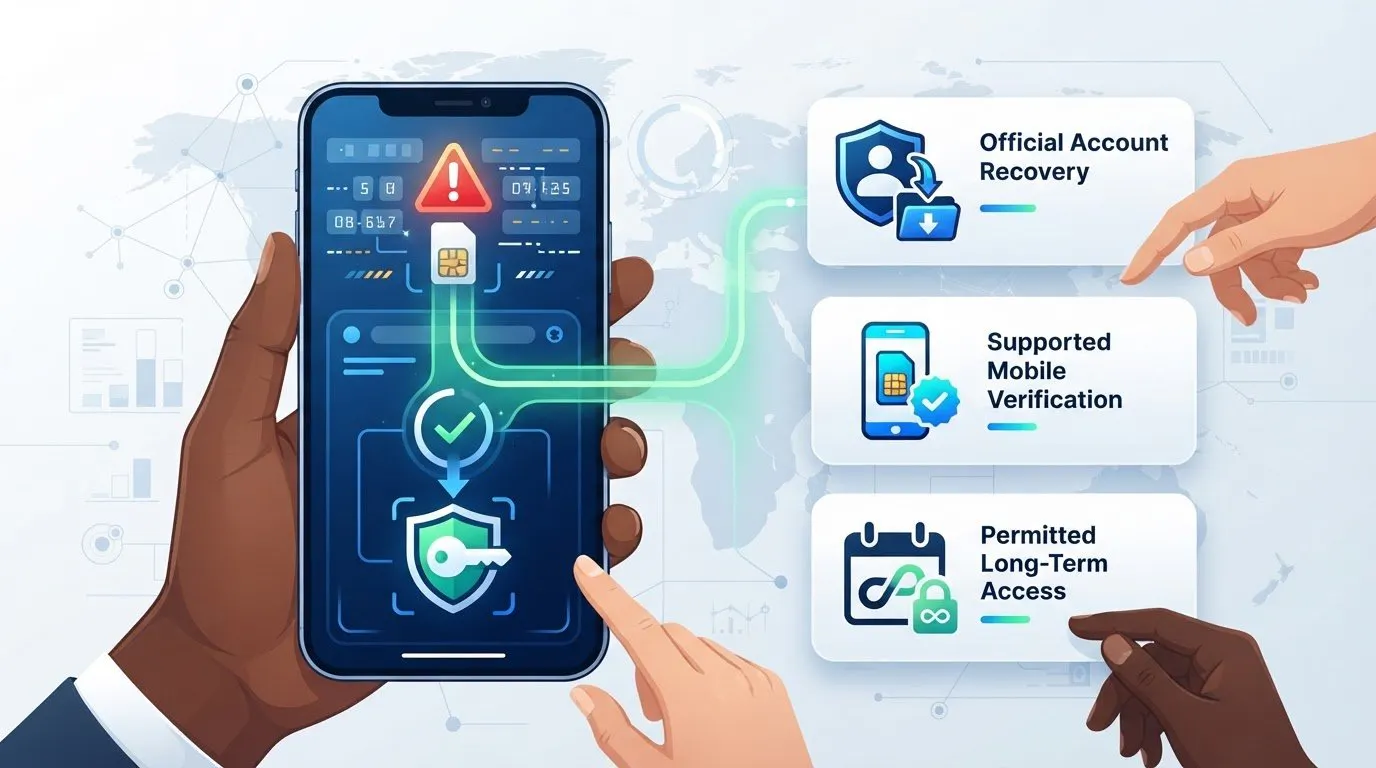
Once you've created an account, follow a strict warming protocol to build trust. Avoid high-risk actions like bulk posting or rapid scraping in the first 48 hours. Scale your activity gradually to simulate organic cellular movement and browsing patterns. If a platform requests re-verification, using Mobile VoIP rentals ensures you maintain access without relying on temporary, high-churn numbers. This consistency builds long-term trust scores with platform security, reducing the likelihood of sudden bans during active scraping sessions.
Matching Network and Telephony Layers
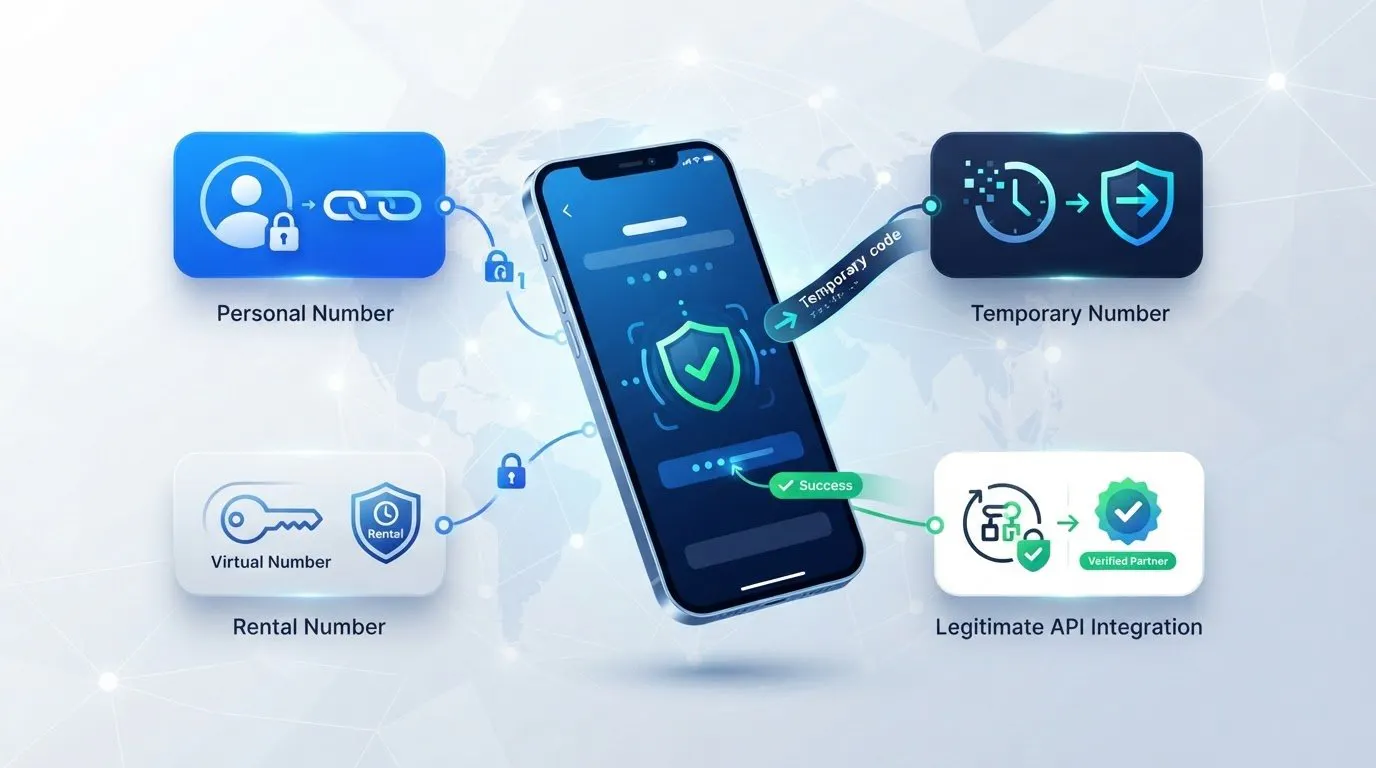
Matching proxy geo-location with SMS provider data is technically necessary to prevent automated security systems from flagging the account for geographic inconsistency between its network origin and its verified identity. A mobile IP loses its value if the registration number is flagged as a generic VoIP service. You need a telephony layer that mirrors your network layer in both location and carrier type. Using Anosim virtual number rentals allows you to maintain the same identity over months or years, which is essential for stable, long-term scraping projects.
Build your total identity by securing high-trust SMS activations for your scraping accounts.
Scaling Web Scraping with Anosim’s Mobile Infrastructure
Transitioning from manual data collection to automated, enterprise-level operations requires more than just a large IP pool; it demands a programmable infrastructure. By leveraging the mobile proxy services of our partner proxied.com, you ensure your scraping bots maintain the highest possible trust levels as you increase request volume. Manual intervention is the primary bottleneck for scaling. Developer integration is streamlined through the SMS-Activate Standard API, allowing for seamless coordination between IP rotation and account verification. This technical robustness is essential for future-proofing your strategy against evolving AI security measures that analyze behavioral patterns at scale. Using mobile proxies for web scraping at an enterprise level provides the necessary cellular footprint to bypass these predictive algorithms.
Enterprise Solutions and Partner Programs
For high-volume operations, the Anosim Reseller program provides the administrative tools necessary to manage thousands of concurrent sessions efficiently. Partners can also access custom infrastructure through the Affiliate program, creating a tailored environment for specific geographic or carrier requirements. Maintaining this scale requires a sophisticated understanding of verification longevity. You can read more about these strategies in our sibling article, Dedicated Virtual Number for SMS: The Professional Guide to Long-Term Verification. These programs are designed for users who require more than just a standard proxy service, offering a silent partnership in digital infrastructure.
Final Checklist for Secure Account Management
The technical advantage of mobile proxies lies in their ability to blend with legitimate cellular traffic through CGNAT. To build a resilient, ban-proof digital identity, follow these final steps:
- Match your proxy geolocation with your SMS verification source exactly.
- Utilize anti-detect browsers to isolate and manage unique account fingerprints.
- Automate both IP rotation and SMS retrieval via API to maintain high-frequency throughput.
- Regularly monitor carrier trust scores to ensure your tasks run on high-authority subnets.
Resilient scraping isn't just about avoiding blocks; it's about building a sustainable system that mimics human behavior with technical precision. Secure your digital operations with Anosim today and build a scraping infrastructure that scales with your needs.
Future-Proofing Your Scraping Infrastructure
The shift toward AI-driven behavioral detection means your choice of network infrastructure is now a primary security factor. Datacenter IPs are no longer viable for high-stakes platforms that prioritize organic human signals. By utilizing mobile proxies for web scraping, you leverage the inherent trust of cellular networks and the anonymity provided by Carrier-Grade NAT. Success in 2026 requires a unified approach where your network identity, browser fingerprint, and telephony data match perfectly across every session.
Anosim provides the technical foundation for this "Total Identity" workflow. With API v1 and SMS-Activate Standard API compatibility, you can automate long-term virtual number rentals and pair them with the high-trust mobile IPs of our partner proxied.com. This dual infrastructure ensures your accounts remain stable and your data extraction remains uninterrupted by sudden verification loops or shadowbans. Maintaining consistency across your digital footprint is the most effective way to bypass modern anti-bot systems. You don't have to manage these complexities alone. Secure your digital operations with the high-trust mobile proxies of our partner proxied.com and build a resilient scraping system that scales with your ambition.
Frequently Asked Questions
What makes mobile proxies better than residential proxies for web scraping?
Mobile proxies offer higher trust scores due to Carrier-Grade NAT (CGNAT), where thousands of legitimate users share a single public IP. If a platform blocks a mobile IP, they risk losing thousands of real customers. This makes mobile proxies for web scraping more resilient than residential options. While residential IPs are good for basic tasks, mobile infrastructure provides the crowd anonymity required for high-stakes platforms like TikTok or Instagram.
Can I use mobile proxies for bulk account creation on social media?
You can use mobile proxies for bulk account creation, provided you integrate them with a "Total Identity" workflow. This involves matching the IP's carrier and geolocation with high-trust SMS activations. Platforms detect bulk activity by looking for footprint inconsistencies. Using a dedicated mobile IP alongside a unique browser profile reduces the risk of instant flags. It's an efficient way to scale account farms without triggering automated behavioral security systems.
How do I avoid getting my mobile proxy IP blacklisted by platforms?
Avoiding blacklists requires mimicking organic human behavior patterns through controlled request frequency and proper header management. Don't exceed the typical request volume of a standard smartphone user. You should also ensure your TCP/IP fingerprints and User-Agents match the cellular carrier data. If you use a rotating pool, set the rotation intervals to coincide with natural session timeouts. This prevents platforms from identifying your bot as a non-human entity.
Is it necessary to use an anti-detect browser with a mobile proxy?
Using an anti-detect browser is essential because a proxy only masks your IP address, while your browser fingerprint remains exposed. Sites like Amazon analyze canvas data, WebGL, and hardware identifiers to track users. If your browser fingerprint doesn't match the cellular nature of your proxy, the account is flagged. Combining mobile proxies for web scraping with tools like AdsPower creates an isolated, consistent environment that passes advanced behavioral checks.
How do I combine mobile proxies with Anosim's SMS verification?
The Anosim API v1 automates the telephony side of your operation: ordering, renting numbers and mobile VoIP, and retrieving SMS verification codes without manual intervention. The mobile IPs themselves come from our partner proxied.com. This technical integration is vital for high-volume tasks where speed and reliability are priorities. By using the API, you can unify your networking and verification layers into a single, efficient workflow that scales as your scraping requirements grow.
Can I get a dedicated mobile proxy IP that does not rotate?
You can obtain a dedicated mobile proxy through rent services, which provide a static IP for a specific duration. These are ideal for long-term account management where frequent IP changes might trigger security alerts. While rotating proxies are better for broad data harvesting, a dedicated mobile connection provides a stable anchor for accounts on sensitive platforms. It ensures your digital footprint remains consistent, which is a key factor in maintaining high trust scores.
What should I do if a platform asks for SMS verification while using a proxy?
If a platform triggers an SMS verification request, you should use a high-trust virtual number that matches the geolocation of your proxy. Using a number from a different region is an immediate red flag for security algorithms. You can utilize long-term virtual number rentals to ensure you can pass future re-verification checks. This approach maintains the integrity of your Total Identity and prevents the account from being permanently locked during scraping.
Are mobile proxies legal for managing client social media accounts?
Mobile proxies are legal tools used for digital privacy and operational efficiency. When managing client accounts, they help you maintain separate identities and avoid cross-contamination that could lead to bans. However, you must always comply with the specific Terms of Service of the platforms you're accessing. Most professionals use them as a legitimate way to manage global accounts from a central location without triggering geographic security alerts or IP-based restrictions.