By 2026, the era of relying on recycled residential pools for sensitive automation has effectively ended as anti-bot systems now flag residential IPs with the same scrutiny once reserved for data centers. You've likely experienced the frustration of immediate account bans on platforms like Tinder or Telegram, even when using supposedly high-quality providers. It's clear that standard IP rotation isn't enough when your operations are being throttled by high latency and blacklisted signatures. We agree that maintaining account stability shouldn't feel like a constant battle against invisible filters.
This guide will show you how to identify and leverage clean mobile proxy ips to maintain high-trust scores and secure your digital infrastructure against advanced detection methods like TLS JA4 fingerprinting. You'll learn how to verify IP cleanliness and use Carrier-Grade NAT to your advantage for seamless account management. We'll also explore the most efficient ways to integrate these tools with SMS verification for a reliable, non-flagged operational flow that respects your need for privacy and technical robustness.
Key Takeaways
- Differentiate between newly assigned and historically clean addresses to prevent automated account bans during the initial setup phase.
- Leverage the technical advantages of Carrier-Grade NAT to blend with legitimate mobile traffic and bypass advanced bot detection systems.
- Implement a rigorous verification strategy for clean mobile proxy ips by auditing Autonomous System Numbers and cross-referencing global blacklists.
- Ensure long-term account stability on high-security platforms like Telegram and Tinder through the use of non-flagged mobile infrastructure.
- Optimize your operational efficiency by integrating the automated IP rotation of our proxy partner proxied.com with SMS activation tools.
Table of Contents
- What Are Clean Mobile Proxy IPs and Why Do They Matter?
- The Anatomy of a High-Trust Mobile IP Address
- Why Cleanliness is Mandatory for Account Stability
- How to Evaluate and Verify Proxy Cleanliness
- The Anosim Advantage: Clean Proxies for Integrated Workflows
What Are Clean Mobile Proxy IPs and Why Do They Matter?
A clean IP address is characterized by a lack of association with spam, fraudulent activity, or previous security blacklisting. In the context of digital operations, clean mobile proxy ips represent addresses that have maintained a positive reputation across global databases. This cleanliness is vital because platforms like Google, Instagram, and Amazon don't just look at what you're doing; they look at where you're coming from. If your IP has a history of abuse, your session is likely to be terminated or challenged with endless CAPTCHAs before you even begin.
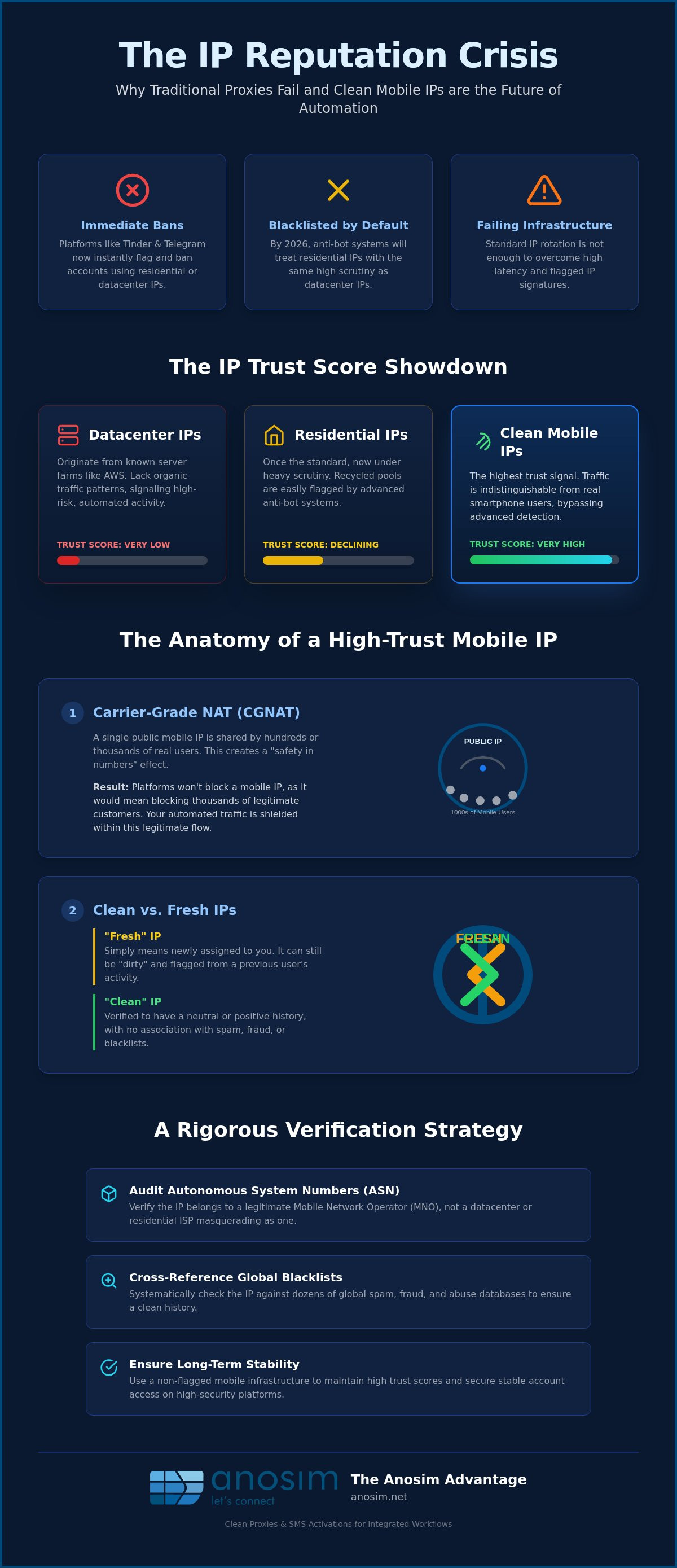
It's a common mistake to confuse "clean" IPs with "fresh" IPs. A fresh IP is simply an address that has been newly assigned to you by a provider. However, an IP can be fresh to your account while still being "dirty" in the eyes of a security system. If the previous user of that specific address engaged in aggressive scraping or account creation, the IP remains flagged. True cleanliness requires an address with a neutral or positive history, ensuring that your connection doesn't trigger immediate defensive responses from target servers.
Datacenter IPs fail this test because they originate from known server farms. Major platforms recognize that legitimate human users don't browse the web from an Amazon Web Services or DigitalOcean facility. These IPs are often "dirty" by default because they lack the organic traffic patterns associated with residential or mobile users. When you use datacenter proxies for sensitive tasks like account verification, you're essentially signaling to anti-bot systems like Cloudflare or Akamai that your connection is automated and high-risk.
The Concept of IP Trust Scores
IP Trust Score is the metric platforms use to determine if a user is human or automated. This score is calculated in real-time by analyzing several variables, including the type of ISP, its geographic location, and its proximity to known botnet clusters. If an address has been used for a previous ban, the score drops significantly. High-security platforms assign a risk value to every incoming connection. When that value exceeds a specific threshold, the system automatically triggers verification hurdles or outright blocks. Maintaining a high score is the only way to ensure long-term account stability.
Mobile vs. Datacenter: The Reputation Gap
The trust associated with major mobile carriers is significantly higher than any other network type. This is because mobile network operators (MNOs) manage a limited pool of addresses for millions of legitimate users. The underlying Mobile IP protocols allow devices to stay connected while transitioning between different network nodes, creating a dynamic environment that anti-bot systems find difficult to blacklist. If a platform blocks a single mobile IP, it risks blocking thousands of real customers simultaneously. By using clean mobile proxy ips, you effectively hide your automation within a stream of legitimate human traffic, making your digital footprint indistinguishable from a standard smartphone user.
The Anatomy of a High-Trust Mobile IP Address
High-trust status isn't accidental. It's a technical byproduct of how mobile networks are engineered to handle millions of devices with a limited pool of IPv4 addresses. Unlike datacenter or residential connections where an IP is often tied to a single household or server, mobile infrastructure relies on Carrier Grade NAT (CGNAT). This protocol creates a unique environment where your automation can blend into a massive stream of legitimate human activity.
When you utilize clean mobile proxy ips, you're leveraging the same network paths used by everyday smartphone users. The trust doesn't just come from the IP itself; it comes from the layers of telecommunications protocols that verify the connection as a legitimate mobile device. 4G and 5G networks add further complexity to this profile, offering different layers of fingerprinting protection that make it nearly impossible for anti-bot systems to distinguish a proxy from a real handset.
Understanding CGNAT and IP Sharing
Mobile carriers assign a single public IP address to hundreds, or even thousands, of different devices simultaneously. This architectural necessity is the primary reason mobile proxies are so resilient. If a platform like Telegram or Tinder were to ban a single mobile IP due to suspicious activity, they would inadvertently block hundreds of legitimate, revenue-generating users sharing that same address. Websites prefer to avoid this collateral damage. This "safety in numbers" principle ensures that even if your specific session involves high-volume tasks, your IP remains shielded by the massive volume of organic traffic surrounding it.
Hardware-Level Authenticity
Cleanliness extends beyond the IP address to the hardware generating the connection. Many low-quality providers use virtualized mobile environments or simulated stacks that fail under deep packet inspection. Real mobile network infrastructure uses physical SIM cards and authentic modems. This setup ensures that the TCP/IP stack and OS fingerprints perfectly match the expected profile of a mobile device. If a server expects a 5G connection from a Samsung device but receives a packet header associated with a Linux server, the "clean" IP becomes irrelevant; the account is flagged immediately.
For those managing high-stakes digital operations, relying on a stable mobile proxy provider that uses real-device infrastructure is non-negotiable. This hardware-level authenticity ensures that your technical signature remains consistent with the high-trust status of the carrier network.
While 4G proxies have been the industry standard, 5G protocols offer more sophisticated rotation capabilities and lower latency. These newer networks provide a denser pool of addresses and more frequent IP updates, which further complicates the tracking efforts of anti-bot systems. Choosing the right protocol depends on your specific volume requirements, but both rely on the same fundamental principle: blending in is the most effective form of security.
Why Cleanliness is Mandatory for Account Stability
Account stability depends on the reputation of your entry point. If you attempt to access a high-security platform using an address with a history of abuse, your session is compromised before it begins. Using clean mobile proxy ips is no longer a luxury; it's a fundamental requirement for any operation that involves automated account management or sensitive data scraping. When an IP is "dirty," it carries the baggage of previous users who may have triggered security alerts, leading to immediate flagging or permanent bans for any new account associated with that address.
Platforms like Tinder and Telegram maintain extensive databases of IP history. They don't just look for active blacklisting; they analyze patterns of behavior associated with specific subnets. If an IP was recently used to blast spam or create bulk accounts, the platform will likely block any subsequent verification attempts from that same source. This is particularly problematic for high-volume operations where a single flagged IP can cascade into a series of banned accounts, wasting time and resources on failed setups.
The "Shadowban" trap is a more subtle consequence of poor IP quality. In this scenario, your account remains active, and you don't receive an explicit ban notification. However, your reach is severely restricted, your messages aren't delivered, or your profile becomes invisible to other users. This happens because the platform has assigned a low trust score to your connection. By the time you realize the account is ineffective, you've already invested significant effort into an operation that was doomed by its underlying infrastructure.
Bypassing SMS Verification Hurdles
A clean IP is just as critical as a valid phone number for successful OTP delivery. Security systems frequently detect the mismatch between a high-trust mobile number and a low-trust datacenter or residential IP. If you're using Anosim SMS activations, pairing them with clean mobile proxy ips significantly increases your success rate. This synergy ensures that the platform sees a consistent, high-trust mobile profile, which reduces the likelihood of the system rejecting the verification code or flagging the account immediately after signup.
Long-Term Account Management
Maintaining a consistent identity is essential for accounts that require frequent interaction. Using static IPs for long periods can be risky if those IPs eventually leak or become part of a recycled pool that other users abuse. Strategic rotation is the solution. By setting appropriate rotation intervals, you ensure that your proxy sessions remain fresh without appearing erratic. High-trust mobile routing provides the stability needed for long-term management, allowing you to scale operations without the constant fear of sudden, reputation-based account loss.
How to Evaluate and Verify Proxy Cleanliness
Verification is the only way to confirm you're actually using clean mobile proxy ips. Providers often use marketing terms like "premium" or "elite," but technical audits reveal the truth. Start by checking the IP against global blacklists like Spamhaus or Barracuda. While CGNAT means many users share an IP, major security databases shouldn't flag the address for active botnet participation or mail spam. If a major blacklist shows a recent entry for abuse, the IP's reputation is already compromised.
Analyze the Autonomous System Number (ASN) for carrier legitimacy. A legitimate mobile proxy must show an ASN belonging to a recognized mobile carrier like Verizon, Vodafone, or Orange. If the ASN traces back to a hosting provider or a cloud service, the proxy is a disguised datacenter IP and will be flagged by any sophisticated anti-bot system. Next, perform a leak test. DNS and WebRTC leaks are catastrophic because they expose your local IP or ISP, bypassing the proxy entirely and linking your activity to your real identity.
Monitor "fraud scores" using third-party verification tools that aggregate data to assign a risk percentage to an IP. Finally, check the TCP/IP fingerprint. The packet headers should indicate a mobile operating system and match the expected network behavior. If there's a mismatch between the network type and the OS fingerprint, the connection is instantly suspicious. A clean proxy should behave identically to a standard mobile data connection.
Essential Tools for IP Auditing
Services like Scamalytics and IP-Score provide professional-grade fraud detection by analyzing historical data and connection patterns. When reading a blacklist report, look for the specific type of flag. A flag for "general traffic" is common in shared mobile pools, but "confirmed bot activity" is a reason to rotate the IP immediately. Always ensure your browser's User-Agent matches the IP's carrier profile. If your IP says you're on a mobile network but your browser reports a desktop environment, you've failed a basic consistency check that most platforms monitor.
The "Turing Test" for Proxies
Perform a manual test by loading a high-security target platform like Google or a social network. If you encounter immediate CAPTCHAs or unusually high latency, the IP might be "soft-blocked" or throttled by the platform's edge security. Signs of throttling include timed-out requests or "Access Denied" errors that don't appear on other networks. To ensure your infrastructure meets these rigorous standards, you can access high-trust mobile proxies designed for stability and verified cleanliness. This manual verification step confirms that the technical metrics translate into real-world performance.
The Anosim Advantage: Clean Proxies for Integrated Workflows
Operational efficiency in high-stakes digital tasks is often hampered by the need to manage multiple providers for network infrastructure and account verification. Anosim addresses this friction by offering a unified ecosystem where clean mobile proxy ips and SMS activation services coexist on the same platform. This integrated approach eliminates the "footprint mismatch" that occurs when a high-trust virtual number is paired with a low-trust or blacklisted IP address. When your connection and your verification components originate from a single, security-conscious provider, the likelihood of triggering automated defense systems decreases significantly.
Sourcing your infrastructure from a silent partner focused on technical utility allows you to focus on the logic of your operations rather than the stability of your network. By using high-trust mobile IPs specifically designed for account management, you reduce the time spent troubleshooting failed signups and blocked sessions. This synergy is particularly valuable for platforms with aggressive anti-bot measures that analyze the relationship between the user's network type and their verification data. Anosim ensures that both elements meet the rigorous standards of modern digital privacy and operational security.
Seamless API Integration for Developers
Automation is the core of modern digital workflows. Developers can programmatically manage the lifecycle of their proxy sessions via the API of our proxy partner proxied.com. This allows for the precise timing of IP rotations to coincide with specific account actions, such as triggering an SMS activation or performing a sensitive profile update. For those already using industry-standard tools, the infrastructure's compatibility with the SMS-Activate Standard API ensures a smooth transition without the need for extensive code refactoring. You can request a "clean" session for high-value tasks through simple API calls, ensuring that every automated interaction starts with a neutral reputation score.
Scaling with Confidence
Moving from individual account management to enterprise-level automation requires a foundation that doesn't crumble under volume. Anosim’s reliance on real mobile network infrastructure, rather than simulated environments, provides the technical robustness necessary for scaling. Because the service is built around inbound data solutions, the IP quality remains consistently high, avoiding the pitfalls of recycled residential pools that are often saturated with bot traffic. This stability is essential for maintaining long-term account health and ensuring that your digital footprint remains indistinguishable from that of a legitimate mobile user.
Reliability in digital infrastructure isn't just about uptime; it's about the quality of the connection you present to the world. To maintain the highest level of trust for your automated tasks, you can secure your digital operations with Anosim Mobile Proxies. By choosing an integrated workflow, you're not just buying a proxy; you're securing the infrastructure needed for sustainable growth in 2026's increasingly scrutinized digital environment.
Securing Your Operational Future with High-Trust Infrastructure
The digital environment of 2026 doesn't reward basic proxy setups; it requires a strategic approach to network reputation and hardware-level authenticity. By leveraging the inherent trust of Carrier-Grade NAT and maintaining strict verification protocols, you can bypass the sophisticated detection systems that trigger immediate account flagging. Utilizing clean mobile proxy ips is the most effective method for ensuring long-term stability on high-security platforms like Telegram or Tinder.
Operational efficiency is achieved when your infrastructure and verification tools work in tandem. Anosim provides a unified ecosystem that combines real 4G/5G infrastructure with robust API (v1) support for seamless automation. When you pair high-quality mobile proxies with an integrated SMS activation ecosystem, you eliminate the technical friction that often leads to account loss. Get Started with Anosim Clean Mobile Proxies to establish a resilient digital presence. You now have the technical foundation required to scale your operations with confidence and maintain total operational privacy.
Frequently Asked Questions
What is the difference between a clean mobile proxy and a residential proxy?
Mobile proxies utilize Carrier Grade NAT (CGNAT), allowing thousands of users to share a single IP, while residential proxies are tied to individual home connections. This sharing mechanism makes mobile IPs more resilient to blacklisting because platforms avoid blocking legitimate users. Using clean mobile proxy ips ensures that your specific address hasn't been flagged for previous abuse, providing a higher trust score than most residential pools.
Can I use clean mobile proxies to bypass Tinder phone verification?
Clean mobile proxies don't bypass the requirement for a phone number, but they significantly increase the success rate of the verification process. Tinder's security systems often flag virtual numbers if they're used from a suspicious datacenter IP. By matching a high-trust mobile IP with an Anosim SMS activation, you create a consistent mobile profile that reduces the likelihood of automated rejection during the OTP phase.
How often should I rotate my mobile proxy IP for maximum stability?
The ideal rotation interval depends on your specific workflow. For aggressive account creation, rotating your IP every 5 to 10 minutes helps avoid pattern detection. For maintaining existing accounts, sticky sessions that last 30 minutes or more are generally safer. Clean mobile proxy ips provide the flexibility to adjust these intervals programmatically based on the security sensitivity of the platform you're accessing.
Do clean mobile proxies prevent all types of account bans?
No proxy can prevent all bans because account stability also depends on your behavior and device fingerprint. While a clean IP provides the necessary high-trust foundation, you must also manage your browser cookies, canvas fingerprinting, and interaction patterns. A high-quality proxy ensures your infrastructure isn't the reason for a ban, but it doesn't excuse bot-like behavior that triggers secondary security filters.
Are mobile proxies faster than residential or datacenter proxies?
Mobile proxies are typically slower than datacenter connections but comparable to residential speeds. Datacenter IPs offer the lowest latency because they reside in server farms, but they lack the trust required for sensitive tasks. 4G and 5G mobile proxies prioritize reputation over raw throughput, making them the superior choice for account management where stability is more valuable than milliseconds of speed.
How does Anosim ensure their mobile proxy IPs remain clean?
Anosim maintains cleanliness by utilizing real mobile network infrastructure instead of simulated or recycled IP pools. By sourcing connections directly from major carriers, the service ensures that every IP carries the inherent trust of a legitimate mobile device. This approach avoids the reputation decay common in residential networks where personal devices are often infected with malware or used for aggressive spam.
Can proxy rotation be managed programmatically?
Yes — proxy sessions and rotation settings can be fully controlled programmatically through our proxy partner proxied.com. Developers can automate IP changes to match specific account actions or set fixed intervals for high-volume tasks. Combined with the Anosim API (v1) for SMS verification, your workflow remains efficient and you're always operating from a fresh, non-flagged connection without requiring manual intervention.