Can a disposable number to avoid spam keep signup messages away from your personal phone without putting account access at risk? It can limit how widely you share your primary number, which is useful when a website, marketplace, or free-trial signup asks for SMS verification. But a separate number isn’t a spam filter, and a one-time code option may not suit an account you’ll need to recover later. The right choice depends on what you’re signing up for and whether you’ll need future messages.
This guide explains when a short-term inbound SMS activation may suit one-time verification, when renting a number makes more sense for continued access to incoming codes, and where virtual numbers can fall short. Some services reject virtual numbers, and if an account remains tied to a number you can no longer access, recovery may become difficult. We’ll look at how to weigh convenience, exposure, platform acceptance, and account continuity so you can choose an option that fits the signup without creating a new access problem.
Key Takeaways
- A disposable number to avoid spam can reduce exposure of your primary number, but it won’t block every unwanted message.
- Compare one-time activation and longer-term rental by how long you need inbound messages and whether future account recovery matters.
- Before signing up, consider the account’s importance, how long you’ll need access, and which recovery options it supports.
- Review marketing consent and notification preferences instead of relying on a separate number alone.
- Match the number option to the task: Anosim offers inbound SMS activation for one-time verification and number rental for continued access to verification messages.
Table of Contents
- How a Disposable Number Can Reduce Exposure to Spam
- Disposable, Temporary, or Rented Number: Understand the Difference
- Will a Disposable Number Actually Stop Spam?
- A Practical Checklist Before Using a Disposable Number
- Choose an Anosim Number Option for Inbound Verification
How a Disposable Number Can Reduce Exposure to Spam
A disposable number to avoid spam is a separate, short-term contact route you can use instead of giving a website or service your primary phone number. It isn’t a spam filter: it doesn’t inspect messages or automatically block senders. Its value is in limiting where your main number is shared. If a signup later leads to marketing texts, those messages may go to the separate number rather than your everyday contact channel.
The idea is similar to using a burner phone for a particular purpose, though a number can be virtual rather than tied to a physical device. The practical distinction is exposure: using another number changes which contact detail you provide, not how the receiving company handles the information.
A separate number can protect your primary number from wider exposure, but it can’t guarantee that spam stops. If your primary number has already been shared, a new number won’t remove it from a company’s records or prevent messages to the number you already disclosed.
What changes when a signup uses a separate number?
Using a second number creates a boundary between selected signups and your primary contact channel. For example, you might enter it when registering for an event or creating an account you don’t want connected to your usual number. If the service sends a verification text or later messages, they can reach the separate number while it remains active and able to receive them.
This separation can make it easier to identify which signup is associated with incoming messages. It doesn’t make the signup anonymous. The service may retain or process the number and other details you submit according to its policies, so review the privacy terms and marketing choices when practical.
Consider the purpose before using a temporary route. A number used for a one-time code may be unsuitable for an account that could require future verification. If you expect to need messages later, continued access to the number is part of the privacy decision, not an afterthought.
What a disposable number cannot do
A separate number can’t erase contact data you’ve already shared with a company, retract it from existing records, or guarantee you won’t receive marketing messages. It also won’t prevent a service from sharing or processing submitted details as described in its policies. Review consent boxes and notification preferences during signup, and use available unsubscribe options if unwanted marketing arrives.
There are also verification limits. A platform may reject a number, including because it doesn’t accept certain virtual-number types, or it may require another verification method. A disposable number therefore isn’t a dependable workaround for every signup. Choose based on the account’s purpose and your need for future access, and avoid relying on a number you may lose for an account that matters.
- Use a separate number when the goal is to keep a particular signup from receiving your primary contact detail.
- Keep control of the number for as long as you may need verification or account-recovery messages.
- Review marketing consent and account-recovery options, since number separation doesn’t replace either step.
Disposable, Temporary, or Rented Number: Understand the Difference
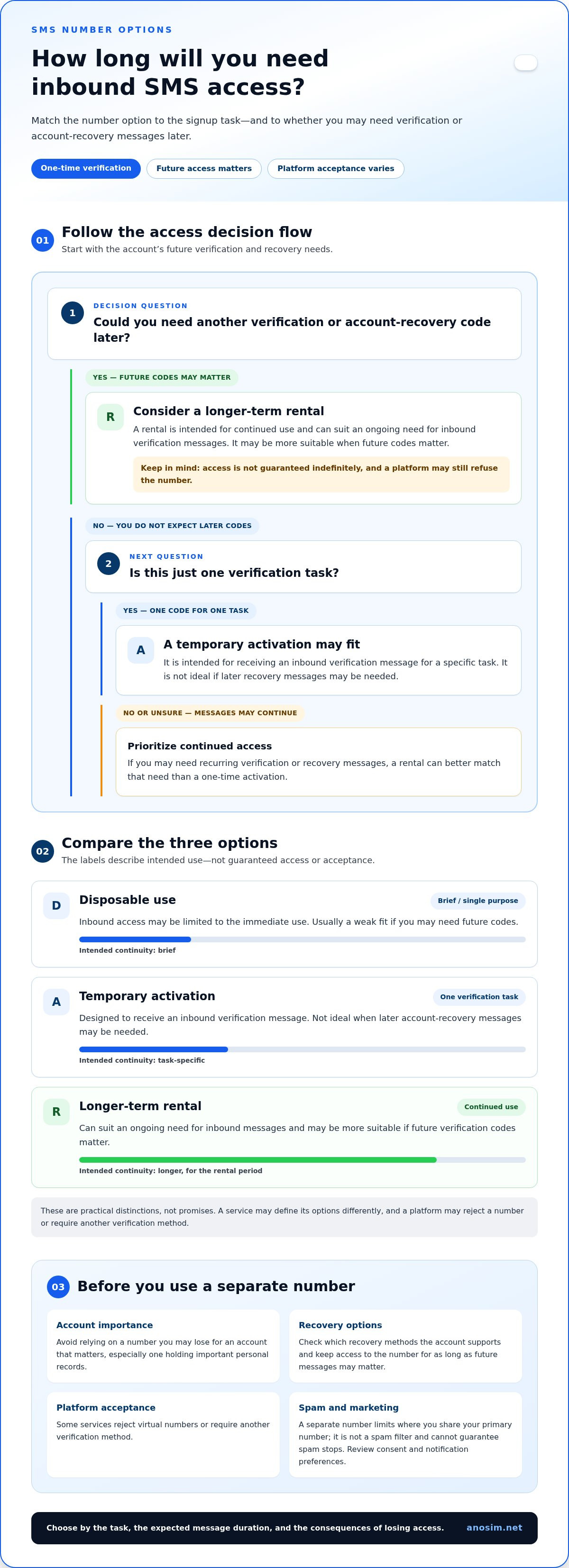
These labels describe how a number is intended to be used, but they aren’t universal technical categories. “Disposable” usually means you plan to use the number briefly and then stop using it. A temporary activation is designed for receiving a code for a specific verification task. A rental is intended for use over a longer period, which can matter if you expect another verification or recovery message.
Compare the options by the access you need, not just the label. A number used for a single signup may be a poor fit for an account you rely on. For broader advice on unwanted messages, the FCC guide on stopping robocalls outlines other steps consumers can take alongside limiting number exposure.
- Disposable use: brief, often for a single purpose. Inbound-message access may be limited to the immediate use, so it is usually a weak fit if you may need future codes.
- Temporary activation: covers one verification task and is meant for receiving an inbound verification message. It is not ideal when later recovery messages may be needed.
- Longer-term rental: continued use over a rental period that can suit an ongoing need for inbound messages. It may be more suitable if future codes matter, but access is not guaranteed indefinitely.
These are practical distinctions, not promises about access, platform acceptance, or recovery. A service may define its options differently, and a platform may refuse a number or require another verification method. Choose based on the task and the consequences of losing access.
When a short-term number may fit
A short-term option may suit a low-stakes signup, such as accessing an event page or completing a one-time registration when you don’t expect to return to the account. An inbound SMS activation can fit a task that only requires receiving a verification code. Avoid this approach for essential accounts, such as one holding important personal records, if you may need that number to regain access later.
When continued access matters more
If an account may send recurring verification or recovery codes, prioritize ongoing access to inbound messages. A rental can better match that need than a one-time activation, though it doesn’t guarantee that a platform will accept the number or that recovery will succeed. Anosim’s rented virtual numbers are an option for continued SMS access when future inbound verification messages matter. The Dedicated Virtual Number for SMS guide can also help frame the decision around duration and continuity.
Before choosing a disposable number to avoid spam, ask yourself how long you need access and whether the account can be recovered another way. If the answer is uncertain, don’t treat a one-time code as your only access plan.
Will a Disposable Number Actually Stop Spam?
No. A separate number can limit exposure of your primary number, but it can’t stop all spam. It changes which number you share with a signup; it doesn’t block messages, control a sender’s contact practices, or remove information already submitted. A disposable number to avoid spam is best understood as a way to compartmentalize contact details, not a guarantee of quiet.
That separation can still be useful. If an optional signup later sends marketing texts, those messages may go to the number you used for that service instead of your primary line. But the new number is still reachable, and its usefulness depends on how long you can access it and which messages you may need to receive.
Why unwanted messages may still arrive
Once you submit a number, the service receiving it can handle that contact detail under its own policies. A separate number doesn’t prevent that processing or guarantee that the number won’t receive messages. It may also get texts from senders beyond the original signup, so don’t assume that using it makes the number anonymous or limits every message to one source.
If messages arrive, use the service’s marketing preferences or available opt-out options where appropriate. A separate number can help contain exposure, but it doesn’t replace reviewing signup choices or managing unwanted messages directly.
Account recovery is the main trade-off
The risk grows when an account sends a recovery code to a number you no longer control. You could lose a route to verify your identity, even if you still know the account password. For essential accounts, use a number you expect to keep accessing and set up other recovery methods where the service allows them.
Number recycling adds uncertainty over time. If a number is later reassigned, its new holder could receive messages intended for the number’s previous user. That doesn’t automatically grant access to an account, but it can create confusion and makes relying on a short-term number for long-term recovery a poor fit. Review any account tied to a number before ending access to it.
- Benefit: You can keep selected signups separate from your main contact channel.
- Trade-off: Messages can still reach the separate number, and its future availability may be uncertain.
- Account risk: Losing access can complicate verification or recovery if the platform still sends codes there.
For a single verification task, an activation may fit if you don’t expect to need the account again. For accounts that may require later messages, ongoing access matters more. The temporary-number guide can help you compare those use cases. Assess recovery needs before choosing, not after a code is required.
A Practical Checklist Before Using a Disposable Number
Before choosing a disposable number to avoid spam, decide what you need the number to do after signup. A quick privacy decision can affect future verification and account recovery, so match the number’s access period to the account’s expected lifespan. Use this checklist before submitting a number.
Decide what the account needs
Classify the account by importance: low-stakes, recurring-use, or important for identity and recovery. A one-time event signup may need only a single verification. An account you use regularly may send login codes later, while an essential account could depend on the registered number for recovery. Review its verification and recovery settings before choosing a short-term option.
- Account importance: Would losing access cause a serious problem, or is the signup easy to replace?
- Access duration: Do you expect to use the account once, periodically, or for the foreseeable future?
- Recovery route: Could the service send future login or recovery messages to this number? Is another recovery method available?
- Number lifespan: Choose an access period that fits the account’s expected use. Don’t rely on a short-term number for an account you may need to recover later.
If the account is important or its recovery process is unclear, keep it tied to a number you can continue accessing. Follow the platform’s terms and verification process. Use a separate number for legitimate privacy management, not to misrepresent your identity or bypass a service’s controls.
Limit unwanted contact through signup choices
A separate number is only one part of managing messages. Read the signup choices carefully and distinguish essential verification from optional marketing consent. Don’t opt in to promotional texts unless you want them. If unwanted messages arrive, use available unsubscribe or reporting controls rather than assuming number separation will stop them.
- Check whether providing a phone number is required for the service or optional.
- Review consent boxes and notification preferences before submitting the form.
- Keep a secure note of which number is tied to each account and when access may end.
- Don’t share verification codes with anyone. Treat an unexpected request for a code as a reason to verify the request through the service’s official channel.
- Remove or update saved account details when you no longer need the number, but only after confirming you won’t need it for access or recovery.
That last step requires care. Deleting your own record of a number too early can make account management harder, while keeping unnecessary personal data indefinitely also creates avoidable exposure. Retain only the account-to-number information you need to manage access, store it securely, and review it when an account closes or its recovery settings change.
If your checklist points to a one-time inbound verification need, explore Anosim SMS activation options as one possible fit. For accounts requiring continued access to inbound verification messages, choose an arrangement that better matches that ongoing need.
Choose an Anosim Number Option for Inbound Verification
Once you know how long you’ll need access to verification messages, choosing an option is more straightforward. Anosim offers inbound SMS activation for a single verification use case and number rentals for users who need continued access to incoming codes. Neither option guarantees that a platform will accept a number or that using a separate number will prevent spam. The goal is to match the access period to the task.
Match the service to the access period
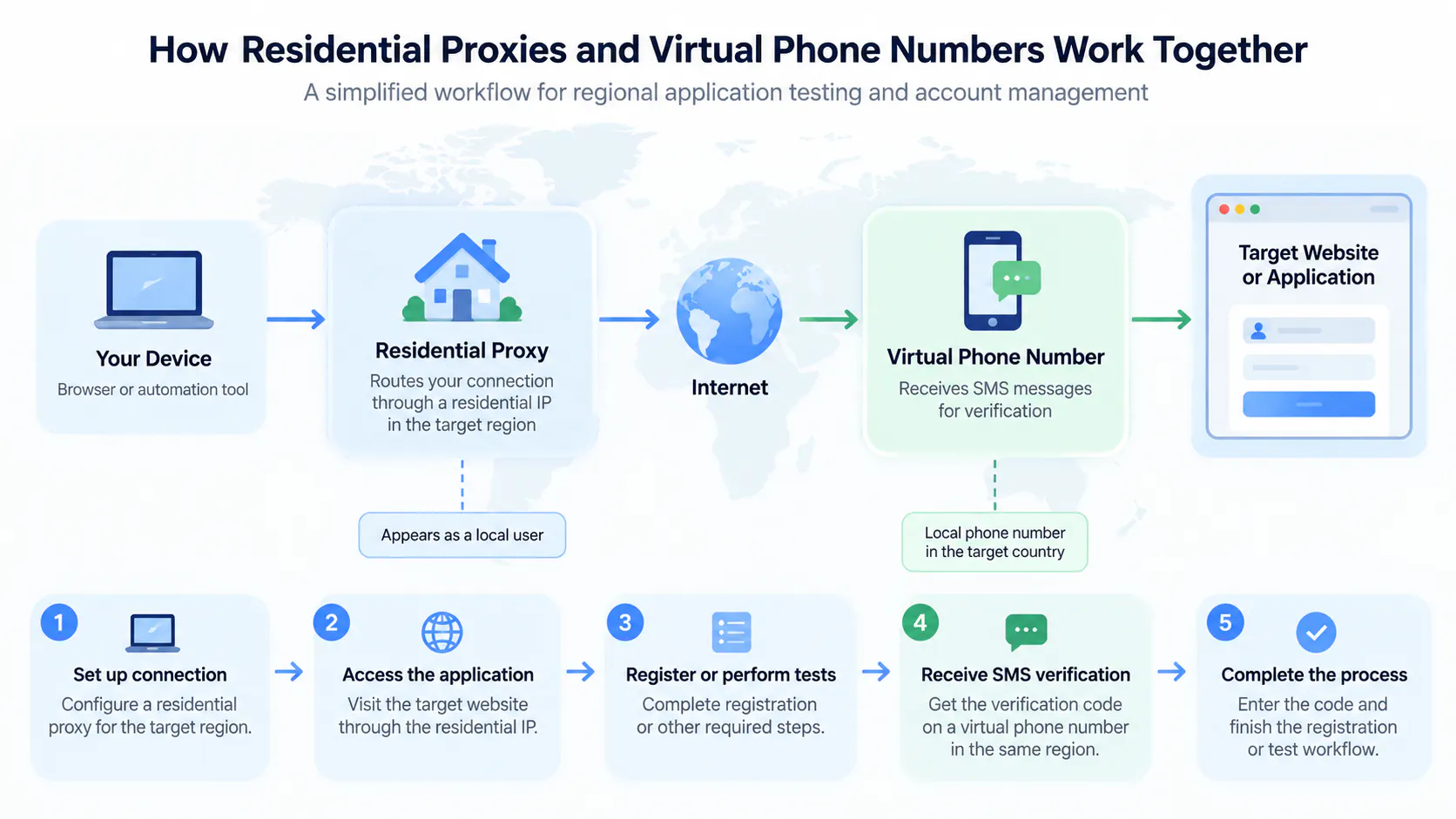
If you need to receive a code for one verification task and don’t expect to need future messages, SMS activation for inbound verification may suit that use case. It provides an inbound SMS route for receiving a verification code. For example, it may fit a signup where you need to complete verification but don’t plan to rely on that account later.
If you expect to need more inbound verification messages over time, a number rental is the more relevant option. It is intended for users who need continued access to incoming codes, such as for an account with recurring verification requirements. Explore Anosim number rental when ongoing access is part of your use case. A rental doesn’t make a number permanent, guarantee account recovery, or ensure acceptance by a particular platform.
Use the account’s purpose to guide your decision:
- One verification task: Consider a short-term SMS activation when future access to the account is not important.
- Repeated verification: Consider renting a number if you expect to need additional inbound codes.
- Critical account: Review the platform’s recovery rules and use a number you can continue accessing for as long as the account depends on it.
Keep verification and privacy expectations realistic
A disposable number to avoid spam can limit exposure of your primary number at a signup, but it doesn’t filter messages or guarantee protection from unwanted contact. The service receiving a number may handle it under its own policies, and a platform may reject a virtual number or request another verification method. Use numbers only in ways that comply with the relevant service’s terms.
Anosim provides inbound SMS services for receiving verification codes. It doesn’t deliver physical SIM cards or provide outgoing texts or voice calls. Keep account recovery in mind before choosing short-term access, and don’t use an activation as the sole recovery route for an account you rely on.
Choose the option that fits your expected access period, then explore Anosim’s inbound SMS options for verification use cases.
Make Your Next Signup a Deliberate Choice
Before your next online signup, decide what contact information the service genuinely needs and how long you’ll need access to the account. That small pause can help you avoid sharing your primary number by default while keeping recovery needs in view. A disposable number to avoid spam is one privacy tool, not a substitute for thoughtful consent choices or a plan for account access.
Set a simple rule for yourself: use short-term access only when the account is low-stakes and future verification isn’t important. For accounts you rely on, choose an arrangement that supports the access period you expect. Anosim offers inbound SMS options for verification, including activation and longer-term number rental.
Explore Anosim inbound SMS options and choose the approach that fits your next verification task. A clear plan makes it easier to share your number with purpose and manage your digital footprint with confidence.
Frequently Asked Questions
Can a disposable number stop spam texts completely?
No. A disposable number to avoid spam can help keep your primary number out of selected signup records, but it can still receive unwanted texts. Treat it as separation, not message blocking. If a message comes from a legitimate business, use its unsubscribe instructions or adjust your preferences in the account. For suspicious texts, avoid replying or opening links, and use your messaging app’s reporting controls.
Is it safe to use a disposable number for account verification?
It can be suitable for a low-stakes signup if you understand the access limits and follow the platform’s rules. Before registering, look at the account’s security or recovery settings and consider whether losing the number could lock you out. For work, identity, or financial accounts, prioritize a contact method you can maintain and use the platform’s approved verification options.
Can I use a disposable number for password recovery later?
Only if you can receive a message at that number when recovery is needed. For example, a code sent months after signup won’t help if your access to the number has ended. Before using a short-term number, set up any alternative recovery methods the account permits, such as a recovery email or backup codes, and store those securely.
What is the difference between a disposable number and a rented number?
“Disposable” describes the intended short-term use, while “rented” generally means access for a defined period. The practical question is whether you need one verification message or expect to receive more later. Read the specific service terms for the access period and message availability, then match the option to the account’s likely use rather than assuming the labels mean the same thing everywhere.
Will websites accept a disposable number for SMS verification?
Not always. Acceptance depends on the website’s verification rules and the number being used. If a number is rejected, use another verification method offered by the platform rather than repeatedly attempting alternatives that may conflict with its terms. Before signup, review the service’s permitted verification methods, especially if the account is important or has strict identity checks.
Can I keep using the same temporary number for multiple accounts?
That depends on the number service’s terms and each platform’s rules. Reusing a number can simplify receiving messages, but it also links multiple accounts to one contact route. If access to that number changes, recovery for several accounts could be affected. Keep a private record of which accounts use it, and review that list before access ends or you change your number arrangement.
What should I do if unwanted texts reach my separate number?
For messages from a business you recognize, use its unsubscribe option or change the account’s marketing preferences. For suspicious texts, don’t reply, click links, or share verification codes. Use your messaging service’s blocking or reporting controls. If texts relate to an account, check its notification settings through the official app or website, rather than using links in an unexpected message.